
What is a sales dialer?
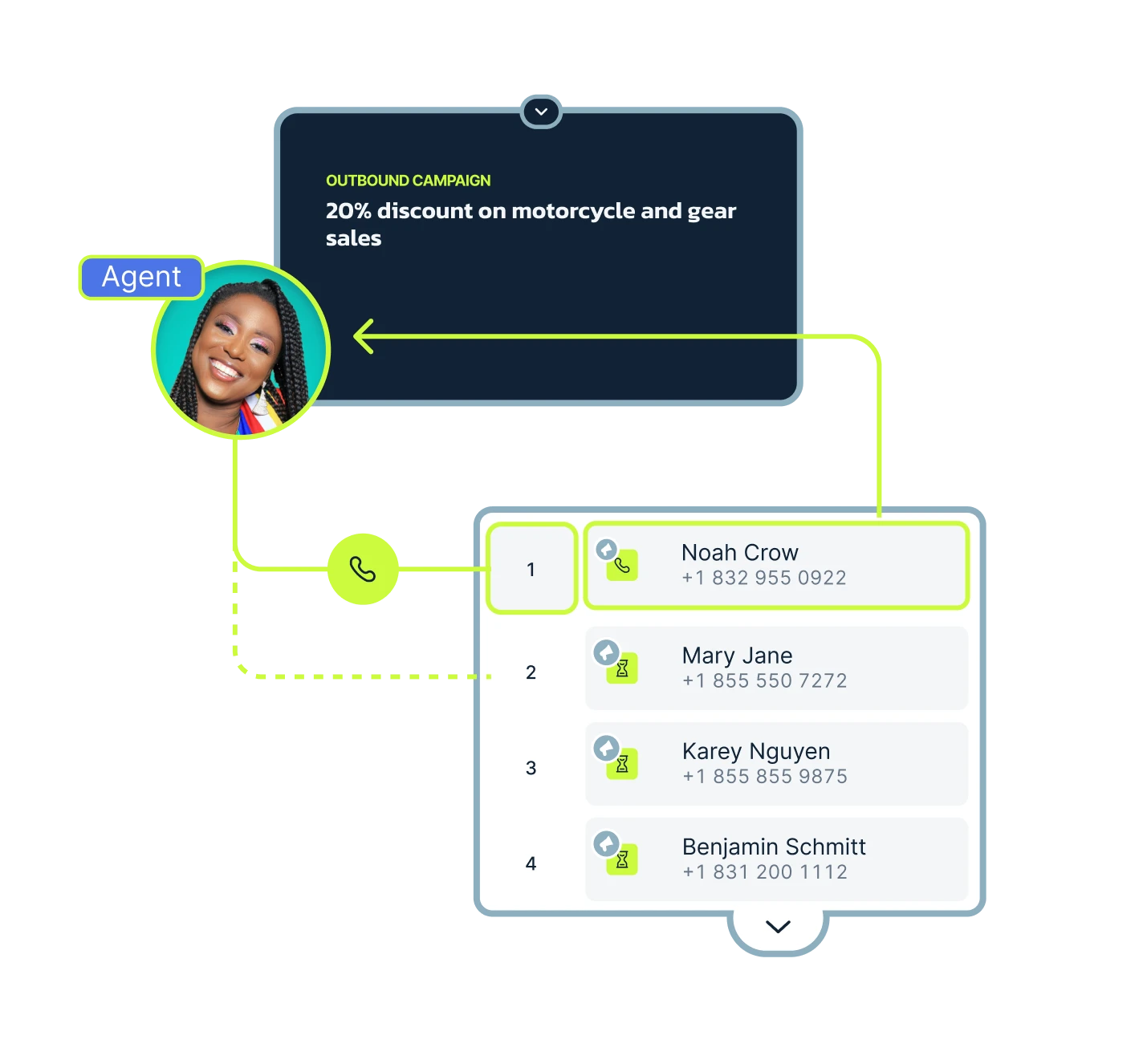
A sales dialer is software that automatically places outbound calls for sales teams, helping them reach more customers in less time.
For the sales team, manual dialing slows the process, wastes valuable selling hours, and limits daily conversation volume. A modern sales dialer tool removes these obstacles and creates a more consistent outbound calling workflow.
Key functions typically include:
- Automatically dialing numbers from a contact list
- Skipping busy signals, voicemails, or disconnected lines
- Logging calls and outcomes automatically
- Integrating with CRM systems to sync contact data
- Routing calls and tracking performance metrics
Unlike a regular phone system, a sales dialer is built specifically to increase productivity and outbound efficiency. This helps teams make more calls, have more conversations, and generate more revenue in the same workday.
How intelligent dialing for sales works on every call
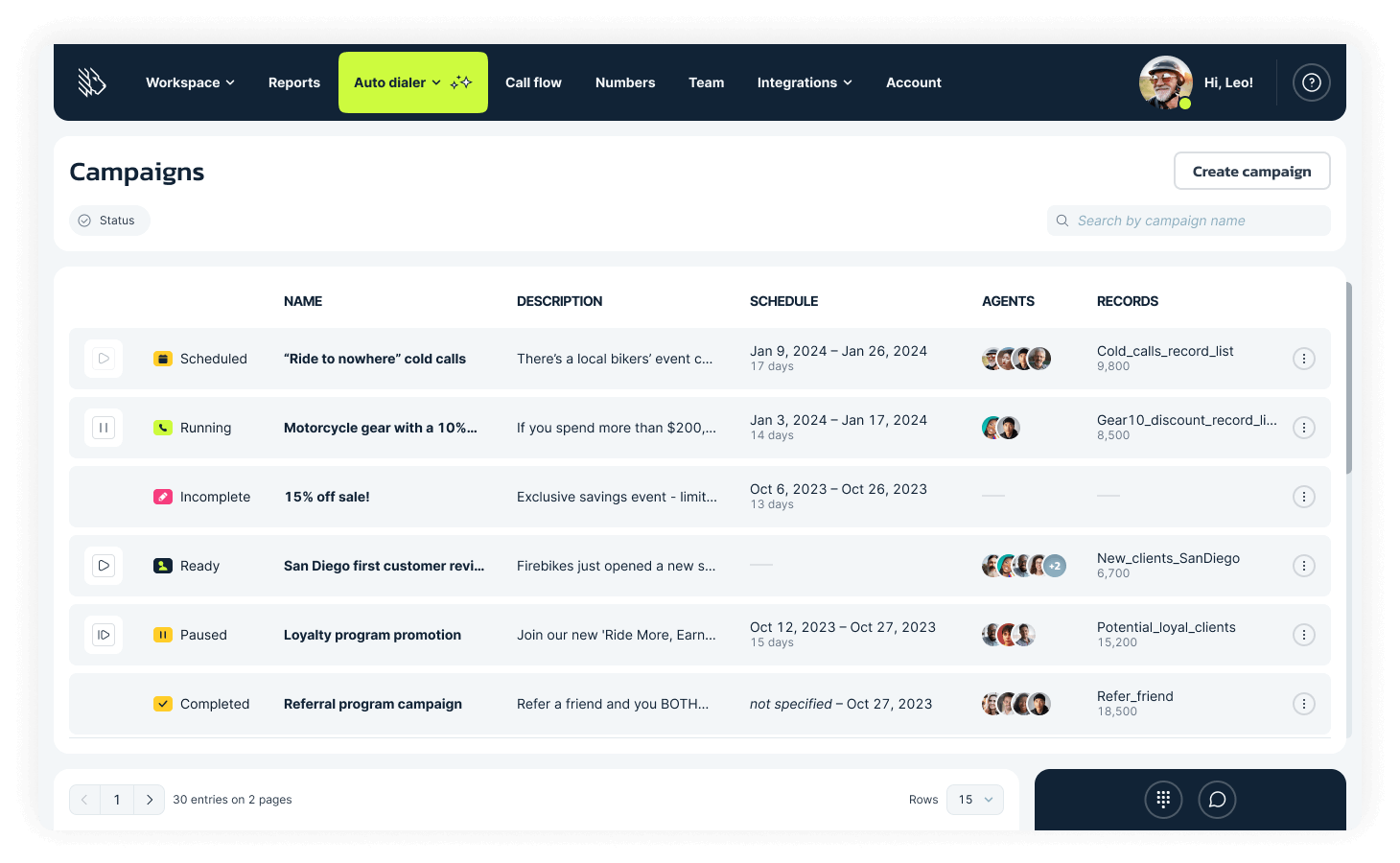
Modern dialer replaces slow, manual workflows with intelligent automation that handles dialing numbers, routing, and tracking from start to finish. Here’s how it works at MightyCall:
- Create a campaign and adjust general settings. Set up a new outbound campaign in the Auto Dialer. Set up your campaign description, time zones, and business hours, and select business numbers.
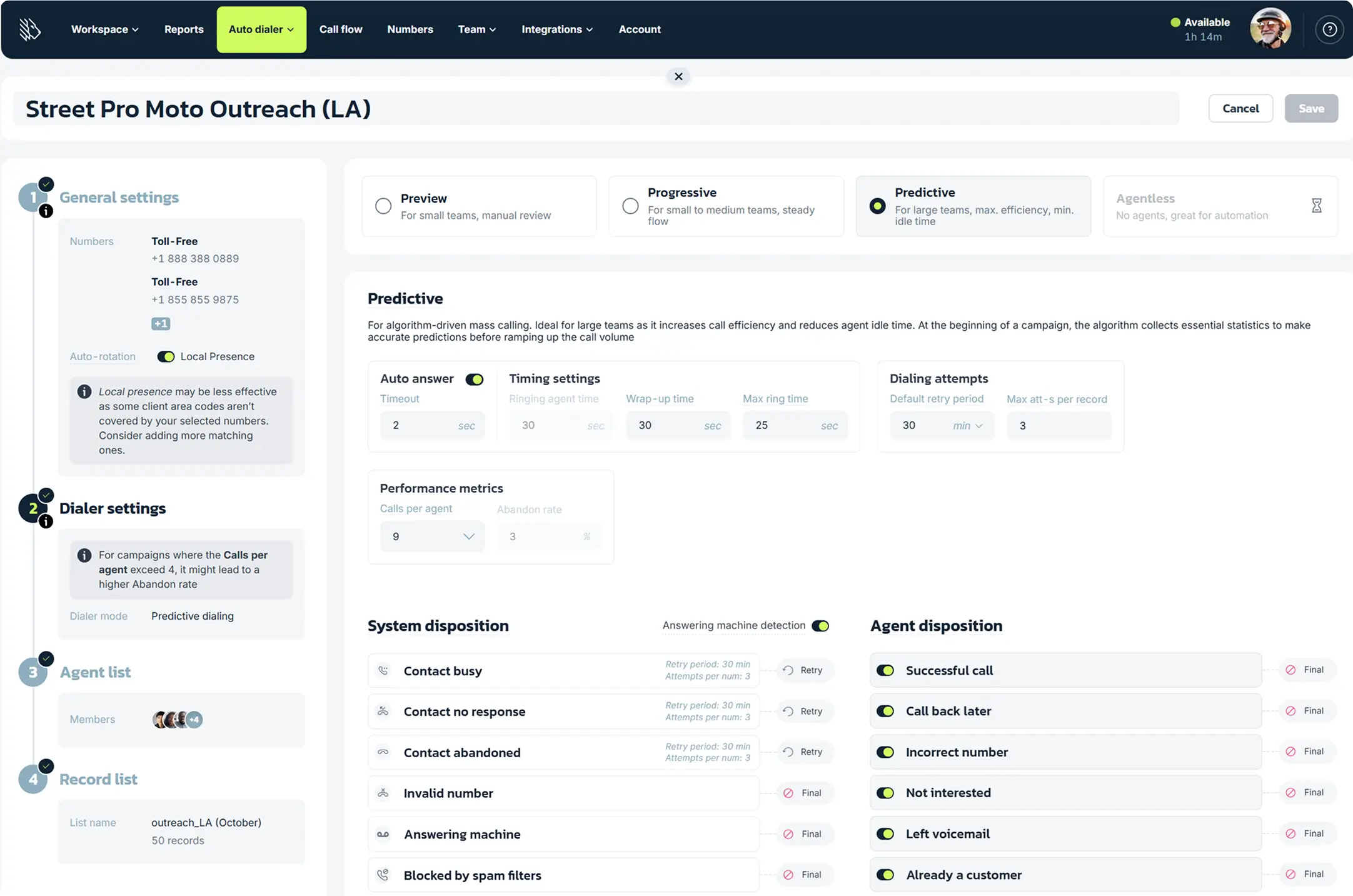
Result: Your team begins automating the outbound campaign. - Select a dialing mode. Teams choose predictive, progressive, or preview dialing based on campaign goals and team size.
Result: The dialer adapts pacing to maximize talk time and reduce idle gaps. - Adjust dialer settings. Regardless of the type of dialer mode you choose, you can adjust time settings, dialing attempts, and system and agent dispositions.
Result: Agents spend more time in live conversations instead of manually dialing numbers. - Capture call results. After each call, the agent adds call notes, tags results, and schedules the following calls.
Result: Data stays accurate and actionable without extra admin work.
Unlike legacy phone systems, a sales dialer is built to continuously optimize performance. This structured workflow increases connection rates, improves productivity, and drives more consistent outbound results.
Key features of sales dialer software
Key features typically include capabilities that directly improve call volume, consistency, and data accuracy.
- Smart dialing modes: Match pacing to campaign goals and increase live conversations.
- Auto dialing with personalization: Automate repetitive tasks without losing authenticity.
- Real-time monitoring and intelligence: Improve rep performance during and after every call.
- CRM integration: Keep lead management clean and fully synchronized.
- Analytics and dashboards: Track performance with clear, actionable metrics.
- Compliance controls: Protect your business with built-in governance tools.
The right dialer increases connection rates and improves revenue performance.
Smart dialing modes for every outbound sales motion
Different types of sales dialers are built for different workflows, and choosing the right mode directly impacts efficiency and call volume. Explore dialing modes to match your exact outbound strategy.
Preview dialers: The sales rep reviews contact details before the call.
- Typical use case: high-value or complex outbound sales.
- Key benefit: greater personalization and higher-quality conversations.
Progressive dialers (also called power dialers): Automatically dial the next number only when a rep is available.
- Typical use case: steady-paced outbound campaigns.
- Key benefit: consistent workflow without overwhelming reps.
Predictive dialers: Use algorithms to dial multiple numbers at once, connecting reps only when someone answers.
- Typical use case: high-volume outbound teams.
- Key benefit: maximizes talk time and minimizes idle gaps.
Auto dialing that feels personal on every call
Auto dialing often raises a concern: how do you automate speed without sacrificing a personal approach? Modern software resolves this by combining automation with smart customization tools.
- Voicemail drop: Leave a pre-recorded voicemail instantly when a call goes unanswered, saving time while keeping messaging consistent.
- Dynamic scripts: Adjust talking points in real time based on lead data.
- Local presence: Use business numbers with local area codes matching your contacts’ phone numbers to improve answer rates.
- AI AMD: AI-powered answering machine detection feature that automatically distinguishes humans from voicemail or bots on outbound calls.
For example, a rep calling a new lead can see CRM context, follow a dynamic script, and use voicemail drop if there’s no answer. The result is faster outreach that still feels human and relevant.
Real-time monitoring and call intelligence
Real-time monitoring allows supervisors to view, listen to, and analyze calls as they happen, improving performance immediately.
Key features for monitoring calls include:
- Call recording: Capture every conversation for review and coaching.
- Live call monitoring: Managers can listen in or assist during active calls.
- AI-generated transcripts: Automatically convert conversations into searchable text.
- Assist prompts: Suggest questions or flag competitor mentions in real time.
- Performance tracking: Identify trends in talk time and call results.
Deep CRM and sales software integrations
A modern sales dialer must connect seamlessly with your CRM to eliminate manual data entry and maintain data integrity. Core integration actions include:
- Sync contacts and lead lists automatically
- Auto-log calls and call recording links
- Sync call outcomes instantly
- Create subsequent tasks based on results
When a rep finishes a call, the dialer automatically logs the activity, updates the status, attaches notes, and schedules the next task in the CRM system. This keeps lead management clean, improves RevOps visibility, and ensures reporting reflects reality across the entire platform.
Reporting, analytics, and dashboards for every team
Reports transform activity into strategic decisions. Key metrics include:
- Calls made: Shows daily and weekly outreach volume.
- Connect rate: The percentage of dialing attempts that reach a live customer.
- Talk time: Reveals how much time reps spend in actual conversations.
- Conversion rate: Shows how many calls become opportunities or deals.
- Call outcomes: Breaks down results by category for deeper analysis.
Reps use call center dashboards to track personal performance. Managers compare team metrics to coach effectively. Leadership reviews conversion rates and efficiency trends to guide revenue strategy.
Enterprise-grade compliance and governance
Enterprise-grade compliance ensures the dialer complies with legal and security requirements while supporting outbound sales at scale. Core areas include:
- Call recording policies: Configure recording rules by region and based on consent requirements.
- DNC lists: Automatically exclude restricted numbers.
- Data retention controls: Manage how long recordings and logs are stored.
- Data protection regulations: Support global privacy standards and secure data handling.
Use cases: Best sales dialer software for B2B teams
A modern sales auto dialer platform helps teams dial smarter, increase call volume, and engage every lead more effectively. These use cases show how B2B teams apply sales dialers in practice.
SDR and BDR teams: High-velocity prospecting
Goal: Book meetings and quickly reach as many potential clients as possible.
Problem: SDRs and BDRs lose momentum due to manual dialing and voicemail delays, limiting daily call volume.
How the dialer is used:
- Use a predictive dialer to maximize live connections
- Automate sequential dialing to reduce idle time
- Drop pre-recorded voicemail messages instantly
- Trigger automatic callback rules for interested leads
Outcome: The sales team spends more time speaking with leads and less time managing tools. This helps SDRs have more live conversations per hour and consistently hit activity targets.
Account executives: Follow-up and deal acceleration
Context: Account executives make fewer but higher-value calls focused on moving deals forward.
Problem: Missed follow-ups and unclear next steps slow deal progression and reduce close rates.
How the dialer is used:
- Schedule callbacks directly after a conversation
- Set automated reminders for key milestones
- Run structured multi-step follow-up sequences
- Log call notes and outcomes instantly in the platform
For example, after a product demo, an account executive can schedule a next-day dial and send a voicemail if needed.
Outcome: This keeps deals moving forward predictably and ensures that significant opportunities don’t stall due to neglected follow-ups.
RevOps and sales leaders: Data-driven dialing strategy
Focus: Optimization, forecasting, and performance consistency across sales reps.
Problem: Without centralized insights, dialing strategy becomes inconsistent and difficult to scale.
How the dialer is used:
- Test different sales dialers and dialing modes for performance
- Compare scripts and call results across teams
- Analyze call volume trends and conversion metrics
- Allocate headcount based on real activity data
RevOps uses this data to refine dialing strategy, improve efficiency, and standardize best practices.
Outcome: Sales leaders gain visibility into performance drivers and can systematically improve results across the entire organization.
Key benefits of sales dialing: From more calls to more revenue
Every successful sales team knows that the right moment wins deals. Sales dialing builds that momentum. Let’s check how.
Increase live connect rates and talk time
Live connect rate means the percentage of dialing numbers that result in a real conversation with a customer. Modern sales dialer software improves this by optimizing when and how each dial occurs.
Mechanisms that increase connections include:
- Local presence caller ID: Displays a familiar area code to improve pickup rates.
- Intelligent pacing: Adjusts dialing speed to reduce idle time between conversations.
- Automatic retries: Re-attempts unanswered numbers at optimal times.
Boost rep productivity and cut admin work
Rep productivity means maximizing time spent in live conversations rather than on administrative tasks. Sales dialers automate repetitive steps so sales reps can focus on selling.
Before (manual workflow):
- Manually dial each number
- Log call notes by hand
- Create subsequent tasks separately
After (with a dialer tool):
- Auto dial and connect instantly
- Auto-log calls and sync analytics
- Automatically schedule calls to reconnect with clients
Turn every B2B sales call into a coaching opportunity
A coaching opportunity means every call becomes data for improving performance. Modern sales dialers capture and analyze conversations to improve the skills of both new and experienced reps.
Key coaching mechanics include:
- Call recording for structured review sessions
- AI-generated transcripts for insights
- Curated call playlists for onboarding and training
- Targeted feedback tied to real call results
Prove ROI with pipeline and revenue impact
To prove ROI, teams typically compare performance before and after implementing sales dialer software and track revenue-linked metrics separately from operational ones.
Key ROI levers include:
- More meetings booked from higher connect rates
- Higher conversion rates from improved sales engagement
- Shorter sales cycles from faster follow-up
- More closed-won deals driven by a consistent dialing strategy
Teams can compare revenue per rep before and after using the dialer to clearly measure impact.
How much does dialer for sales cost?
Sales dialer software is typically priced per user (or per seat) per month, with costs increasing based on feature tiers, dialing modes, and advanced capabilities for larger sales operations. Entry plans focus on core calling features, while higher tiers include automation, analytics, and compliance controls.
Pricing usually depends on the number of users, required dialing modes, CRM integrations, reporting depth, and governance needs. Teams should evaluate both current volume and future growth before selecting a tier.
| Tier | Best for | Typical features |
|---|---|---|
| Growth | Small sales teams | Basic dialing modes, CRM sync, and call logging |
| Scale | Growing outbound teams | Predictive dialing modes, analytics, automation |
| Enterprise | Large sales operations | Advanced reporting, compliance controls, and custom integrations |
Implementation: launch your sales dialer software in weeks, not months
This 3-step implementation plan shows how teams can quickly and efficiently use sales dialer platforms. With the right setup, most teams complete basic rollout in 2-4 weeks, depending on complexity, types of dialers, and sales operations requirements.
Step 1: Connect your CRM
The goal of this step is to ensure your tool syncs with your CRM system. Key actions are the following:
- Connect your CRM system to the dialer
- Import phone numbers
- Test call routing and basic analytics tracking
Step 2: Design your first outbound dialing campaigns
This step focuses on building a clear, structured campaign before reps begin to dial. Core decisions include:
- Selecting the target list
- Choosing the type of dialer (preview, progressive, predictive)
- Setting time settings, dialing attempts, system, and agent disposition
- Finalizing call scripts
- Setting call schedules
Step 3: Train, coach, and optimize with real data
After launch, teams focus on training and optimization using real performance data. The optimization cycle is the following:
- Train reps on scripts and workflows
- Monitor metrics like call volume, connect rate, talk time, and conversion rate
- Adjust scripts or dialing modes
- Retrain and repeat
Best practices for getting the most from your sales dialer
These practical tips help teams get consistent results from a sales dialer. Strong sales dialer best practices create reliability, operational maturity, and predictable performance across auto dialers, regardless of the type of dialer you use.
1. Keep data clean and leads prioritized
High-performing teams treat lead management as a core discipline, not a one-time setup. Teams should:
- Deduplicate leads regularly
- Validate and update phone numbers
- Apply lead scoring to prioritize high-intent leads
- Remove unqualified or inactive contacts
Clean data ensures reps spend time dialing the right people. This improves connect rates and increases rep efficiency.
2. Pair auto dialing with personalized conversations
Automation should support, not replace, personalization. The goal is to use auto dialers for speed while keeping conversations relevant and human. Practical techniques include:
- Crafting personalized opening lines
- Referencing prior interactions or downloads
- Tailoring offers to industry or role
For example: “Hi Sarah, I noticed your team downloaded our logistics guide last week. I’m calling to see if reducing delivery times is a current priority.” This balance maintains efficiency while improving customer support and sales engagement outcomes.
3. Measure what matters and iterate quickly
Consistent improvement depends on tracking the right analytics and acting on them. Core KPIs to monitor:
- Connect rate: Percentage of dials that reach a live person.
- Call volume: Total outbound calls placed per rep.
- Talk time: Time spent in active conversations.
- Conversion rate: Percentage of calls that create opportunities.
Teams should run weekly performance reviews and a monthly deep dive.
4. Make compliance and trust non-negotiable
Sustainable dialing requires strict operational discipline and respect for regulations. Best practices include:
- Honoring opt-outs immediately
- Respecting local calling time windows
- Maintaining accurate do-not-contact lists
- Storing recordings securely under data protection rules
Trust supports compliance and long-term customer relationships. Strong compliance habits protect revenue, brand reputation, and the integrity of your sales process.
Ready to supercharge outbound sales with intelligent dialing?
Now, you need to answer two very important questions: What kind of dialer features are you looking for? Do you want a power dialer or perhaps the predictive one? What do you want from your dialer?
- Increase live connect rates and talk time?
- Automate workflows without losing personalization?
- Turn call data into measurable revenue impact?
The truth is, you don’t really have to choose which one you need. The best one combines advanced analytics and seamless integrations into a single, powerful, cloud-based sales dialer solution. Book a sales dialer demo today and see how intelligent dialing can accelerate conversations, improve consistency, and drive predictable outbound growth.