
Why automatic call distribution matters for modern call centers
Without automatic call distribution, call centers face constant disorder during busy periods, with call center agents overwhelmed by misrouted calls and customers having to deal with long waits. But with ACD-equipped call center software, operations are smooth, and callers get connected to the right person immediately, easing team stress.
Reduce wait times
Wait times can already be frustrating enough for customers. But being sent to the wrong person initially by a clumsy call handling extends those wait times significantly.
ACD, however, takes any chance for human error out of the call chain. Your callers will automatically be sent to the most available agent, without issue, quickening resolution rates. And queue transparency allows your callers to know roughly how long they’ll be waiting.
Improve voice experiences
Voice experience is the overall call experience for the customer; think words like easy, respectful, and effective from start to finish. But poor routing will worsen their voice experience, due to repeatedly having to repeat their story with each incorrect transfers, sparking frustration and eroding trust in the process.
With an automated call distribution system, calls go straight to the right agent, eliminating those pains. Before, a tech support call might ricochet at random; after, it’s direct. This shows empathy, as customers avoid retelling issues, feeling supported and valued instead.
Scale with confidence
Seasonal spikes or sudden events like product launches can swamp teams, but ACD can make scaling manageable by adjusting distribution rules automatically to handle the load.
It provides predictable infrastructure: calls spread evenly, overflows managed, and service stays consistent. For example, during holiday rushes, it prevents crashes, letting you expand operations without the constant need for manual tweaks or the added stress.
What is automatic call distribution (ACD)?
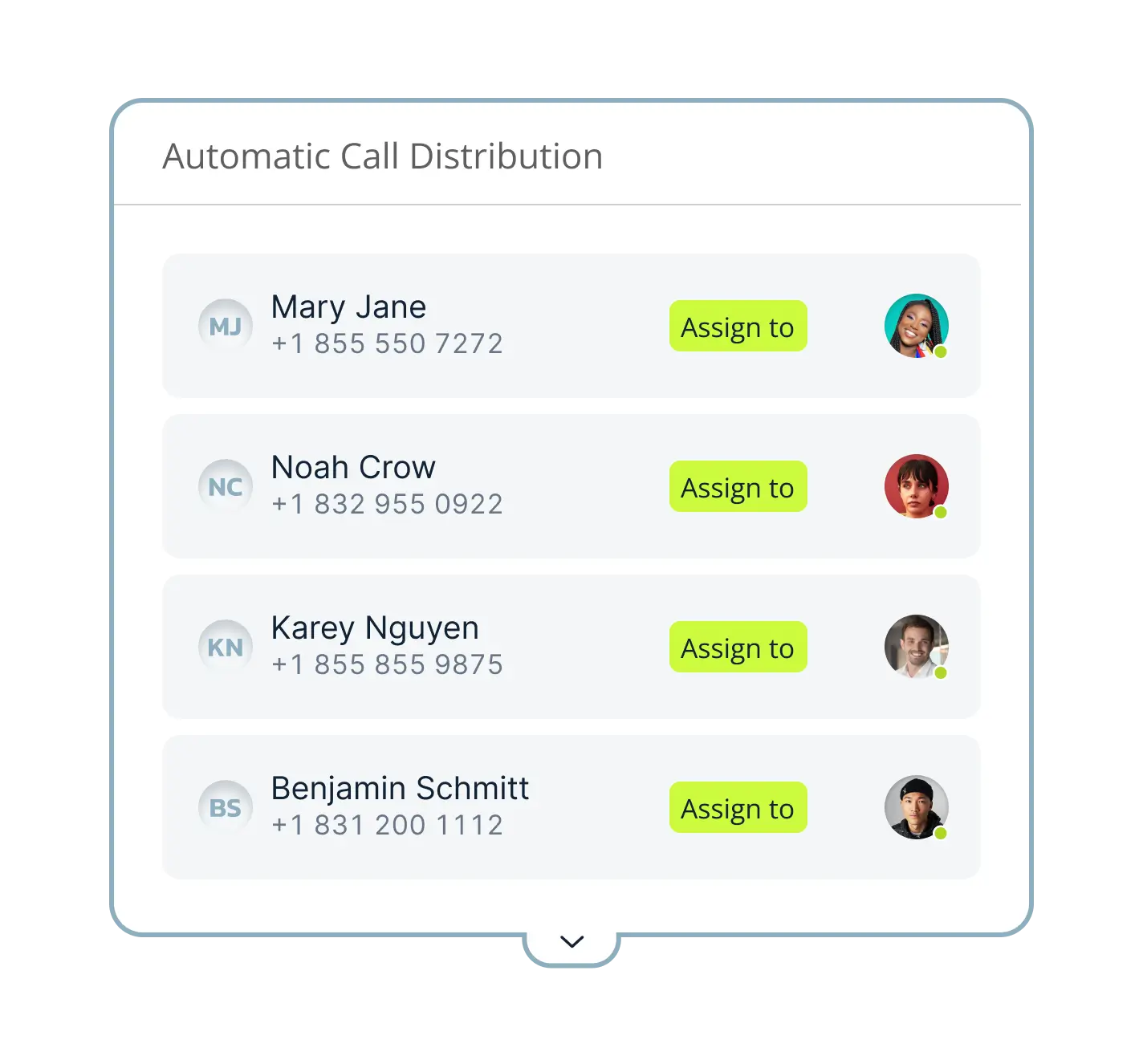
Automatic call distribution (ACD) is a telephony system that routes incoming calls to the most suitable agent or department using predefined criteria and real-time info like skills or availability. It exists to streamline high-volume call management, reducing delays and mismatches.
ACD integrates into larger telephony and contact center ecosystems as the core of how routing will work. It complements your IVR system for screening and CRM for data, providing value through efficient allocation that cuts costs and boosts satisfaction, even in periods of high call volumes.
In sum, it can dramatically boost your call center performance.
How an automatic call distribution software works
Automatic call distribution software operates through a quickly-moving workflow: it identifies the caller, evaluates factors, and routes accordingly. This all happens in seconds, so that things keep moving.
1. Identify the caller across telephone and voice channels
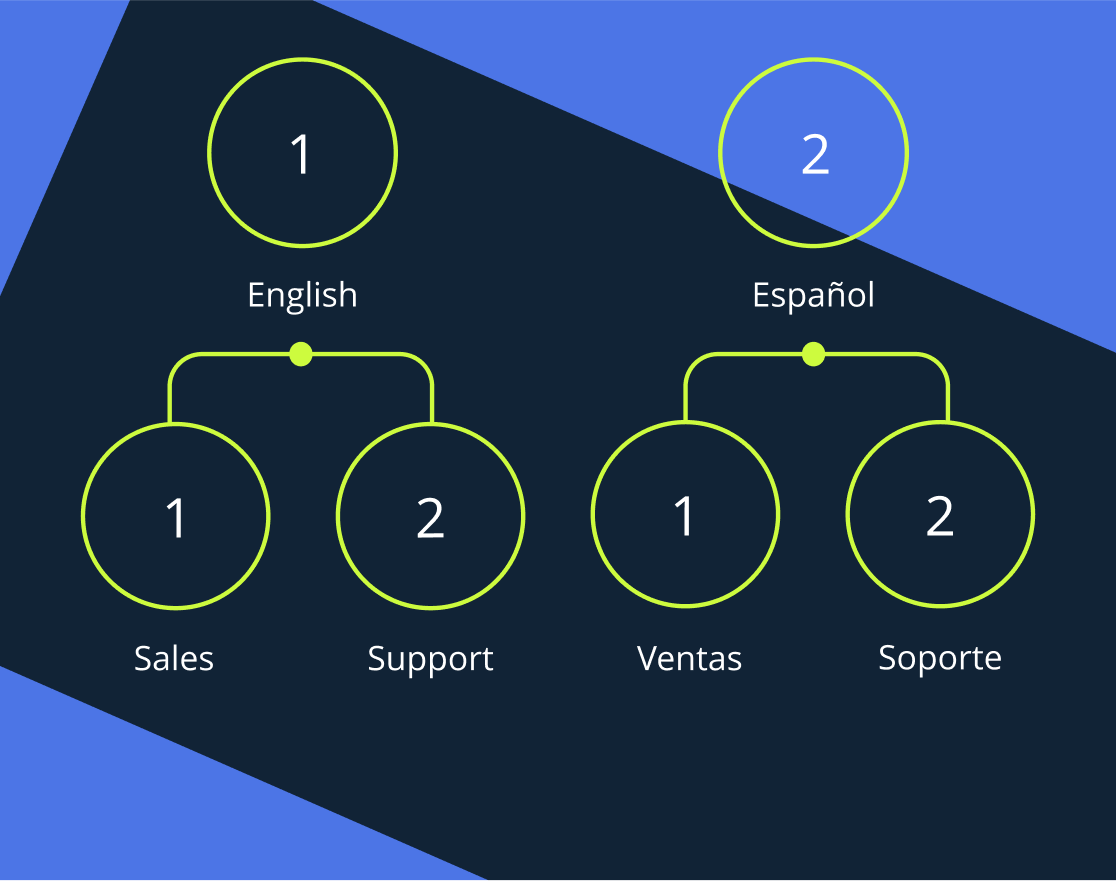
To start, automated call distribution software collects data: caller ID for basic details, IVR choices for intent, language settings for preference, and account status for context like open tickets or VIP level (its ability to collect all of these will depend upon your system and what settings you have selected, of course).
This pre-hello context prepares the call. For example, if it’s a loyal customer calling about a recent purchase, the system notes it, enabling a tailored approach from the outset.
2. Evaluate intent, priority, and agent availability
The system then analyzes intent from gathered info, sets priority (for example, urgent for complaints), and scans for agent availability, including skills, schedules, and business hours.
High-priority calls get boosted, while specialized ones match experts. This quick evaluation ensures fair, effective distribution without overlooking key details.
3. Route the call using automated distribution rules
Rules apply to connect: to the best agent, a queue with position updates, or fallback mechanisms such as callbacks or voicemail when agents are unavailable.
As a result, connections are reliable, transfers rare, and customers remain engaged, boosting satisfaction during peaks.
ACD vs IVR vs phone menus
Lots of people oftentimes get these confused: they both distribute calls, right?
Well, sort of. ACD technology handles agent routing, using dynamic factors to distribute calls. IVR offers interactive automatic responses for self-service, with phone menus providing basic key options for customer navigation.
They complement each other: menus lead to IVR for details, then ACD for live help. If you have IVR already, ACD helps by adding smart agent matching, reducing misroutes and waits.
Different types of call distribution used by the MightyCall phone system
Cloud-based ACD systems use multiple call distribution methods, and MightyCall offers flexibility to choose based on your setup and how you want the call distribution process to play out.
Fixed-order
Also known as linear, fixed-order routes calls in a preset list order, always starting from the first agent.
This is best for small, hierarchical teams where leaders handle escalations first and these types of automated calls can be useful. The downside, however, is that it can burden top agents if they’re often busy, leading to longer waits for others.
Round-robin
Round-robin (sometimes also called circular or rotary) rotates calls equally among agents in a loop. It’s ideal for even distribution in sales groups, ensuring fair chances at making a sale.
A potential tradeoff is that there can be slight delays if the next agent isn’t immediately free, but this is a relatively minor issue.
Uniform
Uniform distributes based on current agent load, keeping workloads balanced overall.
This is best suited for maintaining consistent volumes where efficiency matters most. Of course, a tradeoff is that it may ignore specific skills in favor of evenness, potentially mismatching complex calls.
Priority-based
Priority-based sorts calls by importance, such as VIP status or issue severity, allowing these individuals to skip queues.
This is perfect for support centers which have some sort of tiered client list. That said, it can result in standard calls taking a longer time to resolve, so make sure to monitor for fairness and adjust thresholds as needed.
Simultaneous
Simultaneous call distribution, as you might have guessed, rings all available agents at once, with the quickest responder taking the call.
This is great for time-sensitive call centers, where getting someone to pick up the phone is critical. But it can throw off rhythms, and create internal competition or ring overloads during highs.
Core functions of an automatic call distributor software
ACD is a complete system, with each feature built toward helping you achieve specific outcomes. The core functions of this software include these key elements for full control and scalability.
Intelligent call routing and distribution logic
Intelligent call routing and distribution logic is the heart of this software, where predefined rules combined with real-time factors like skills and availability can help you manage your inbound calls.
This leads to fewer errors and faster resolutions, giving teams the control to handle volumes without chaos.
Call queues, callbacks, and voicemail handling
- Phone call queues organize waiting callers with status updates to keep them informed
- Callbacks allow scheduling returns to avoid holds
- Voicemail securely records messages for later follow-up.
Each feature minimizes frustration, lowers abandonment, and maintains customer engagement.
Caller ID, CRM context, and contact data sync
- Caller ID pulls basic info for identification
- CRM adds history and details for relevance
- Contact data sync ensures everything is up-to-date across systems.
Together, they enable personalized service, shortening calls by providing agents with immediate insights and reducing repetition.
Call recording, monitoring, and agent coaching
- Call recording captures full interactions for review
- Phone call monitoring lets supervisors listen live without intrusion
- Agent coaching delivers real-time guidance during calls.
These support quality assurance, compliance checks, and ongoing training to improve performance and ensure standards.
Real-time analytics and reporting for call center leaders
Real-time analytics track metrics like ASA, FCR, and call volume in live dashboards. Whereas reporting generates detailed insights for trends and performance.
Leaders use this visibility to make informed decisions, adjust strategies, and optimize operations promptly, driving better results.
Measurable benefits of an advanced ACD system
An advanced call distribution system can translates features into quantifiable gains for your call center. Features aren’t randomly added to seem impressive: they’re there for a purpose.
Improve first-call resolution and customer satisfaction
First-call resolution is the rate at which issues are solved on the initial call. Cloud ACD improves it by utilizing skills-based routing, which sends the call to the right agent with the necessary skills, directly leading to higher CSAT scores, reduced callbacks, and stronger customer loyalty through efficient, one-and-done service.
Balance agent workload and optimize contact center efficiency
There are a variety of ways you can use ACD to balance workload and help with inbound call management. Make sure that you’re evenly spreading calls by checking your call statistics to ensure that your agents are getting fair amounts of calls each.
ACD can also help reduce idle time and overload, resulting in smoother operations, lower burnout, and higher productivity across the team.
Lower cost per call with automated routing
Cost per call is the total expense per interaction, including time and labor. ACD software can lower it by automating routes to cut transfers, holds, and unnecessary steps, saving money on operations and allowing resources for growth.
Improve supervisor visibility with real-time reporting
Supervisors can benefit from live dashboards showing key data to improve visibility. This enables quick decisions like reassigning agents during spikes, identifying training issues, or adjusting rules for better flow and performance.
How to choose the best automatic call distribution system
When evaluating ACD systems, consider these factors to ensure it fits your needs.
- Integration capabilities: Does it link smoothly with your CRM, IVR, and other tools for seamless data flow?
- Customization options: Can you set rules easily for your unique workflows, like skills or priorities?
- Scalability: Will it grow with your call volume without performance drops or extra costs?
- Reporting features: What metrics does it track in real time, and how user-friendly are the dashboards?
- Setup and support: Is implementation quick, and is customer service reliable? Check out reviews for real experiences.
Implementing automatic call distribution in your contact center
Follow these steps to implement ACD efficiently, achieving fast time-to-value with minimal disruption.
Step 1: Design call flows and routing rules
Begin by imagining typical caller journeys (you can even use a pen and paper to physically map them out) and creating rules based on common needs and scenarios. You can ask your team for their thoughts.
Outcome: A clear blueprint that aligns with your call center operations, ready for smooth configuration.
Step 2: Configure skills, schedules, and telephone routing logic
Assign agent skills, enter work schedules, and define the logic for how calls route, such as priority or availability.
Outcome: System customized to your team, ensuring calls match the right people at the right times.
Step 3: Integrate voice, CRM, and contact center software
Make sure to integrate your voice system, CRM, and other software to enable data sharing and context for calls.
Outcome: A cohesive setup where agents have full info, enhancing every interaction.
Step 4: Test, monitor, and optimize call distribution performance
Run test calls, track initial metrics, and tweak rules based on results for better performance.
Outcome: Validated system with continuous improvements, delivering peak efficiency.
Security, reliability, and governance in ACD systems
Best practices for ACD include the use of strong security through data encryption and access controls, in order to protect sensitive call info. System reliability comes from built-in redundancies to keep the system running during failures. Whereas governance involves structured processes for managing changes to rules and settings.
Uptime, failover, and call continuity
For uptime, aim for high availability with automatic failover to backup systems, ensuring call continuity so active conversations aren’t dropped. This can help maintain operational flow and customer trust even in unexpected situations.
Role-based access and routing rule governance
Role-based access will who can edit configurations (adding to your securitization), while governance adds approval workflows and audit trails for changes, preventing unauthorized tweaks and ensuring compliance.
Upgrade your call center with an automatic call distributor
Without ACD, your call center will experience inefficiency and frustration. With it, calls are routed to your agents smartly, for better outcomes. It reduces waits, balances loads, and improves experiences, leading to cost savings and growth.
MightyCall’s automatic call distribution system integrates easily for these benefits. Take the next step, and explore how it can elevate your operations today!