

TL;DR
- Best virtual call centers for small teams: MightyCall. Small teams usually get the most value from simple, fast-to-launch programs with solid voice, SMS, and CRM integrations.
- Best options for mid-sized teams: MightyCall and Aircall. Larger or more complex teams need stronger dialing, workforce management, reporting, and automation tools.
- Best call center phone systems for global teams: RingCentral and Nextiva. Global teams should prioritize the availability of numbers, multilingual support, AI integrations, and compliance alongside implementation quality.
For most teams, the best virtual call center software depends less on the “best” brand and more on team size, support volume, and workflow complexity. The strongest VoIP call centers stand out through omnichannel support, AI-powered summaries and QA, CRM integrations, and analytics that help remote teams work faster and with more consistency.
Best virtual call center solutions at a glance
We put together a table of platforms based on price, dialer availability, live reporting, and AI answering-machine detection. This way, you can narrow options fast.
| Provider | Starting price (monthly) | Unlimited calling in the USA/Canada | Free setup | Best for | G2 rating |
|---|---|---|---|---|---|
| MightyCall | $25/user | Yes | Yes | Small businesses and small call center teams | 4.4/5 |
| Nextiva | $23/user | Yes | Yes | Businesses that want unified communications and customer engagement tools | 4.5/5 |
| Aircall | $40/license | Yes | No | Sales and support teams that need strong integrations | 4.4/5 |
| Five9 | $119/seat | No (voice not included in base digital plan) | No (not publicly listed) | Phone-heavy contact centers and outbound teams | 4.1/5 |
| Dialpad | $27/user | Yes | Yes | SMBs that want AI-powered business phone features | 4.4/5 |
| CloudTalk | $27/user | Yes | Yes | International and outbound calling teams | 4.4/5 |
| Zendesk | $25/agent | No (usage-based calling) | No (not publicly listed) | Support teams already using Zendesk | 4.6/5 |
| Genesys | $75/user | Not clearly advertised | No (not publicly listed) | Enterprise contact centers with advanced routing/AI | 4.4/5 |
| RingCentral | $30/user | Yes | Yes (or paid implementation) | Startups & SMBs needing full phone systems | 4.1/5 |
| JustCall | $39/user | On select plans | Yes | Sales & support teams | 4.3/5 |
| ReadyMode | $119/license | No (depends on carrier) | No | Outbound call centers & sales teams | 4.6/5 |
| Talkroute | $19/user | Yes | Yes | Small teams needing simple virtual phone systems | 4.7/5 |
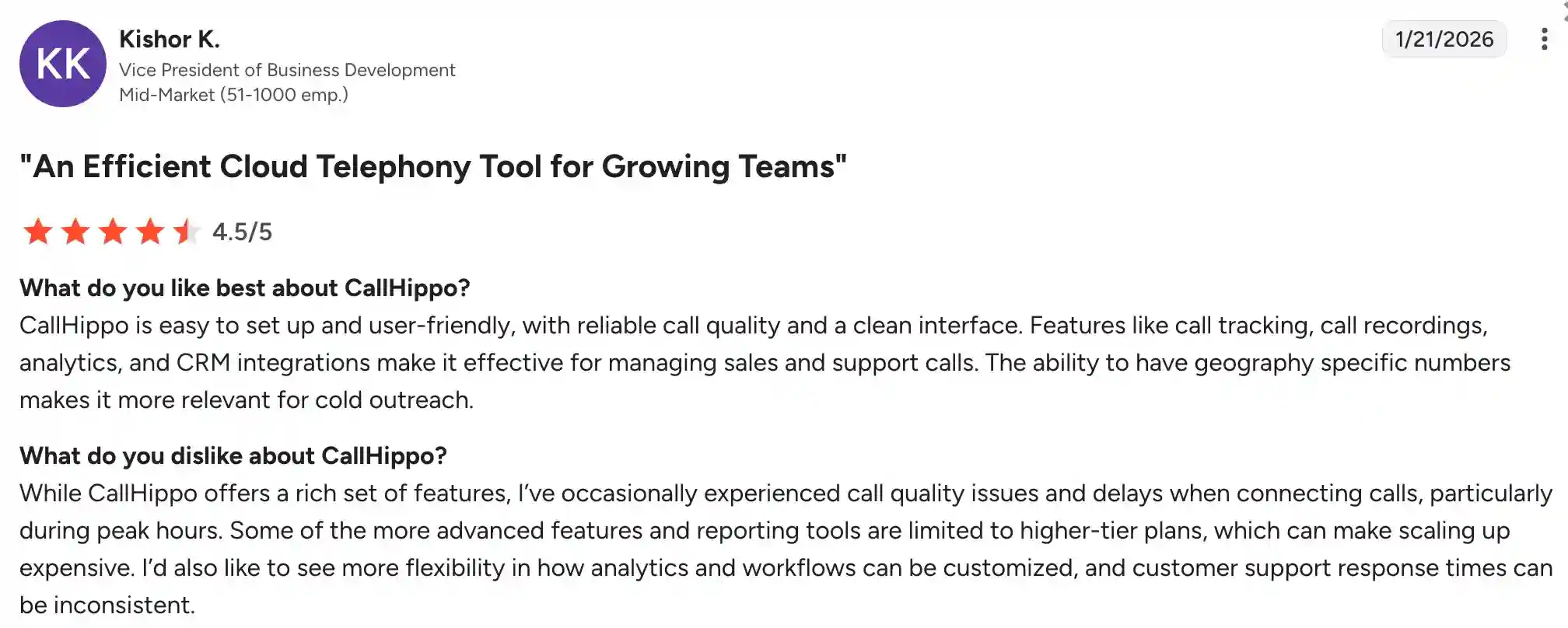
| CallHippo | $25/user | Yes | Yes | SMBs & sales teams | 4.5/5 |
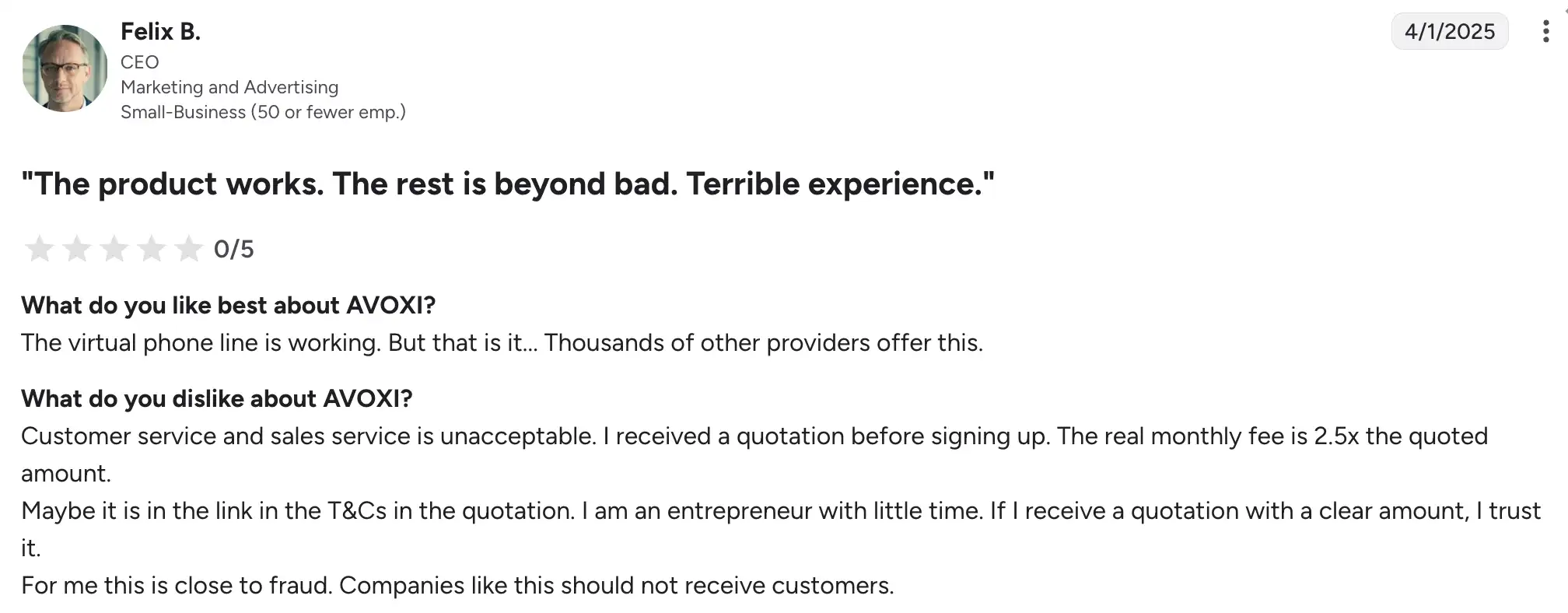
| AVOXI | $14.99/user | No (usage-based) | Yes | International calling & global teams | 4.4/5 |
| VICIDial | Free/self-hosted | Depends on SIP/carrier | No (self-setup required) | Technical teams needing open-source dialing | 4.1/5 |
How we evaluated these service providers
We evaluated these best virtual call center companies based on what truly matters in remote environments, not just brand recognition or market presence. Instead of treating them like generic business phone systems, we reviewed them through the lens of customer support leaders and SaaS buyers who need flexible cloud features, strong operational visibility, and reliable performance across distributed teams.
We also looked beyond headline features to evaluate how well each platform supports day-to-day management, long-term value, and growth for remote or hybrid service operations.
- Core voice and contact center capabilities, including routing, IVR, call monitoring, and omnichannel support.
- Ease of setup, admin simplicity, and usability for remote and hybrid teams.
- CRM and help desk integrations that support connected workflows.
- Analytics, quality assurance, and AI automation tools.
- Pricing transparency, overall value, and likely extra costs.
- Security, compliance readiness, and scalability for growing teams.
The 15 best virtual call center software tools
This list is organized by best fit, not by raw score, because the right platform depends on your team size, support model, channel mix, and existing tech stack. Some solutions are lightweight all-in-one options for small teams, while others are specialist outbound platforms or larger contact center systems built for scale, automation, and global operations.
1. MightyCall — best virtual call center software for SMBs
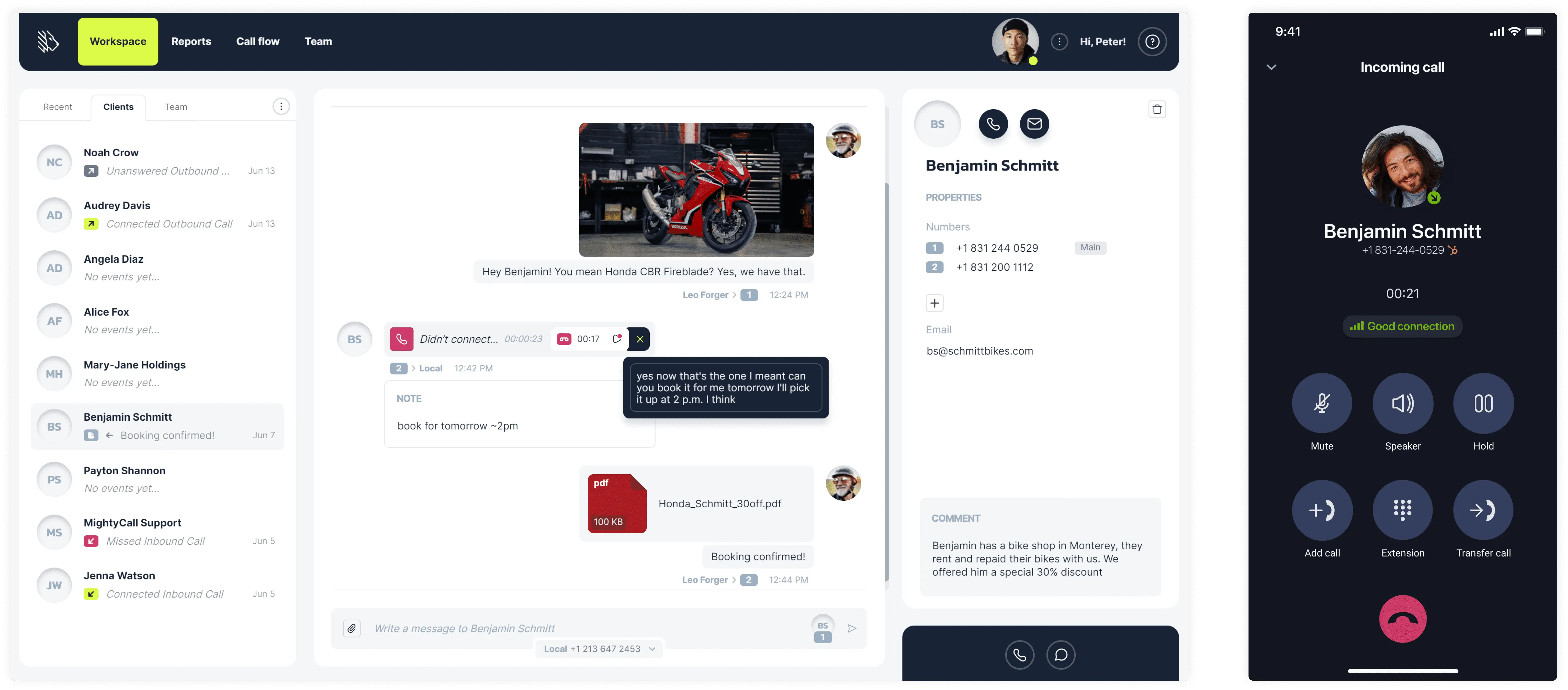
MightyCall is a cloud call center platform designed primarily for small and mid-sized businesses that need support functionality without the complexity of enterprise software. The platform focuses on making call handling easier to manage through a straightforward setup and a more accessible feature set. That makes it a strong fit for startups, support teams, and growing service businesses that want remote-friendly voice operations without the extra overhead of a larger virtual contact center software.
Key features:
- Intelligent call routing
- Call tagging
- Call forwarding
- Multi-level IVR
- Call queues
- Call recording
- Live call monitoring
- Auto dialer modes: predictive, progressive, preview
- Number reputation management
- AI AMD
- Voicemail drop
- Local presence
Pricing
- Core: $25
- Pro: $45
- Power: $65
- Enterprise: $75
MightyCall also offers a 7-day free trial.
Integrations
All major CRMs
G2 rating
On G2, MightyCall has a 4.4/5 rating. As a great cloud-based call center software platform, it is often praised for its ease of use, affordability, and responsive support, while recurring complaints include mobile app bugs.


MightyCall solved the problem by enabling bulk calling and SMS, because we got to make a lot cold calls and SMS. Then, it also helps with auto recording call feature, that as a supervisor I can listen to, by just going in the report section. Also, there are unlimited minutes for USA and Canada, please addition of new phone numbers that help a lot.
schedule your personalized demo with our amazing team

2. Nextiva — best virtual call center platform for growing companies
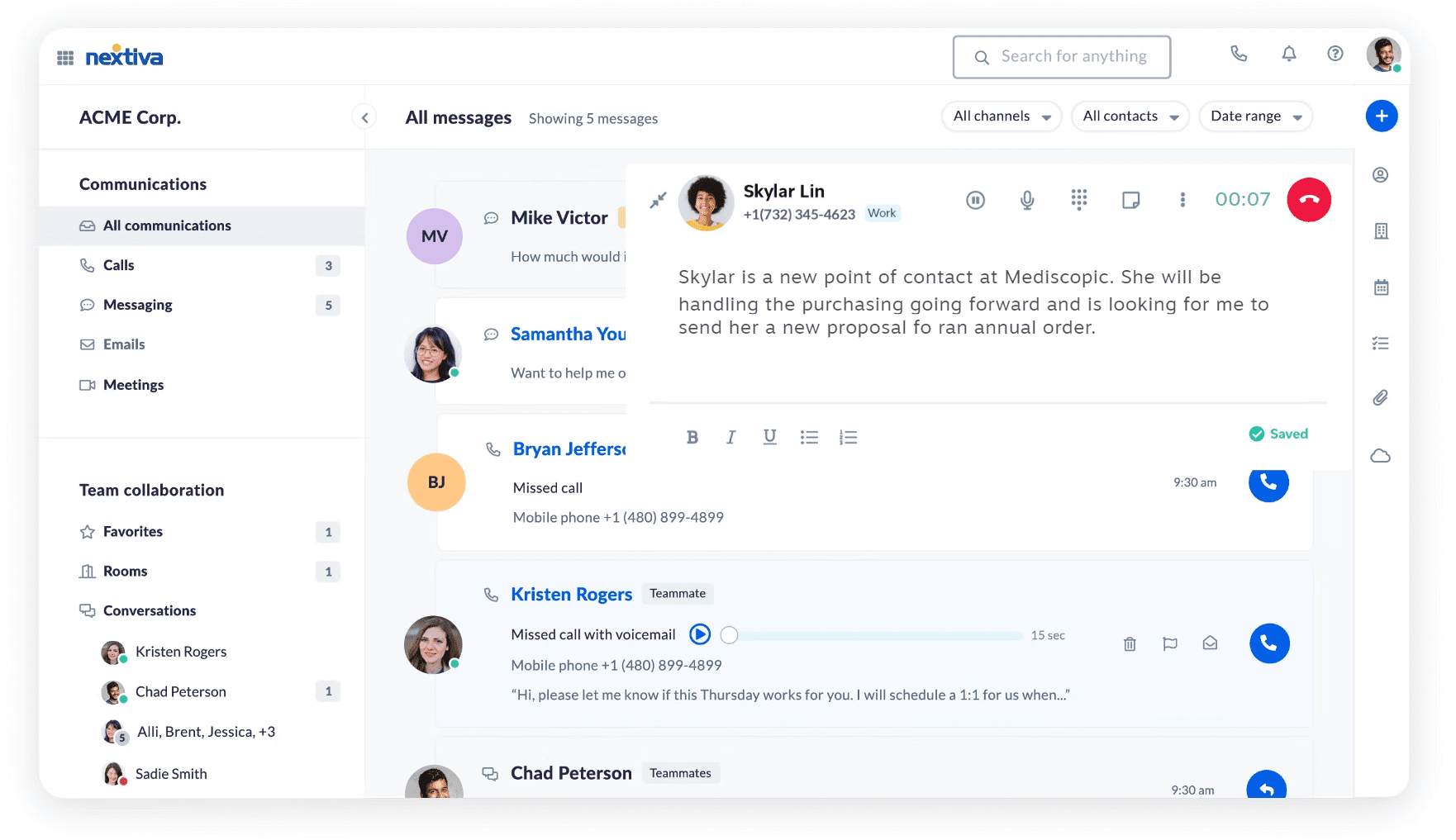
Nextiva is a virtual contact center built for growing companies that want calls, digital channels, analytics, and customer context in one place. The platform is a good fit for SMBs expanding into more complex support needs and mid-sized teams that want to manage calling, messaging, service workflows, and reporting without juggling multiple tools.
Key features
- ACD
- IVR
- Skills-based routing
- Call monitoring
- Real-time analytics
Pricing
- Core: $23
- Engage: $50
- Scale: $75
The platform offers a free trial; however, the duration is inconclusive.
Integrations
All major CRMs.
G2 rating
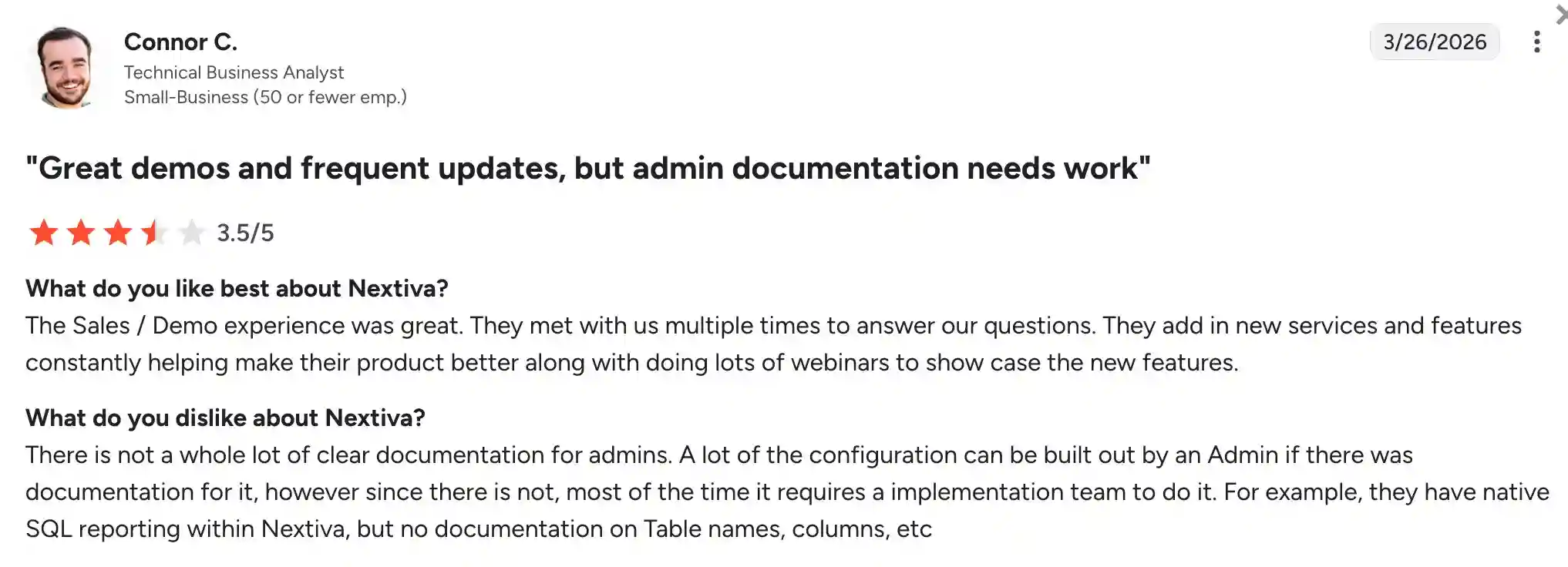
Nextiva holds a 4.5/5 rating on G2. Users frequently praise its call quality, broad functionality, and customer support, while common complaints include billing issues, setup complexity, and occasional admin or texting limitations.
3. Aircall — best cloud phone system for remote European support teams
Aircall is a virtual call center provider designed for modern sales and support teams that need something easy to roll out and manage remotely. It is especially well-suited to remote European support teams working across multiple countries, languages, or time zones. It works well for businesses that already use a CRM or help desk and want to add calling without much complexity, making it a practical choice for distributed teams that value fast onboarding, flexible collaboration, and strong voice support.
Key features
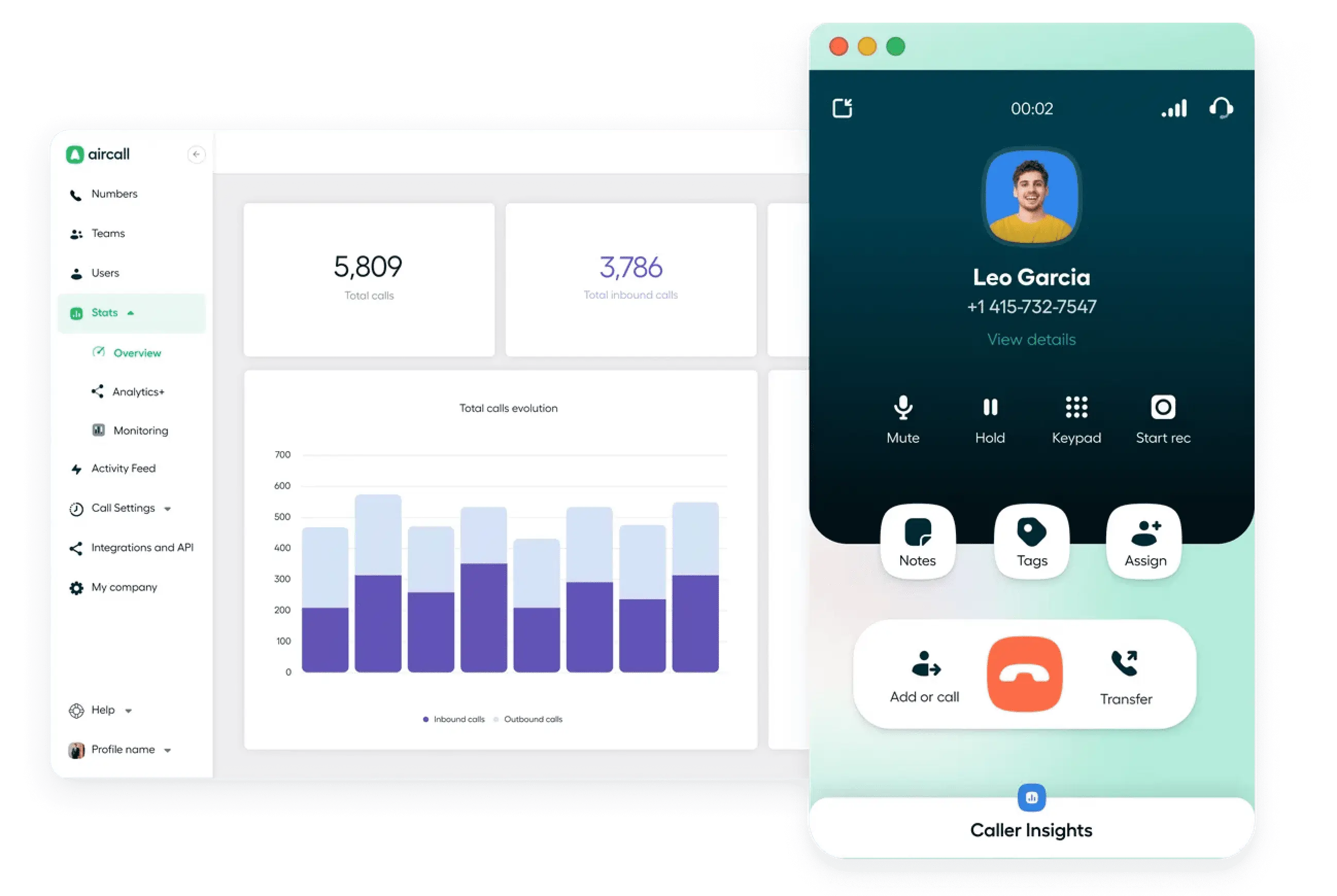
- Call routing
- IVR
- Live monitoring
- Analytics dashboards and conversation tracking
- Remote-friendly desktop and mobile apps
Pricing
- Essentials: $40
- Professional: $70
- Custom pricing is available for larger teams and advanced requirements.
The free trial is typically 7 days.
Integrations
All major CRMs
G2 rating
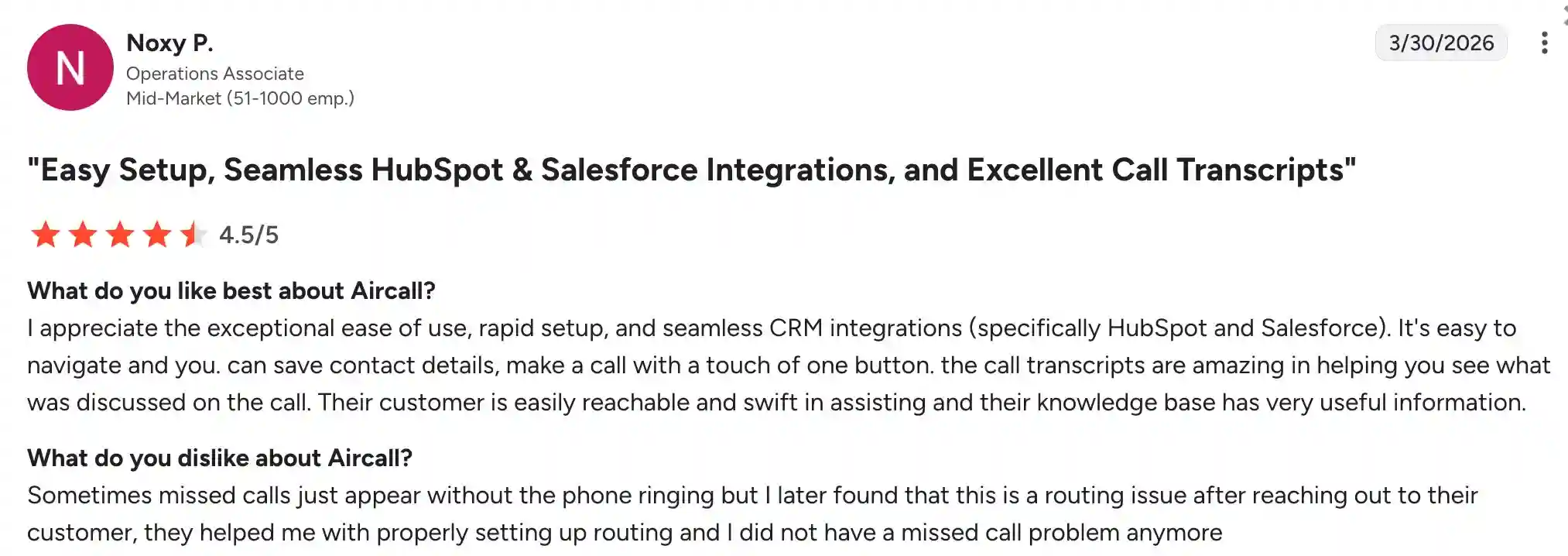
Aircall has a strong 4/5 rating on G2. The platform is often praised for ease of setup, intuitive design, and its integration ecosystem, especially by teams that want calling to fit neatly into existing workflows. Common complaints usually focus on pricing as teams scale and occasional call quality issues.
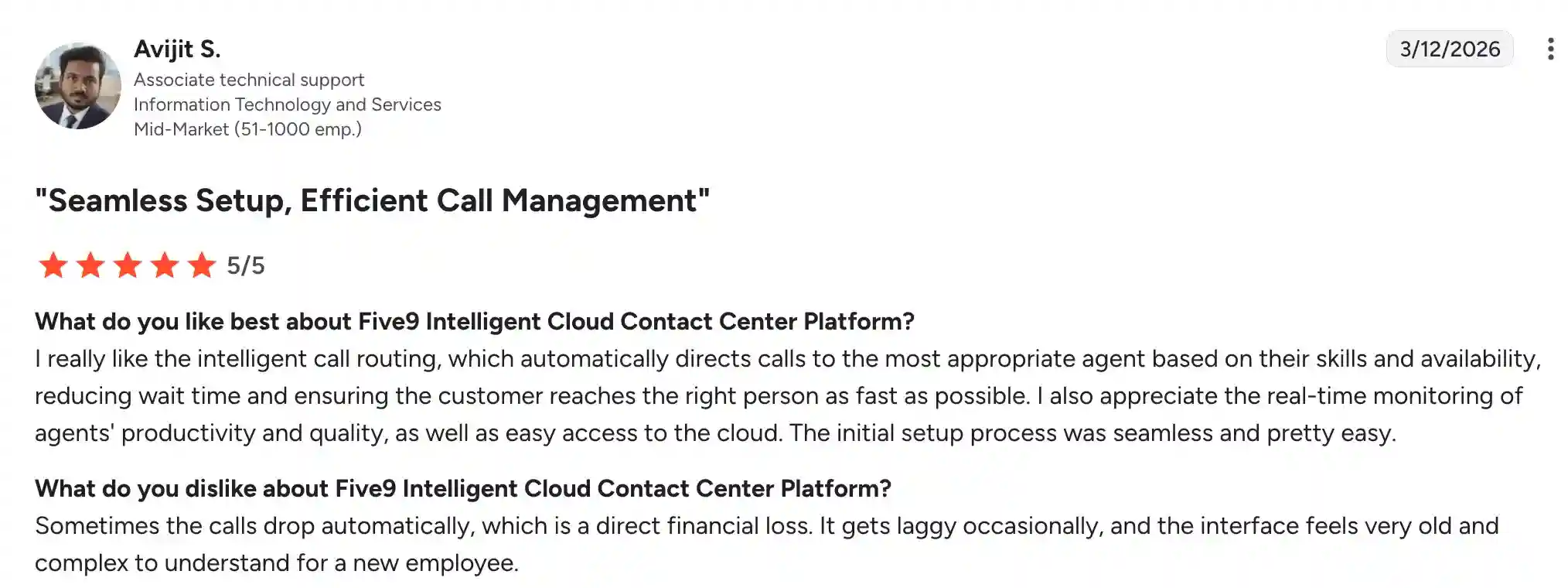
4. Five9 — best enterprise contact center platform
Five9 is a virtual contact center provider built for larger support and sales teams that need greater control, automation, and scalability. It’s a better fit for organizations handling high volumes across multiple teams, regions, or departments than for smaller teams that just need a simple call center phone system.
Key features
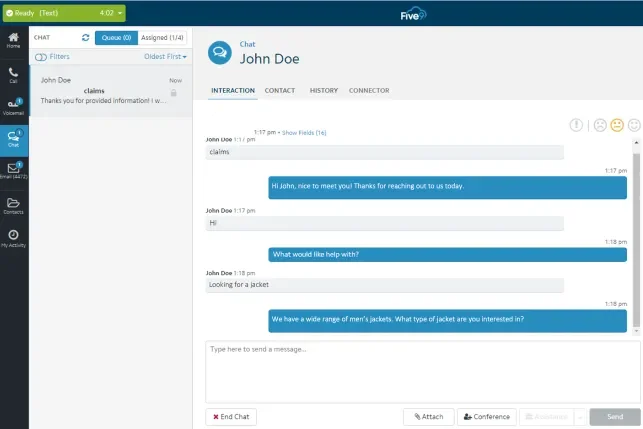
- Omnichannel routing
- Intelligent IVR
- Workflow automation
- Dialer modes
- Real-time dashboards
- Historical reporting
Pricing
- Digital: $119
- Core: $159
- Plus, Pro and Enterprise: Contact sales for more information
There is no available information about the free trial.
Integrations
All major CRMs
G2 rating
Five9 is generally well-rated on G2, with a 4.1/5 rating. It is often praised for its robust functionality, depth of reporting, and scalability in complex environments. Users commonly like its routing flexibility and enterprise feature set, while complaints tend to focus on implementation effort, admin complexity, and pricing that can rise quickly once advanced capabilities are added.
5. Dialpad — best AI-powered call center software
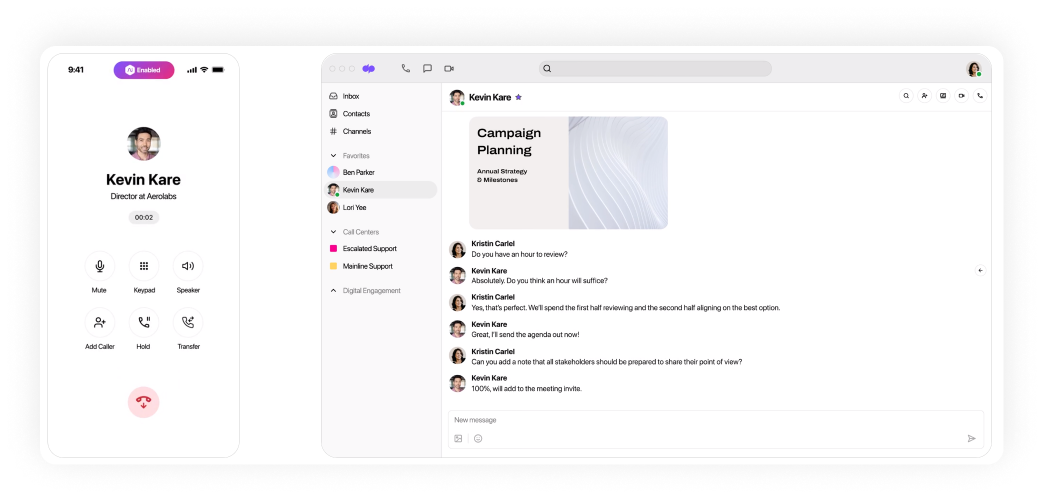
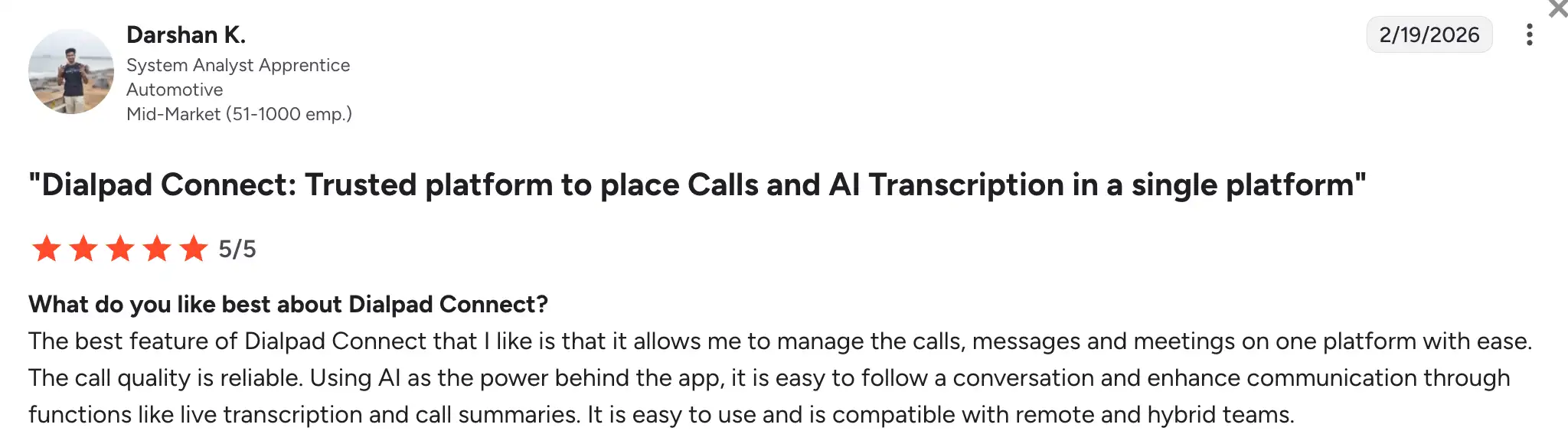
Dialpad is a cloud contact center and communications platform that stands out for how deeply AI is built into everyday work. It’s especially appealing to fast-moving support and sales teams that benefit from features like real-time transcription, call summaries, live coaching, and conversation insights. For distributed teams, AI tools can speed up onboarding, reduce context gaps, and simplify quality management. However, it’s still worth weighing whether that level of AI is necessary for your team and budget.
Key features
- Real-time call transcription
- Post-call summaries
- Live coaching
- Call routing
- IVR
Pricing
- Standard: $27
- Pro: $35
- Enterprise: Contact for custom pricing
Free trial: often available for some plans, but not always for every contact center tier.
Integrations
All major CRMs
G2 rating
Dialpad is typically reviewed positively on G2, with a 4.4/5 rating. Users often highlight the convenience of having calls, messages, and meetings in one place. At the same time, common drawbacks include occasional feature limitations in more complex contact center environments, admin quirks, and pricing concerns once higher-tier AI capabilities are included.
6. CloudTalk — best call center software for analytics and automation
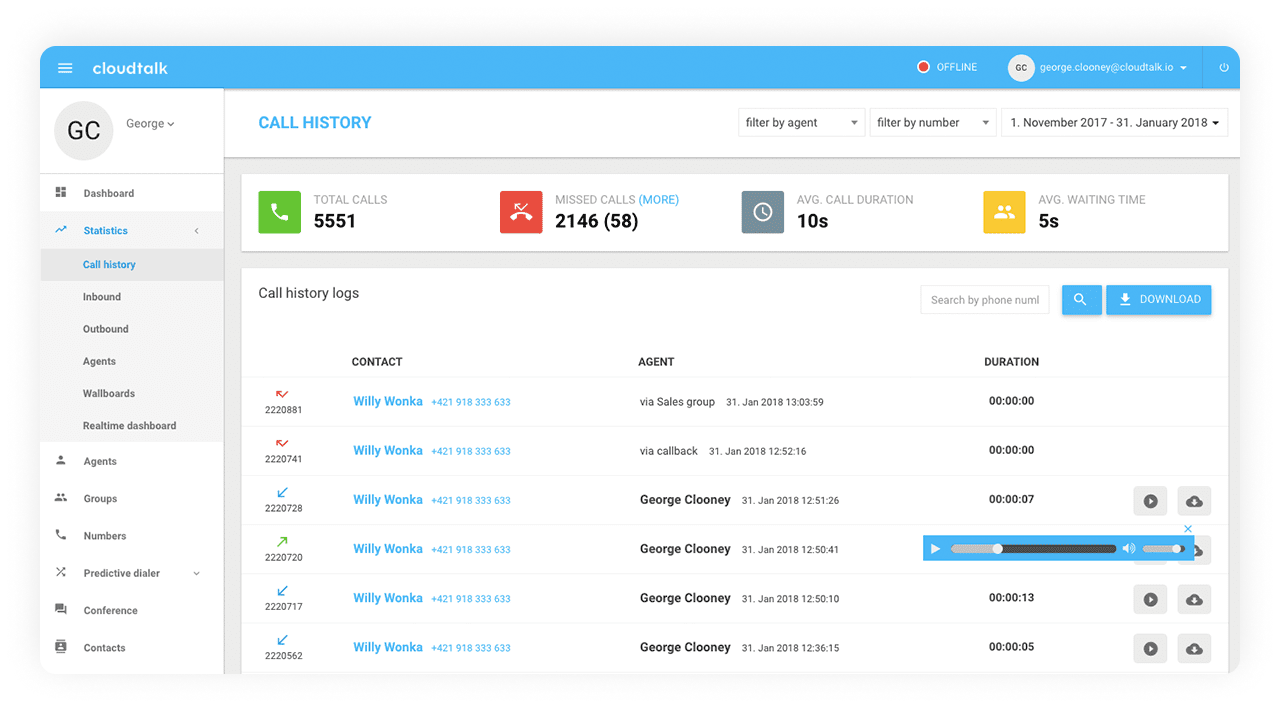
CloudTalk is a cloud-based call center system designed for support and sales teams that want more insight into call performance and more control over how conversations are handled. It’s a strong fit for teams that care about reporting, routing, and workflow optimization, but don’t want the complexity of a heavy enterprise platform. For remote and hybrid teams in particular, CloudTalk stands out for balancing ease of use with automation and practical, data-driven visibility.
Key features
- Smart call routing
- Skill-based call flows
- IVR
- Real-time dashboards
- Dialer modes
- Call monitoring
Pricing
- Lite: $27
- Essential: $39
- Expert: $69
CloudTalk offers a 14-day free trial.
Integrations
All major CRMs
G2 rating
CloudTalk has a positive, 4.4/5 rating on G2. Users often highlight the dashboard, call quality, and ease of managing distributed teams. Since this call center software is cloud-based, common criticisms often cite occasional sync or setup friction with certain integrations, as well as differences in features across plans.
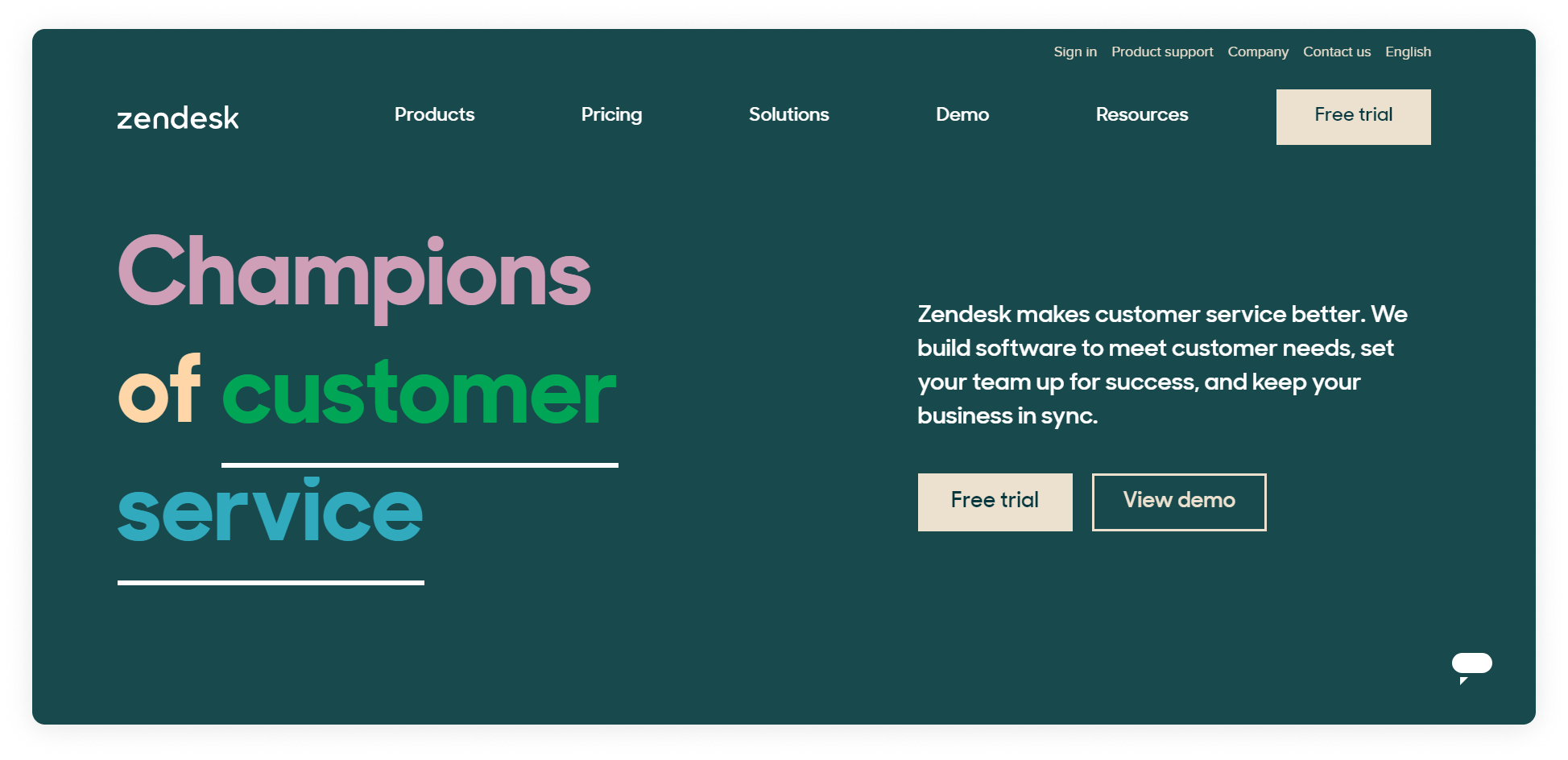
7. Zendesk — best omnichannel contact center solution
Zendesk is a customer support platform built for teams that want to manage voice, messaging, and service workflows in one connected environment. Founded in 2007 and based in San Francisco, it’s used by businesses worldwide that need tickets, contact history, and conversations to stay connected.
Rather than working as just a call center phone system, Zendesk is better suited to support teams that see voice as one part of a broader service experience. That makes it especially useful for teams that already work in structured support environments and want better continuity across channels. For remote teams, the biggest advantage is having every interaction connected to the full customer record, not just the call itself.
Key features
- Integrated ticketing and customer history
- Intelligent routing
- Workflow automation
- AI assistance for summaries, bots, and agent productivity
- Quality assurance, analytics, and service reporting
Pricing
- Support Team: $25
- Suite Team: $69
- Suite Professional: $149
- Suite Enterprise: $219
Zendesk offers a 14-day free trial.
Integrations
All major CRMs
G2 rating
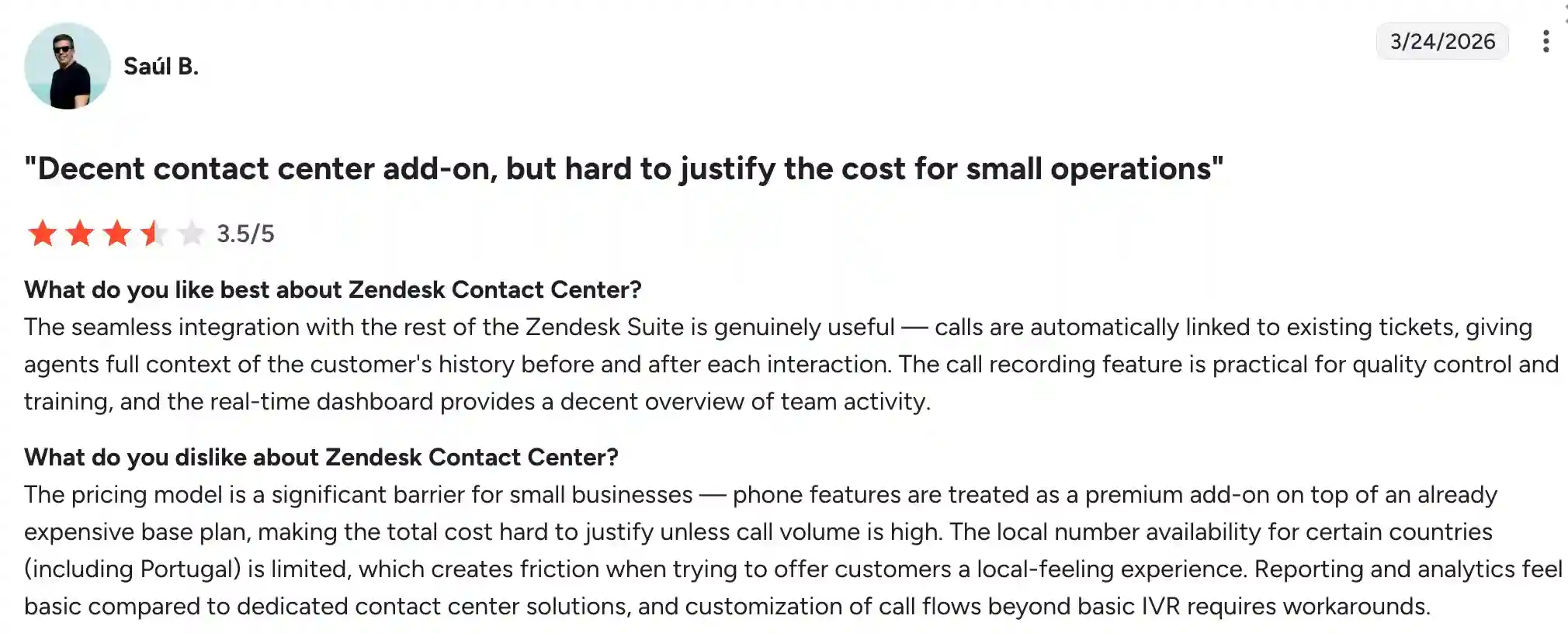
Zendesk has a 4.6/5 rating on G2. Users usually praise its ticketing workflows, omnichannel continuity, and ease of maintaining a centralized service context. The most common complaints center on pricing as more features are added.
8. Genesys — best global contact center system
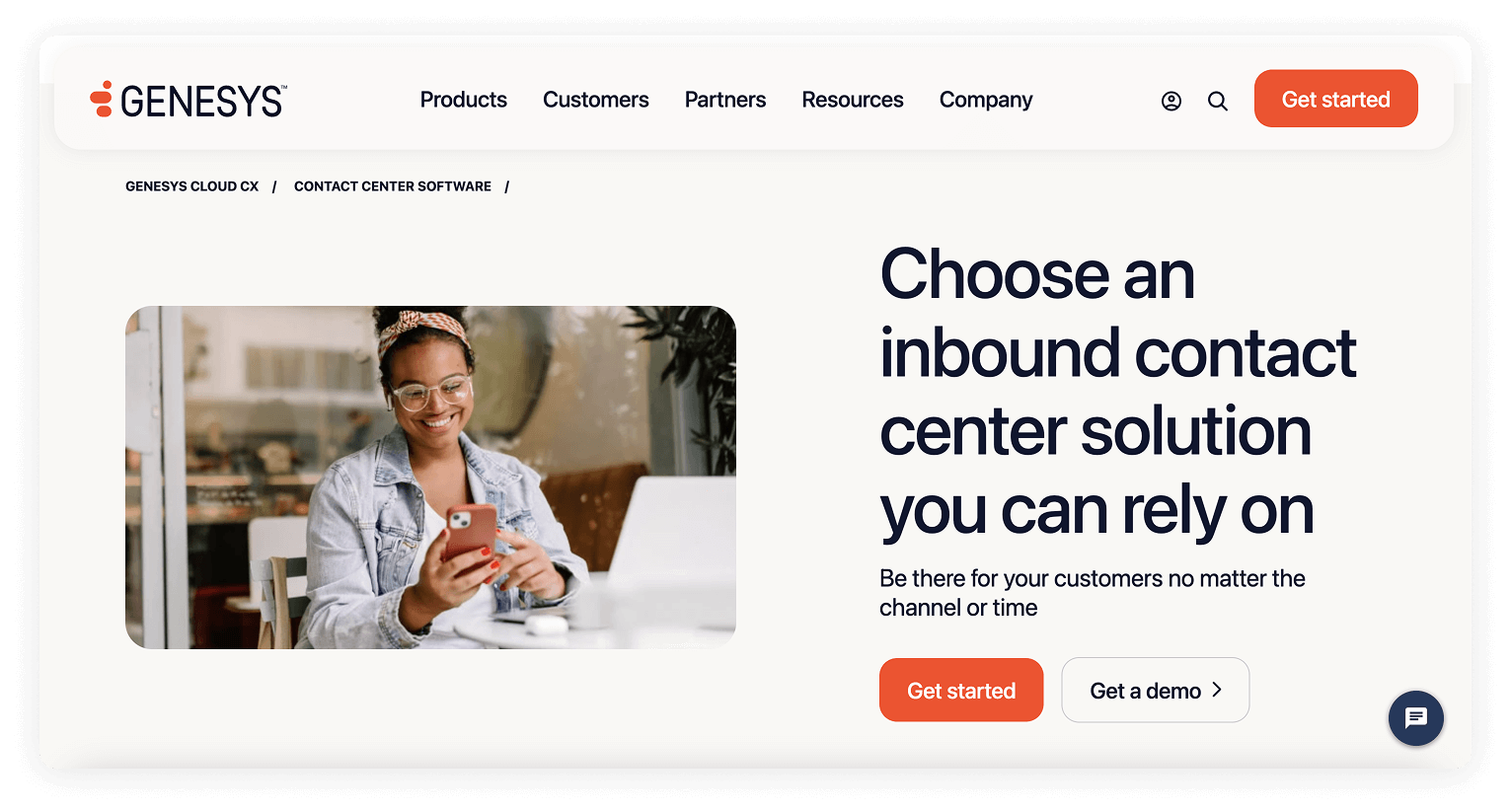
Genesys is a well-established CCaaS platform built for large organizations that need robust contact center capabilities across teams, channels, and regions. It’s especially well-suited to multinational companies that need multilingual support and stronger workforce management. Genesys is often chosen not just for handling calls, but for managing customer interactions across the entire service journey.
Key features
- Predictive routing and journey orchestration
- Workforce engagement
- Real-time dashboards
- AI-powered automation
- Global support for large, distributed service operations
Pricing
- Genesys Cloud CX 1: $75
- Genesys Cloud CX 2: $115
- Genesys Cloud CX 3: $155
- Genesys Cloud CX 4: $240
The free trial appears to be available; however, its duration is unclear.
Integrations
All major CRMs
G2 rating
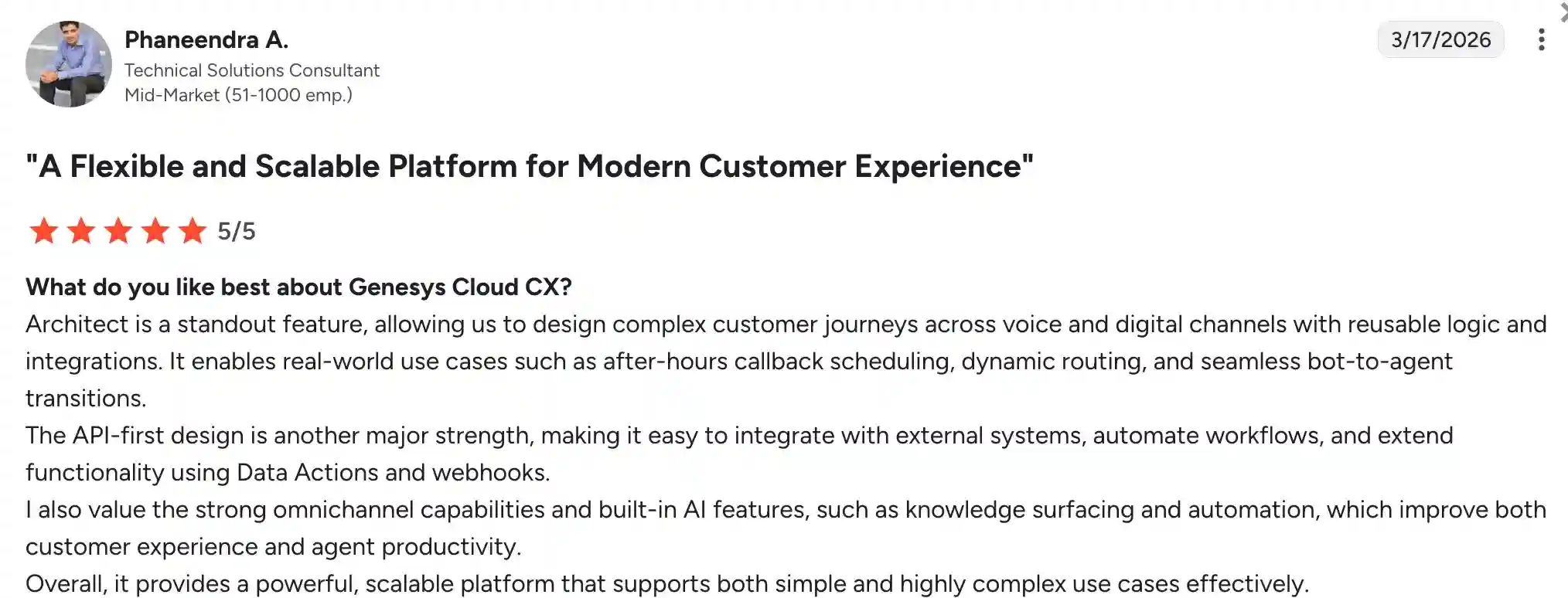
Genesys has a 4.4/5 rating on G2. There’s generally positive feedback from enterprise users who value its routing depth, scalability, and support for complex global service environments. The most commonly mentioned issues are implementation effort, administrative complexity, and pricing.
9. RingCentral Contact Center — best for mid-sized teams that need advanced analytics
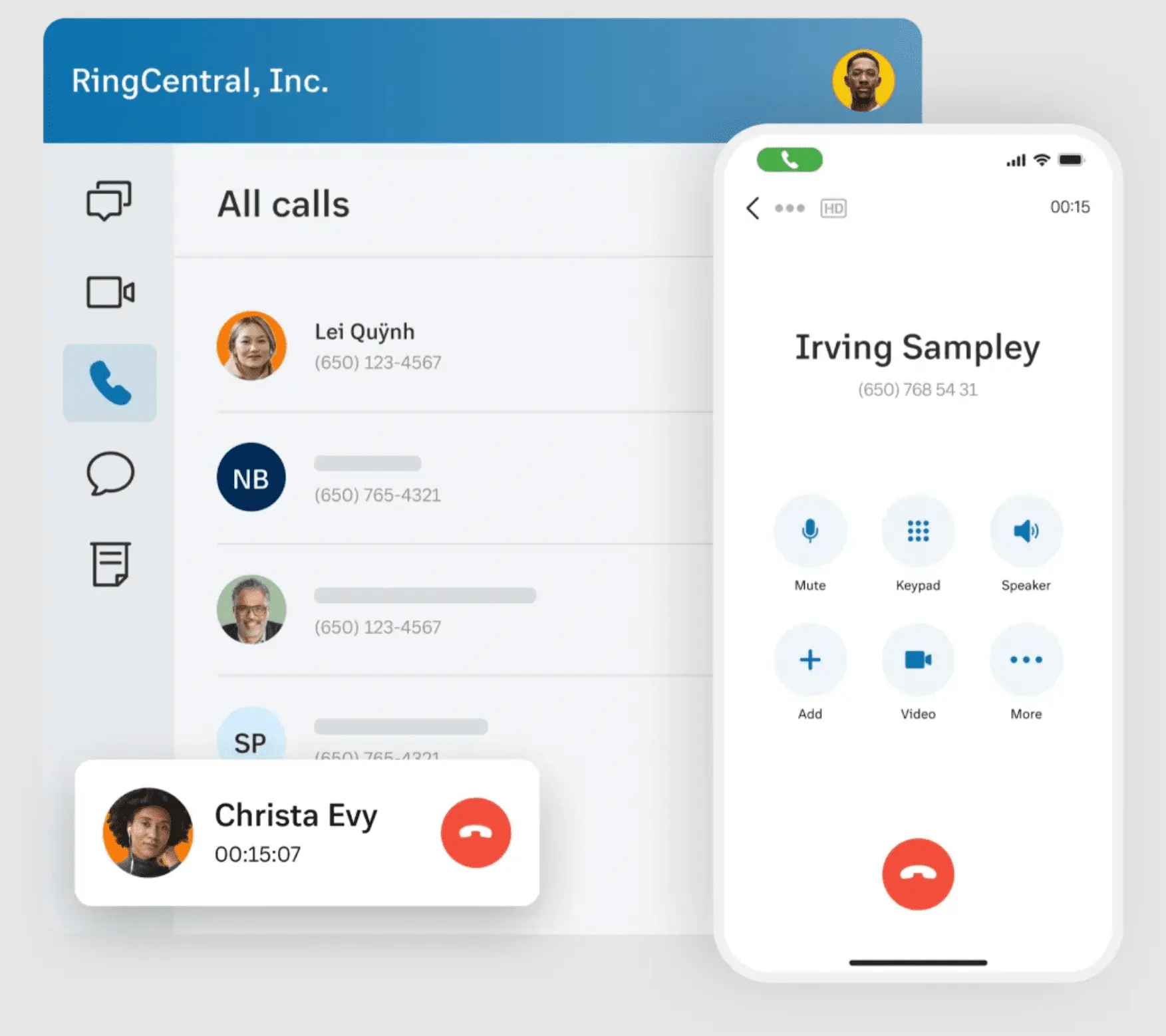
RingCentral is a cloud-based contact center platform built for teams that need clear visibility into performance across remote and hybrid operations. It’s a strong fit for support environments where managers rely on dashboards, KPI tracking, and real-time oversight to keep service quality on track. Rather than just a phone system, it provides teams with a broader contact center setup for monitoring queue health, agent performance, and day-to-day consistency.
Key features
- Real-time dashboards
- Omnichannel routing
- Call monitoring
- Workforce engagement
- Historical reporting and KPI tracking
Pricing
- Core: $30
- Advanced: $35
- Ultra: $45
- Customer Engagement Bundle: Contact them for pricing
RingCentral offers a 14-day free trial.
Integrations
All major CRMs
G2 rating
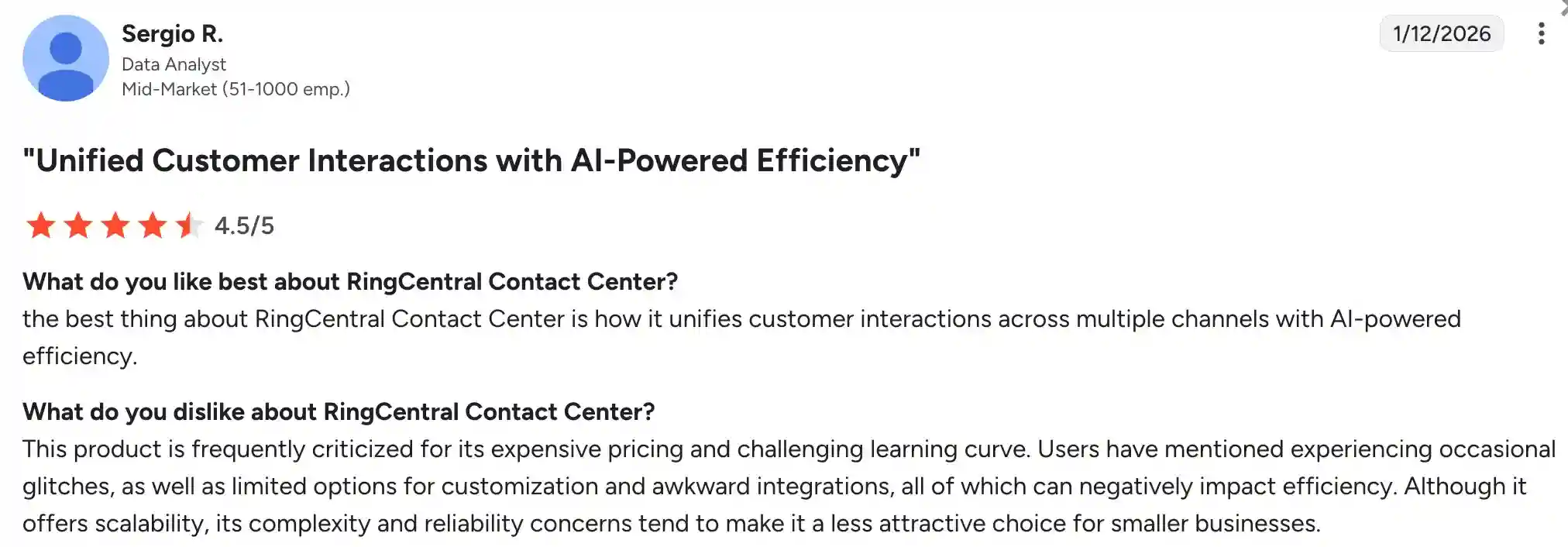
RingCentral has a 4.1/5 rating on G2. It is generally rated well by users who value reporting depth, management visibility, and the ability to monitor distributed teams more closely. Common complaints usually point to administrative complexity, pricing, and the learning curve that comes with configuring a more advanced, reporting-heavy environment.
10. JustCall — best low-cost virtual call center software
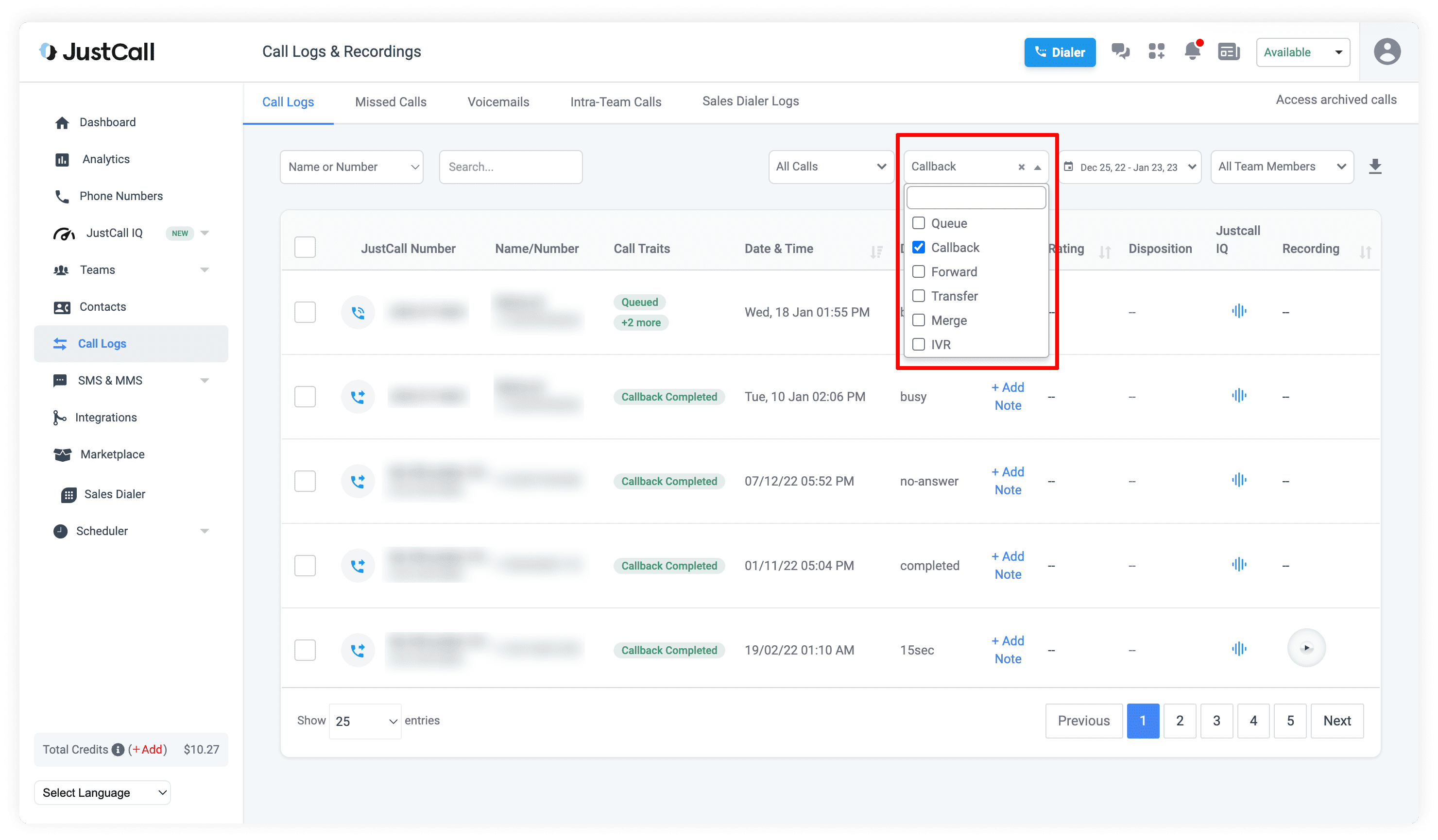
JustCall is a cloud phone and contact center platform designed for sales and support teams that want calling, messaging, and automation without the weight of a more complex enterprise system. It’s especially well-suited to remote teams looking for predictable pricing, fast setup, and strong CRM connections. JustCall works best for companies that need to handle inbound and outbound conversations efficiently across distributed teams, with a good balance of affordability, ease of use, and practical day-to-day features.
Key features
- SMS support for customer communication
- Call routing and IVR
- Automation tools
- Call recording and monitoring
- Analytics and team performance tracking
Pricing
- Team: $39
- Pro: $69
- Pro Plus: $109
- Business: Request a quote
JustCall typically offers a free trial.
Integrations
All major CRMs
G2 rating
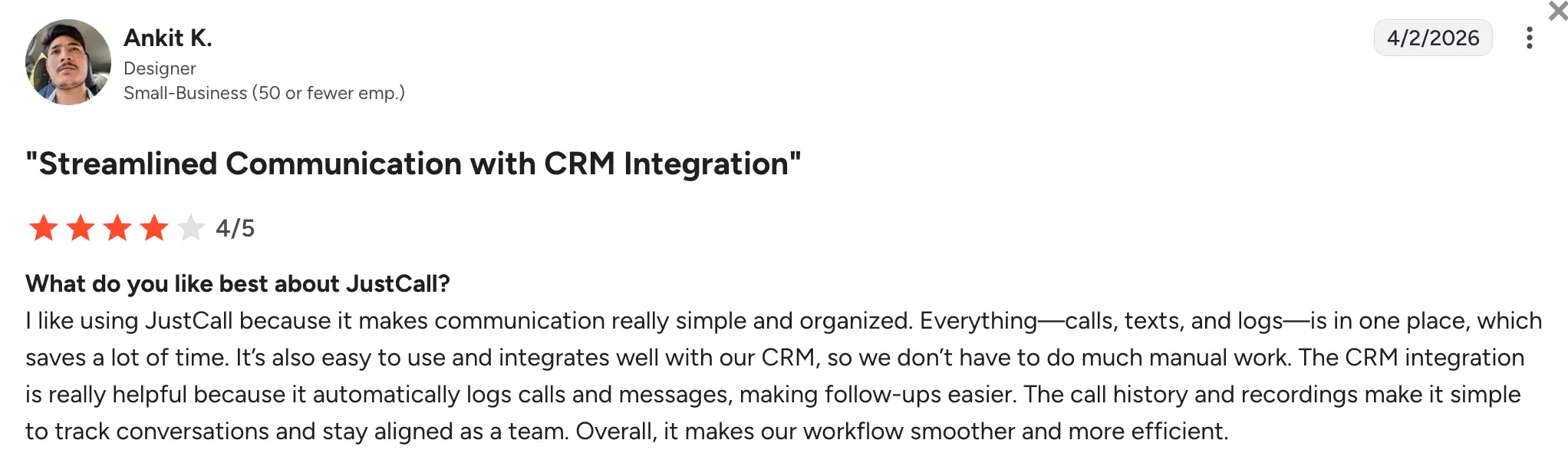
JustCall earned a 4.3/5 rating on G2. It is usually praised for ease of use and strong CRM integrations that help small and mid-sized teams stay productive. The most common drawbacks mentioned by users include occasional call-quality issues, limited features on lower tiers, and the need to upgrade plans to support more advanced workflows.
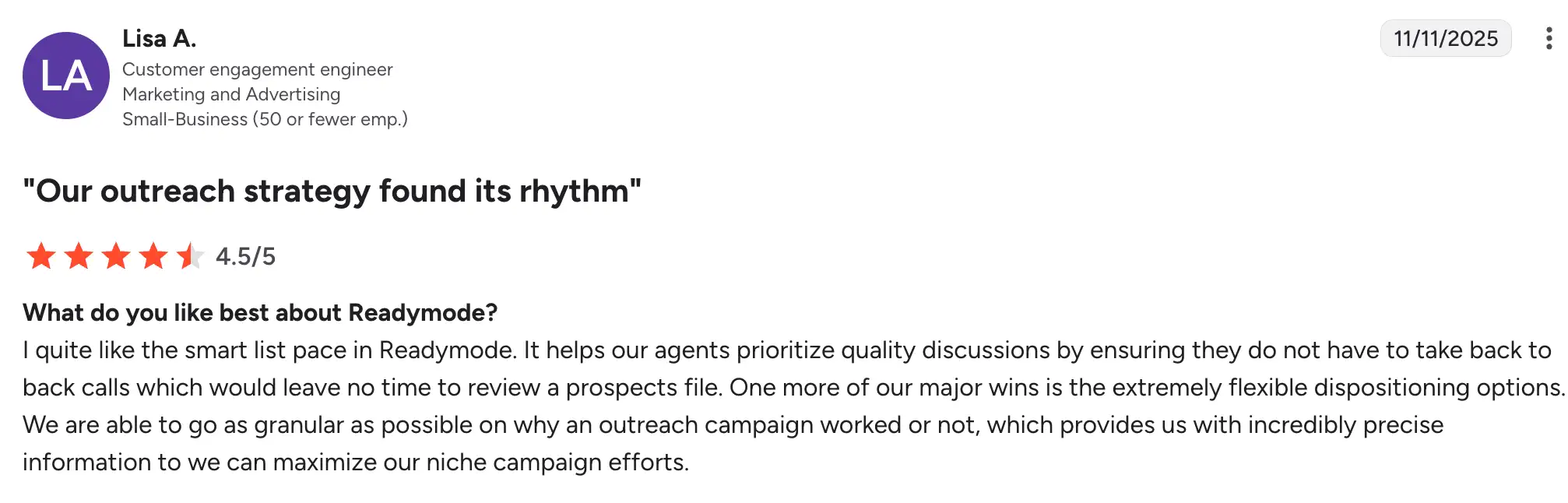
11. ReadyMode — best outbound call center platform for high-volume campaigns
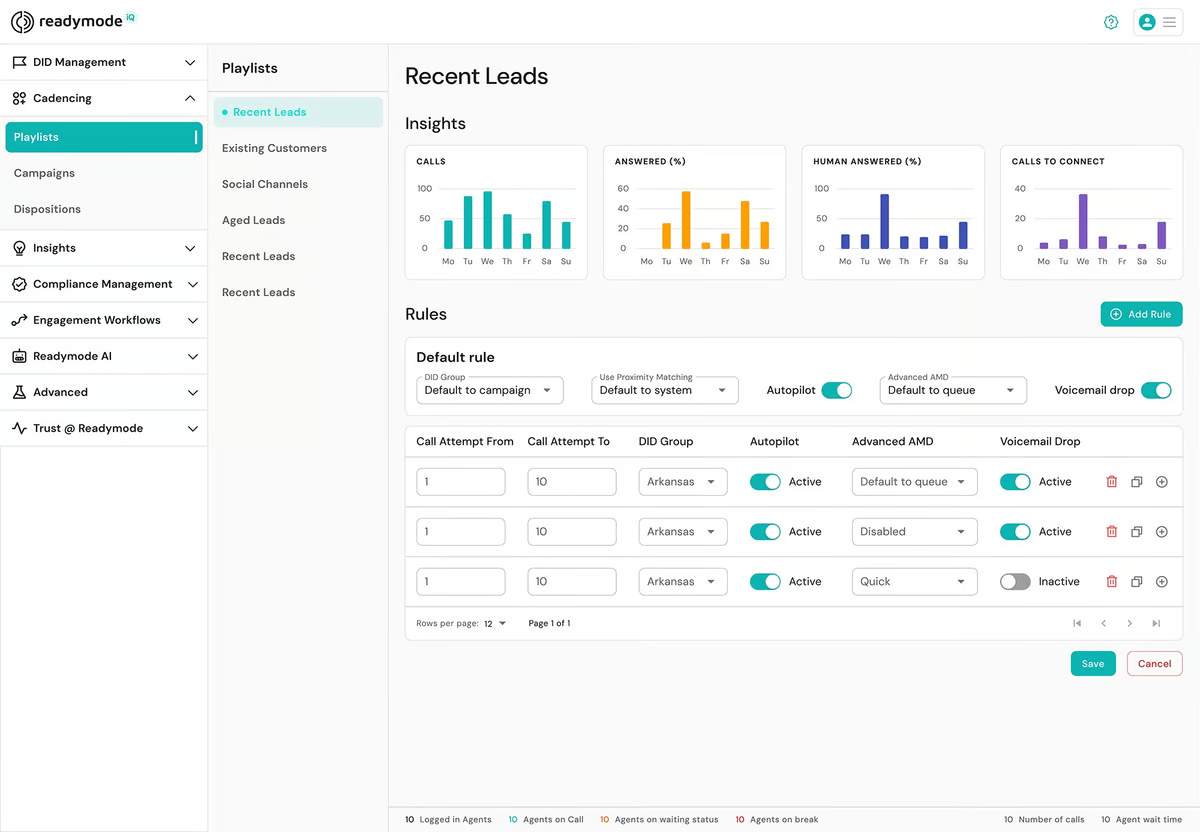
ReadyMode is an outbound remote call center software built for teams running high-volume campaigns, including sales outreach, lead generation, and collections. The platform focuses more on predictive dialing and campaign efficiency than on broad omnichannel customer service. It’s a strong fit for organizations where outbound productivity, list management, and call center agent output matter most.
Key features
- Campaign management and lead distribution
- Real-time agent and campaign dashboards
- Call recording and monitoring
- Productivity controls for outbound teams
Pricing
- Readymode Starter: $199
- Readymode iQ: $249
It isn’t clear if a free trial is offered.
Integrations
All major CRMs
G2 rating
Readymode has a solid 4.6/5 rating on G2. Users generally like ReadyMode for dialing speed, outbound productivity, and campaign efficiency. Reported downsides usually include a steeper learning curve, reduced relevance for inbound call center teams, and a product experience better aligned with outbound operations than with broader customer support environments.
12. Talkroute — best call routing software for small teams
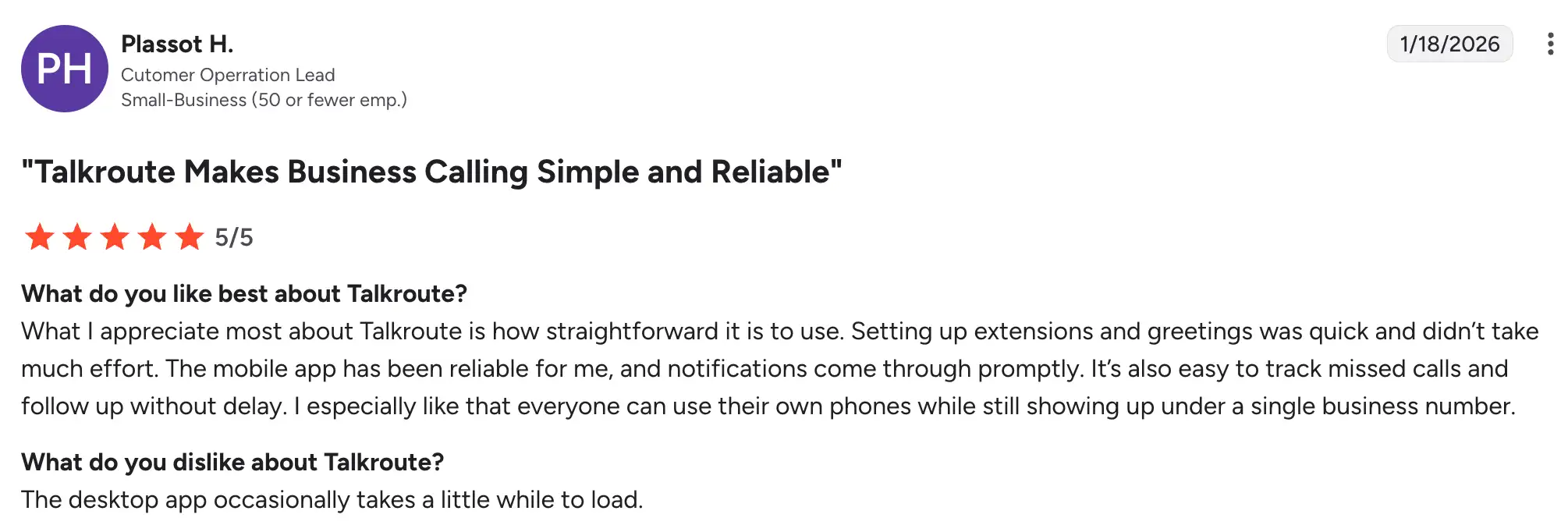
Talkroute is a lightweight virtual phone system built for small businesses that want better call routing, forwarding, texting, and team communication without the complexity of a full contact center platform. It’s a good fit for businesses that want to sound more professional and stay responsive without overcomplicating day-to-day operations. While it doesn’t offer the depth of a full contact center solution, it can still improve the customer experience by reducing missed calls and making communication easier to manage.
Key features
- Call routing and forwarding
- Custom greetings and extensions
- SMS and business texting
- Voicemail management
- Video meetings
- Desktop and mobile apps for remote access
Pricing
- Basic: $19
- Plus: $39
- Pro: $59
- Enterprise: Contact for custom pricing
Talkroute offers a 7-day free trial.
Integrations
All major CRMs
G2 rating
Talkroute has a rating of 4.7/5 on G2. Users often like Talkroute for its simplicity, ease of setup, and practical routing features for smaller organizations. Common complaints include limited advanced contact center functionality, fewer deep integrations than those of larger competitors, and the risk that scaling teams may eventually outgrow it.
13. CallHippo — best for growing sales and support teams
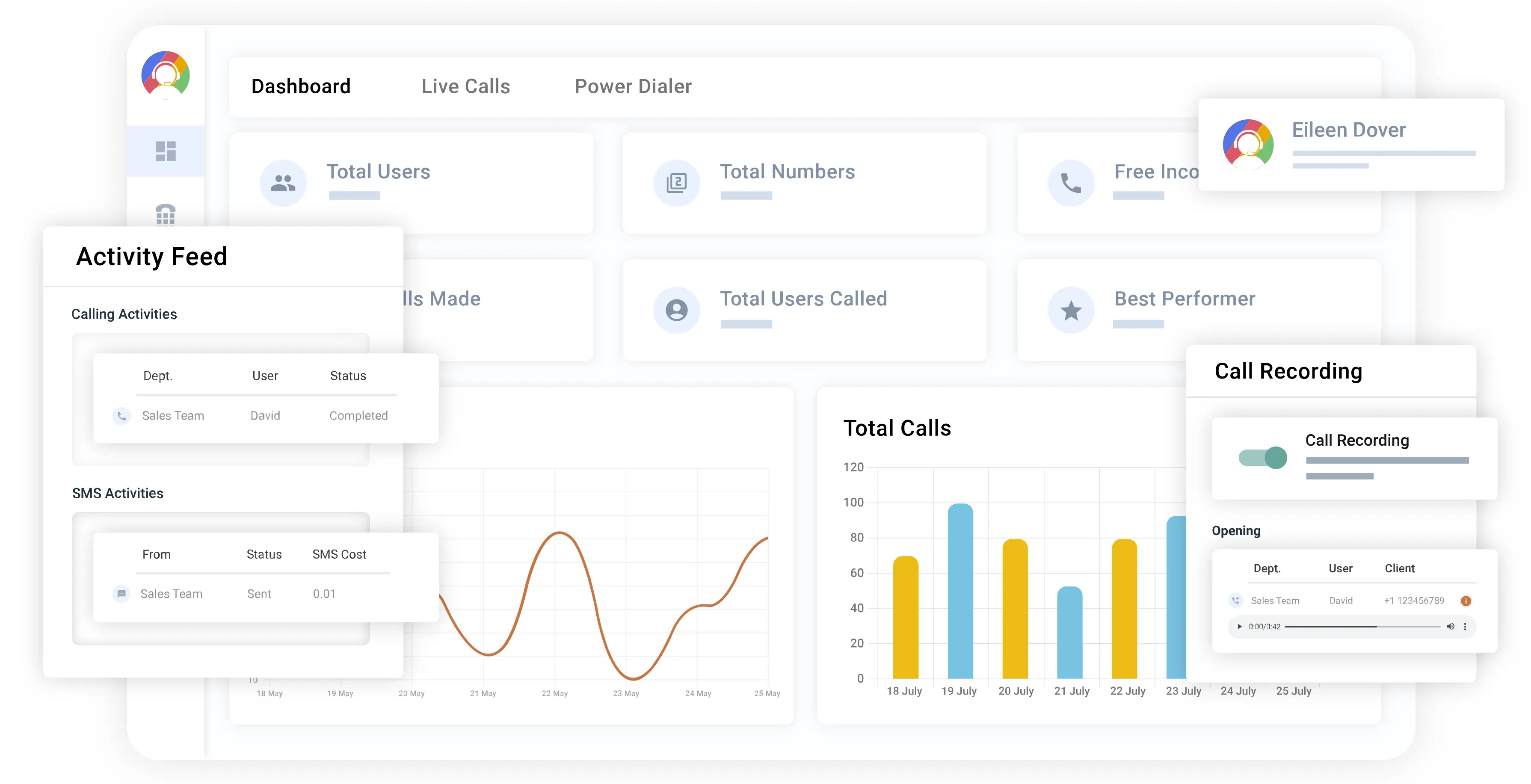
CallHippo is a cloud phone platform built primarily for sales and outbound teams that prioritize dialing speed, number management, and agent productivity. It works especially well for lead generation, sales development, and other outbound-heavy workflows where efficiency matters more than deep service features. For remote teams, CallHippo offers an easy way to keep calling operations organized across locations.
Key features
- Outbound calling solutions
- Virtual phone numbers and number management
- Call routing and IVR
- Call recording and monitoring
- Basic analytics and reporting
- SMS and business communication solutions
Pricing
- Basic: $1
- Starter: $25
- Professional: $39
- Ultimate: $55
CallHippo offers a 10-day free trial.
Integrations
All major CRMs
G2 rating
CallHippo has a rating of 4.5/5 on G2. CallHippo users often praise the platform for affordability, simple setup, and usefulness in outbound and sales-driven environments. Common negatives include occasional call-quality concerns, support responsiveness issues in some cases, and limited functionality for teams that need deeper omnichannel customer service capabilities.
14. AVOXI — best global phone provider for international support teams
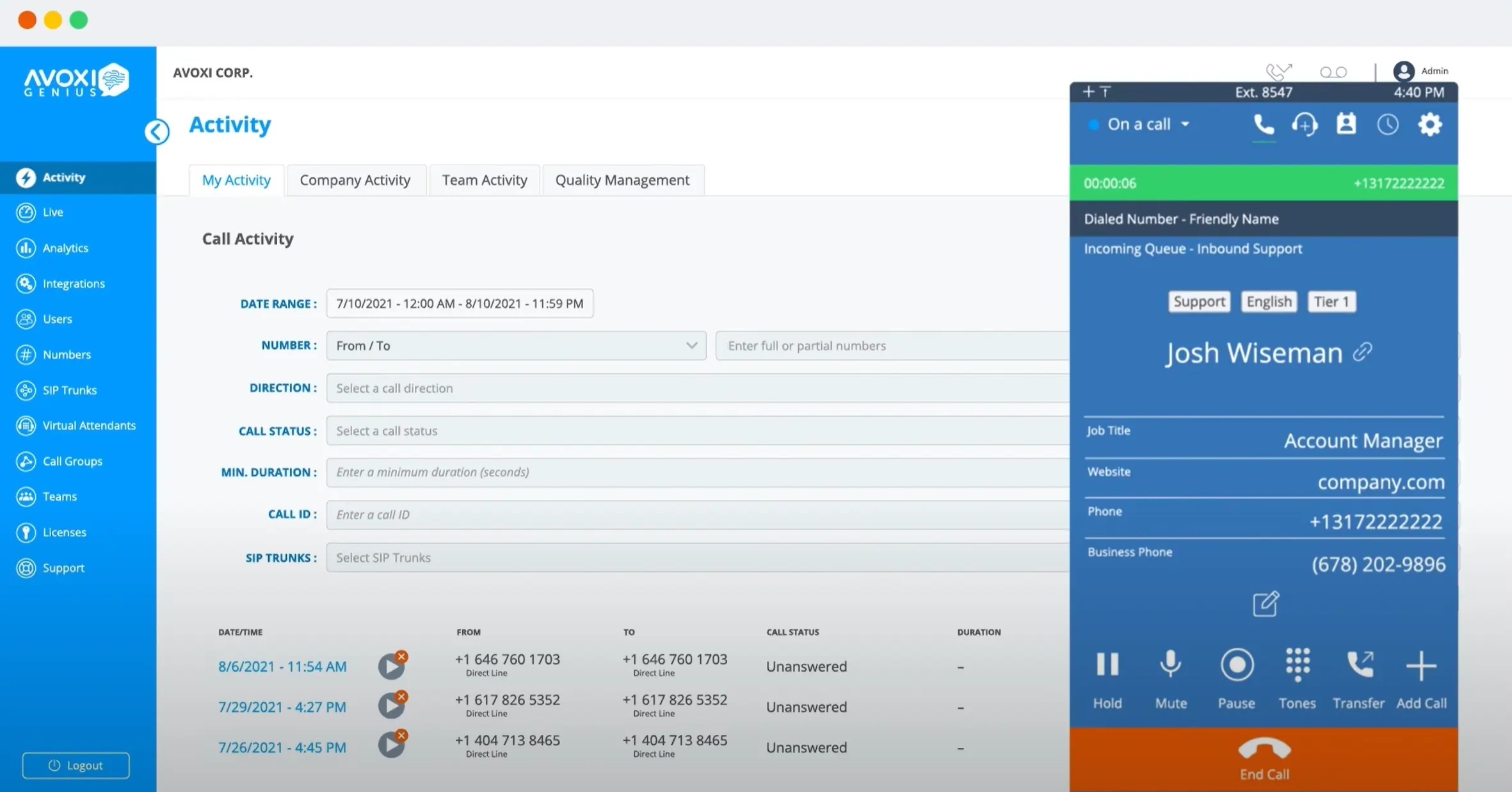
AVOXI is a cloud communications provider best known for helping businesses build a reliable global voice presence. It’s especially useful for distributed support teams serving customers in different regions or businesses with market-specific calling needs. What makes AVOXI stand out is its international reach, which is a core part of the platform rather than an add-on. For companies that need strong cross-border coverage, it can be a very practical choice.
Key features
- International, local, and toll-free number availability
- Call routing and global voice management
- Analytics and call reporting
- Number management for multi-region operations
- Solutions for distributed support teams
Pricing
- Standard: $14.99
- Premium: $99.99
- Premium AI: $199.99
There is no specific information about the free trial.
Integrations
All major CRMs
G2 rating
AVOXI has a solid rating of 4.4/5 on G2. Users commonly value AVOXI for international coverage, number availability, and the ability to support geographically distributed communication needs. The most frequent drawbacks usually involve pricing complexity or regional variability.
15. VICIdial — best open-source call center software for customizable deployments
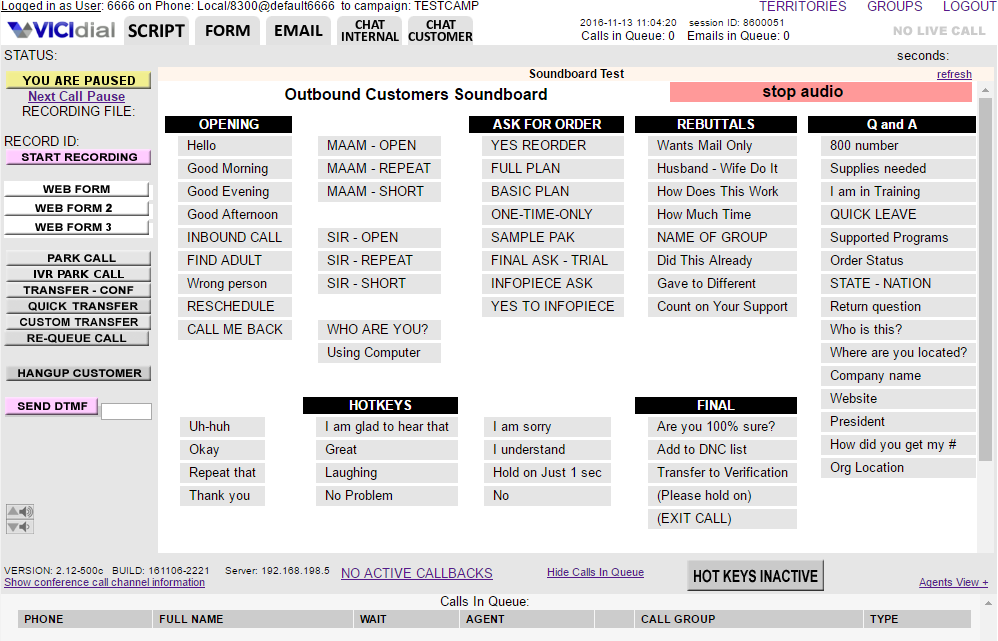
VICIdial is an open-source call center platform that appeals to teams looking for greater control over their calling setup and dialing workflows. It has been around for years and has built a loyal user base among technically experienced organizations that prefer the flexibility of a self-hosted system over a proprietary SaaS platform.
VICIdial is best suited to companies that have the technical resources to handle hosting, customization, compliance, and ongoing maintenance themselves or with a partner.
Key features
- Extensive configuration and customization options
- Call routing and campaign management
- Reporting and monitoring
- Scalability for large calling operations
- Open-source deployment control
Pricing
The software itself is open source and does not require standard SaaS subscription fees. Since it’s an open source platform, it does not offer a free trial.
Integrations
All major CRMs
G2 rating
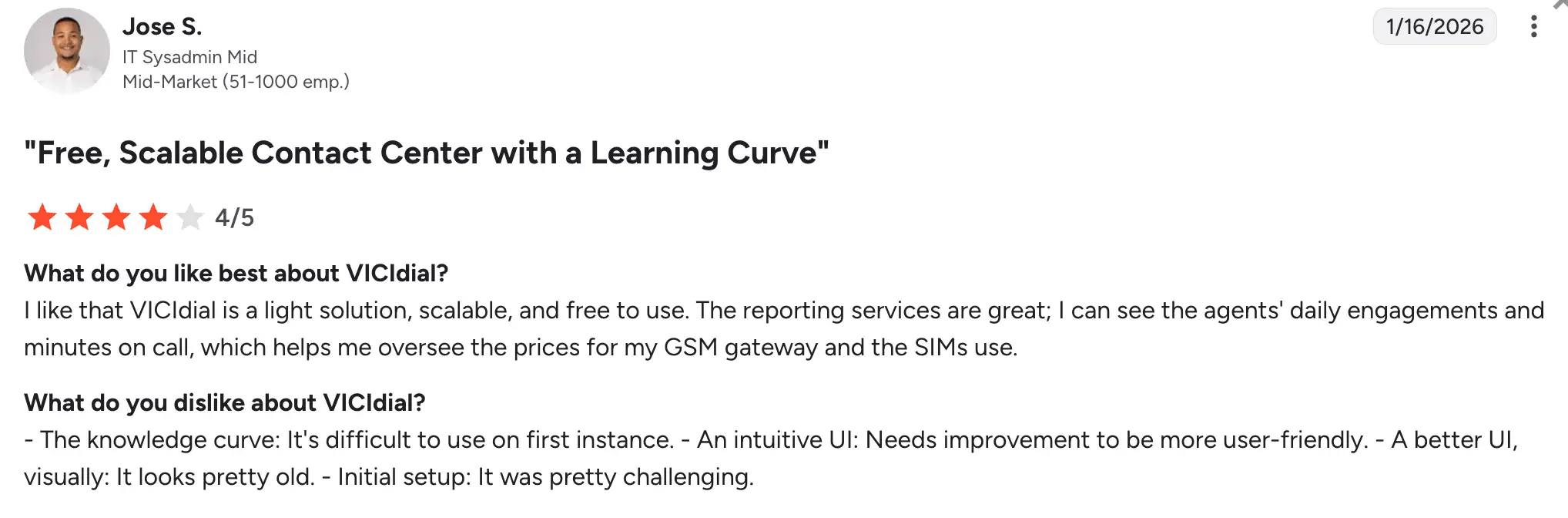
VICIdial has a 4.1/5 rating on G2. Users who choose VICIdial often appreciate its flexibility, powerful dialer capabilities, and the ability to deeply customize the platform to meet specific operational needs. The biggest disadvantages usually center on setup complexity, interface age, and the level of technical expertise required to deploy and maintain it successfully.
Best virtual call center software by company size
Company size changes what “best” means: smaller teams usually need quick setup and low admin friction, mid-size teams need stronger integrations and reporting. Enterprise teams need scalability, governance, and reliable global performance across channels.
Best virtual call center platforms for small companies
Small teams usually benefit most from features that are easy to launch, simple to manage, and affordable enough to scale without a long implementation cycle. The best fits here offer enough routing, calling, and messaging to look professional without burying teams in enterprise complexity.
- MightyCall
- Talkroute
- Aircall
- CallHippo
Best virtual contact center solutions for mid-size teams
Mid-size teams typically need a balance of usability and more advanced reporting, integrations, and automation. These platforms fit growing operations that want stronger visibility and workflow support without jumping straight into the heaviest enterprise deployments.
- Dialpad
- MightyCall
- CloudTalk
- Zendesk
- RingCentral Contact Center
Best enterprise virtual call center solutions for global operations
Enterprise and multinational teams usually need platforms that can handle governance, workforce management, routing complexity, and region-by-region reliability at scale. These options are better aligned with compliance-heavy environments and larger service organizations operating across markets.
- Five9
- Genesys
- AVOXI
- Nextiva
- RingCentral Contact Center
Key features every virtual call center platform should include
Buyers should not judge virtual call center software by their features alone, because the right stack depends on how your team actually handles support, sales, and follow-up workflows. The virtual call center capabilities should improve speed, consistency, visibility, and agent efficiency in a remote environment, especially across routing, coaching, reporting, AI, and customer context. So, what are the benefits of a virtual call center?
Real-time monitoring and supervisor controls
Live monitoring matters because remote managers cannot physically spot issues or coach agents in the moment. Modern platforms solve that with live dashboards, call listening, whisper coaching, and barge-in tools that let supervisors support virtual agents during difficult interactions without interrupting the customer experience.
These control features improve quality assurance, make coaching slightly more immediate, and help teams maintain more consistent service standards. They also give support leaders a faster way to identify performance gaps, escalation patterns, and training needs before those issues affect larger volumes of customers.
Automatic call distribution and IVR routing
Automatic call distribution (ACD) and IVR routing are core features because they route customers to the right queue or agent more quickly, rather than forcing every call down the same path. That reduces wait times, improves consistency, and helps teams match callers with the agent best equipped to solve the issue.
When routing is well set up, it can improve first-call resolution by reducing transfers and shortening the path to an answer. For remote teams, it also creates a more organized support flow, since agents can work across locations while still receiving the right types of calls based on skill, department, or business hours.
Auto dialers and outbound calling automation
Auto dialers are especially important for outbound teams because they reduce the idle time agents spend manually dialing from contact lists. In modern virtual call center software, dialers can automatically place calls and help agents move through outreach queues more quickly, making them useful for sales campaigns, follow-ups, surveys, and appointment reminders.
This improves productivity because agents spend more time talking to live contacts and less time waiting between call attempts. For teams managing large call lists, outbound automation also makes campaign execution more consistent and easier to measure across remote agents and time zones.
Answering machine detection and AI call summaries
Answering machine detection (AMD) helps outbound teams avoid wasting time on voicemails by identifying when a call reaches an answering machine instead of a live person. That is especially useful in high-volume operations where every few seconds of agent time adds up across hundreds or thousands of dials.
AI call summaries solve a different but related problem by turning conversations into short recaps after each call, which reduces the need to listen to full recordings for routine review. For remote support and sales teams, that means faster QA, easier handoffs, and less context loss between agents, managers, and follow-up tasks.
CRM integrations
CRM integrations matter because they reduce tool switching and give agents more context without forcing them to jump between disconnected systems. When a platform integrates with CRMs such as Salesforce, HubSpot, Zendesk, Zoho, or Freshdesk, agents can view customer details faster, log activity more efficiently, and resolve issues with fewer manual steps.
These integrations also improve reporting quality because call activity, notes, and outcomes remain tied to the customer record rather than being in separate systems. For remote teams, that shared context makes handoffs smoother and helps managers track performance, pipeline, and service outcomes with fewer data gaps.
How pricing works for virtual call center software
Virtual call center software pricing usually looks simple at first, but total cost often depends on more than the base monthly rate. Most vendors charge per user per month, while others use usage-based pricing tied to minutes, phone numbers, or messaging volume. Advanced features such as analytics, workforce tools, outbound dialers, AI summaries, and premium integrations can quickly increase costs, especially as teams grow.
Buyers should also watch for setup fees, onboarding costs, support tiers, contract minimums, and add-ons that are not included in entry plans. Enterprise platforms often use custom quotes rather than public pricing, which makes side-by-side comparisons harder and increases the importance of checking what is actually included. In practice, the best approach is to compare pricing models carefully, estimate total cost by team size and use case, and look beyond the starting price before choosing a platform.
How to choose the best virtual call center software solution
Choosing the best virtual call center software is less about finding the platform with the longest feature list and more about matching the tool to your support model, team structure, and growth plans. A good decision framework helps you avoid buying for today’s pain only to run into reporting, admin, or scalability problems six months later.
1. Evaluate your team size and growth stage
What works for a five-person team may break down once you add more agents, supervisors, and channels. A lower-cost tool can look appealing early on, but if it lacks stronger routing, reporting, or admin controls, it may become a migration problem as your operation grows.
2. Identify the type of call center operation you run
Inbound support, outbound sales, blended teams, and omnichannel service operations each require different capabilities. Support-centric teams usually care more about routing, ticket context, and resolution workflows, while outbound teams prioritize dialers, productivity, and campaign controls. Blended teams typically need both.
3. Assess remote team management capabilities
Remote teams need more than calling tools because managers cannot rely on in-office visibility alone. Look for monitoring, whisper, or barge tools, QA workflows, live dashboards, and role-based controls that help supervisors coach agents. That will help maintain consistency and manage the overall performance.
4. Check integrations with your existing technology stack
Think in ecosystems, not standalone apps. Integration quality directly affects adoption, agent context, and the reliability of your reporting. That’s why your call center software should easily connect with your CRM, help desk, messaging tools, analytics stack, and SSO setup.
5. Compare pricing models and scalability
Do not judge a platform only by the entry price. Compare how pricing changes as you add users, usage, AI features, analytics, and support needs. Make sure the platform can scale with you without forcing a painful migration to another platform later.
How to implement a virtual call center for remote teams
Rolling out a virtual call center does not have to be disruptive if you treat implementation as an operational project, not just a software purchase. The goal is to launch with the right workflows, clear ownership, and sufficient testing to support agents confidently from day one.
1. Choose a scalable call center platform
Start by mapping what your team needs now and what is likely to change over the next 6 to 12 months. A platform that fits your current size but cannot support more agents, channels, reporting needs, or automation later can create unnecessary migration work just as your operation becomes more complex.
2. Train agents on workflows and software tools
Implementation succeeds when agents understand how work should flow, not just where to click. Training agents should cover call handling, transfers, escalation rules, after-call tasks, and customer data workflows so the team can deliver consistent service instead of improvising around the system.
3. Test call routing and integrations before launch
Before rolling everything out, pilot the setup with one queue, department, or a small group of agents. Use that phase to verify routing logic, screen pops, CRM sync, escalation paths, voicemail behavior, and fallback scenarios so problems show up before they affect the full team.
4. Monitor performance metrics and service quality
Once the system is live, watch a small set of early KPIs and metrics closely: CSAT, first-call resolution, abandonment rate, average handle time, and QA score. These indicators show whether the rollout is improving customer experience and agent efficiency or whether routing, training, or staffing adjustments are still needed.
Operational challenges remote call center teams face
Remote call center teams usually struggle less with effort than with coordination. When agents, supervisors, and customer conversations are spread across locations, small operational gaps can lead to slower service, uneven quality, and more difficult management unless the platform supports visibility, routing, and connected workflows.
Managing distributed agents across time zones
Time-zone coverage sounds simple until teams start juggling shift overlap, queue ownership, after-hours routing, and handoffs between regions. Without clear dashboards and routing rules, some teams end up overstaffed in one window and exposed in another, which hurts response times and customer continuity. A practical fix is to build schedules around demand patterns, use region-based routing, and define handoff rules so unresolved conversations do not lose context between shifts.
Maintaining a consistent customer experience
Distributed teams often deliver uneven service when managers cannot easily monitor calls, review quality, or enforce consistent standards across all agents. That inconsistency usually shows up in tone, verification steps, escalation handling, and follow-up quality. To reduce the risk, teams should combine call recording, QA reviews, scripts or playbooks, and regular coaching to ensure service standards remain consistent regardless of where agents work.
Handling high call volumes efficiently
High-volume periods create pressure quickly, especially when queues are poorly structured or when too many calls reach the wrong team first. Long waits, repeated transfers, and agent overload are common signs that routing and queue design are relying too heavily on manual work.
The best way to avoid this and handle calls efficiently is to use IVR, ACD, callback options, and simple automation to spread demand more evenly and move callers to the right destination faster.
Reducing tool fragmentation across support platforms
Remote support becomes slower and messier when agents have to jump between separate tools for calling, tickets, CRM records, chat, and QA. That fragmentation increases handle time, creates context gaps, and makes reporting less trustworthy because customer history is spread across too many places.
The fix is not necessarily about replacing every tool, but about choosing software that integrates cleanly with the existing stack so agents can work with fewer tabs and fewer duplicate entries, and with a more complete customer context.
Trends shaping virtual call center technology in 2026
Virtual call center technology in 2026 is moving beyond basic cloud calling into platforms that actively guide operations, automate routine work, and support distributed teams by default. The biggest shifts are no longer theoretical; they are already visible in current products through AI assistance, built-in workforce tools, live dashboards, and stronger remote management features.
AI-powered agent assistance and automation
AI is shifting from “it’s nice to have it” to an important, or almost necessary, workflow layer inside virtual contact center software. Current products increasingly use real-time agent assist, automated after-call summaries, sentiment analysis, and AI-driven routing to reduce manual work and help agents resolve issues faster.
That change matters because it affects daily operations, not just future strategy. For example, Gartner predicts that by 2026, AI agents will domniate 40% of enterprise apps.
Workforce management and performance optimization
Modern virtual call center platforms increasingly include workforce management capabilities such as scheduling, forecasting, skills-based staffing, and KPI tracking. These tools help managers make sure the right number of agents are available at the right times while balancing service levels, efficiency, and agent workload across remote teams.
The trend is moving WFM from static planning into continuous optimization. Peopleware argues that in 2026, the planner’s role shifts from calculation to interpretation, with greater emphasis on multi-skilled scheduling and smarter forecasting.
Remote-first support operations
Virtual call center tools now assume distributed teams as the default operating model rather than an exception. That shows up in browser-based access, role-based controls, remote coaching, multi-region routing, and dashboards designed for managers who cannot rely on physical visibility.
This shift is important because remote operations need more than just internet-based calling. Successful remote-first platforms increasingly combine QA, AI coaching, security controls, and operational runbooks. That allows teams to scale coverage, add channels, and maintain service quality without treating remote support as a temporary workaround.
Advanced analytics and performance monitoring
Analytics is moving from retrospective reporting to live operational guidance. Modern dashboards increasingly track service level, current call volume, abandonment, handle time, agent availability, and sentiment in real time so supervisors can make faster decisions while issues are still unfolding.
That creates a more proactive management model for remote teams. Instead of reviewing reports after problems have already affected customers, leaders can use live dashboards, QA signals, and AI-driven insights to adjust staffing, coach agents, and protect service quality in the moment.
Choose the best virtual call center platform for your team
The best virtual call center software is not the one with the most features. It is the one that fits your team’s size, support model, reporting needs, and growth plans while making remote work easier to manage day to day. Based on the topics covered in this guide, buyers should prioritize usability, routing, analytics, integrations, and scalability over feature volume alone.
For small teams, that may mean a simpler platform with fast setup and low admin overhead, while larger or global operations may need deeper automation, governance, and workforce management. The right choice is the platform that helps your team deliver faster, more consistent service now and continues to support the way you plan to grow next.