
TL;DR
- Caller ID reputation depends on several factors, including calling behavior, number history, recipient engagement, caller identification, and spam complaints.
- Consistent calling patterns and high-quality contact lists help protect your phone number reputation and reduce the risk of negative feedback.
- Business number registration and STIR/SHAKEN authentication help establish caller legitimacy, but neither guarantees protection against spam labels.
- Regular reputation monitoring helps identify problems before they significantly affect answer rates and outbound performance.
- If your reputation deteriorates, investigate and correct the underlying issue before considering number replacement.
Improving call reputation starts with consistent calling patterns, accurate contact lists, and outreach to people who expect your calls. In this article, we’ll explain what affects caller reputation and share 12 practical tips to help you improve and maintain it.
What is caller ID reputation?
Caller ID reputation reflects how trustworthy a business phone number appears to carriers and call analytics providers. Call history, calling patterns, recipient engagement, spam reports, and caller authentication build that trust.
Poor reputation can lead to spam labels, blocked calls, or lower answer rates. Businesses can use number reputation management to track their numbers’ standing and identify potential problems.
What affects your phone number reputation?
What makes carriers trust one business number while flagging another as potential spam? There’s no single answer. Carriers and call analytics providers use different data sources, algorithms, and trust signals to assess calling activity, so there’s no universal formula for calculating caller reputation.
Still, certain factors play an important role in how numbers are evaluated. Let’s look at five key areas that can influence your reputation: number maturity, connection, engagement, sentiment, and calling patterns.
There’s no single switch that makes a number trustworthy. Carriers look at how you behave over time. If your calling looks like a real business talking to real customers, you’re in a much better position than if it looks like a numbers game.
Number maturity
A phone number’s history matters. The longer a number has been used for legitimate, consistent business calls, the more activity history carriers and call analytics providers have to evaluate.
Problems can occur when calling behavior changes suddenly. For example, a number that typically makes a handful of calls per day might attract additional attention if it suddenly starts handling hundreds. Frequently switching numbers can also make it harder to build a stable calling history.
An older number isn’t automatically more trustworthy. What matters is how you’ve used it over time.
Connection
Connection signals show how people respond to your calls. Answer rates, rejected calls, and unanswered attempts can all provide clues about your number’s performance. Your contact list matters, too. Calling outdated numbers or people who don’t expect your call can reduce connections. Low answer rates don’t automatically indicate a reputation problem, but a sudden drop may signal something needs attention.
Engagement
Getting someone to answer is one thing. Keeping them on the line is another. Call duration, meaningful conversations, and agent interactions can reveal how interested recipients are in your outreach. Frequent hang-ups or unusually short calls, on the other hand, may indicate a lack of interest, unfamiliarity with your business, or delays after answering. An occasional short call isn’t a concern. However, recurring patterns across a number or campaign deserve attention.
Sentiment
How people feel about your calls can directly affect your number’s reputation. Negative feedback may include:
- Spam reports and complaints
- Blocked or repeatedly rejected calls
- Requests to stop calling
- Other negative recipient feedback
Even properly registered and authenticated business numbers can develop a poor reputation if their calls consistently generate complaints.
Calling patterns
How often you call, how many attempts you make, and how consistent your activity is can all influence caller reputation. For example, a sudden spike in call volume may attract additional scrutiny, especially if it comes with more complaints or lower engagement. Understanding these patterns is a good starting point. Next, adjust the calling practices your business can control to build and maintain a healthier reputation.
12 tips for better call reputation
Building a good caller ID reputation takes more than avoiding spam complaints. It also means maintaining consistent calling habits, reaching the right people, and paying attention to how they respond.
Here are 12 practical tips to help protect your business numbers, reduce the risk of spam labels, and improve outbound calling performance.
1. Monitor your phone numbers continuously
Your phone number reputation can change over time. A number that looks trustworthy today might receive a spam label tomorrow if calling patterns or recipient feedback change. Reputation can also vary between carriers. One network might display your number normally, while another flags it as potential spam.
Regular caller reputation monitoring helps you catch these issues before they affect your campaigns. Here’s what to watch for:
- Changes in spam status or new spam/scam labels
- Reputation declines across different networks
- Sudden drops in answer rates
- Performance differences between numbers used for similar campaigns
Make phone number reputation monitoring part of your regular outbound operations, rather than waiting for agents to report problems.
Compare reputation changes with campaign activity. If a number gets flagged after a sharp increase in call volume, investigate whether the change contributed to the problem.
2. Keep calling volume consistent
Sudden spikes in call volume can raise concerns, even for established business numbers. For example, a number typically used for customer follow-ups might attract additional attention if it suddenly starts making hundreds of sales calls. To maintain a healthier call reputation:
- Increase calling volume gradually as you scale campaigns.
- Avoid unusually large spikes from a single number.
- Keep calling activity consistent with your business operations.
- Monitor performance when adjusting campaign volume.
- Distribute calls appropriately across your business numbers.
This doesn’t mean making the same number of calls every day. Some fluctuations are perfectly normal. The key is to keep calling patterns predictable and investigate sharp changes, especially when they coincide with lower engagement or more complaints.
The fastest way to get a good number flagged is to treat it like a firehose. When we scale a campaign, we scale it gradually and watch the numbers closely. Patience at the start saves a lot of pain later.
3. Avoid excessive repeat calls
Repeatedly calling someone won’t necessarily make them more likely to answer. In fact, too many attempts can frustrate recipients and eventually lead to blocked numbers or spam complaints. A good retry strategy considers how often you’ve called and how the recipient has responded. Here’s what helps:
- Set clear limits on contact attempts within a given period.
- Space follow-up calls instead of calling repeatedly.
- Adjust your approach when several attempts go unanswered.
- Stop contacting people who have expressed no interest.
- Apply consistent retry rules across agents and campaigns.
For example, if a prospect has already ignored several calls, trying again multiple times that day is unlikely to change their mind. Fewer unnecessary attempts can help protect your caller reputation while freeing up agents to focus on more promising conversations.
If someone hasn’t picked up after a few attempts, the sixth call isn’t going to change that. It just tells the carrier and the prospect that you’re not listening. Good retry rules protect your reputation and your reps’ time.
4. Improve your lead and contact list quality
Even a legitimate business can run into reputation problems when it’s calling the wrong people. Outdated numbers, unqualified leads, and irrelevant offers often lead to unanswered calls, quick hang-ups, and complaints. To keep your contact lists in good shape:
- Regularly remove invalid and outdated phone numbers.
- Keep contact details and interaction history up to date.
- Segment leads by interest, relevance, and previous engagement.
- Prioritize recent inquiries and people expecting your call.
- Remove contacts who have opted out.
- Identify and review poorly performing lead sources.
Think about the difference between calling someone who requested a demo yesterday and someone whose details have been sitting in a database for two years. The first conversation is much more likely to be relevant.
5. Call recipients when the timing and context are relevant
Timing can make a big difference in how people respond to your calls. Someone who submitted an inquiry this morning is more likely to recognize your outreach than someone who barely remembers filling out a form weeks ago. To make your calls more relevant:
- Follow up promptly on recent inquiries and callback requests.
- Respect recipients’ local time zones and preferred calling hours.
- Honor contact preferences and opt-out requests.
- Explain who you are and why you’re calling right away.
- Avoid repeated outreach with irrelevant offers.
- Follow applicable consent and telemarketing regulations.
Also, pay attention to what happens after someone picks up. If recipients frequently hang up within seconds, the problem might be an unclear introduction, an unexpected sales pitch, or a delay before an agent joins the call.
6. Monitor answer rates, engagement, and early call terminations
Reputation monitoring tells you when something might be wrong. Your calling metrics can help you figure out why. Keep an eye on these indicators:
| Metric | What it can reveal |
|---|---|
| Answer rate | How often recipients pick up |
| Connection rate | How often calls connect successfully |
| Early hang-ups | Problems with relevance, caller recognition, or introductions |
| Abandoned calls | Calls ending before an agent connects |
| Pickup-to-agent delay | Delays that may frustrate recipients |
| Unusually short calls | Low engagement or frequent disconnections |
| Engagement by number or campaign | Which numbers or campaigns need attention |
These metrics don’t directly measure caller reputation, but they can reveal behaviors that contribute to negative feedback.
7. Build history gradually for new numbers
A new phone number doesn’t have an established calling history. Launching a high-volume campaign immediately can create unusual traffic patterns before the number has developed a baseline. That’s why businesses often use number warming: gradually increasing legitimate calling activity instead of starting at full volume. A few good practices include:
- Start with manageable calling volumes.
- Increase activity gradually as needed.
- Keep each number’s purpose consistent.
- Monitor answer rates and recipient feedback.
- Check for spam labels as volume grows.
There’s no universal warming schedule that guarantees a good reputation. The right approach depends on your audience, business needs, and calling activity.
8. Register and correctly identify your business numbers
How can carriers and analytics providers recognize your business if they don’t have accurate information about who’s calling? Business number registration links your phone numbers to your organization, giving call protection providers more context about your identity.
In the US, the Free Caller Registry lets businesses submit their calling number information to participating call protection providers. When registering your numbers:
- Include the legitimate numbers used for outbound calls.
- Associate each number with the correct business.
- Provide accurate company and contact details.
- Update registration information when it changes.
- Verify that your business is authorized to use the listed numbers.
Registration is an important step, but it doesn’t guarantee protection against spam labels. Providers still consider calling patterns, complaints, and other signals. Think of registration as one part of building trust, alongside responsible calling practices.
9. Use STIR/SHAKEN authentication
Phone number spoofing makes it harder for recipients and carriers to know who’s really calling. STIR/SHAKEN helps by letting participating voice providers authenticate caller ID information with digital signatures. For businesses, this helps confirm that outbound calls legitimately use the numbers they display.
Check with your voice provider to confirm that your calls are properly authenticated and understand what level of attestation they receive. However, authentication doesn’t guarantee a good reputation. Even a fully authenticated call can be flagged as spam if recipients report it or other calling signals raise concerns.
10. Make your business easy to recognize
Would you answer a call from a number you don’t recognize? Many recipients won’t, especially if they have no idea who’s calling. Clear caller identification gives people more context and can make your calls feel less unexpected. Here’s what you can do:
- Use accurate business caller ID information.
- Display a recognizable company name where supported.
- Keep your business identity consistent across records.
- Consider CNAM or branded caller ID services.
- Train agents to introduce themselves and explain the call’s purpose immediately.
- Avoid displaying caller information that doesn’t match your business identity.
CNAM can display a caller’s name on supported networks, while branded caller ID services may show additional business details on compatible devices. Neither guarantees that your company name will appear on every phone, but accurate identification can reduce confusion.
11. Respect opt-outs and recipient feedback
Few things frustrate recipients more than continuing to receive calls after asking a business to stop. Ignoring these requests can lead to complaints, blocked numbers, and reputation problems, even if your original outreach was legitimate.
To avoid unnecessary negative feedback:
- Process opt-out requests promptly.
- Keep suppression lists accurate and up to date.
- Apply contact preferences across agents and campaigns.
- Avoid excessive outreach to disengaged recipients.
- Investigate increases in complaints or blocked calls.
- Review campaigns generating consistently negative reactions.
Make sure someone removed from one campaign isn’t accidentally contacted through another. Also track feedback by campaign, lead source, and calling team. If one campaign consistently generates more complaints, review its targeting, messaging, and calling frequency before scaling it.
12. Act quickly when reputation deteriorates
Spam labels and declining answer rates don’t necessarily mean you need new phone numbers. Before replacing anything, find out what’s causing the problem. The earlier you identify the issue, the easier it may be to prevent further disruption. Here’s a practical approach:
- Identify affected numbers. Check which numbers have received spam labels or experienced performance declines.
- Compare networks. Determine whether the problem affects one carrier or several.
- Review recent activity. Look for traffic spikes, campaign changes, or unusual calling patterns.
- Check retry frequency. Make sure contacts aren’t receiving excessive attempts.
- Examine list quality and feedback. Review outdated leads, complaints, blocked calls, and opt-outs.
- Verify registration. Confirm that your business information is accurate and up to date.
- Check authentication. Make sure outbound calls are authenticated appropriately.
- Correct the underlying issue. Adjust volume, targeting, retry rules, or other problematic practices.
- Request remediation if needed. Follow the relevant provider’s process to dispute an incorrect or outdated spam label.
- Keep monitoring. Track reputation and engagement after making changes.
Remember, removing a spam label doesn’t necessarily fix the problem that caused it. If the same calling practices continue, the label may return.
How to monitor caller ID reputation
How do you know if your business numbers are developing reputation problems? Regular monitoring helps you spot changes in spam labeling, calling performance, and recipient engagement before they start affecting your campaigns.
What should businesses monitor?
Rather than focusing on a single metric, look at several signals that can reveal potential issues:
- Spam labels: Check for warnings like Spam Likely, Scam Likely, or similar classifications.
- Reputation changes: Track improvements or declines over time.
- Carrier differences: See whether specific networks flag your numbers.
- Answer and connection rates: Watch for unexpected drops in successful connections.
- Engagement trends: Monitor short calls, early hang-ups, and abandoned calls.
- Number-level anomalies: Identify numbers performing worse than others in similar campaigns.
- Campaign changes: Look for reputation shifts following changes in volume, targeting, or dialing practices.
The real value comes from connecting these signals. For example, a sudden drop in answer rates could point to an outdated contact list. But if the same number also receives a new spam label, that’s another reason to investigate its reputation.
How often should you monitor it?
If outbound calling is central to your business, frequent or continuous monitoring can help you catch problems before they affect answer rates. Smaller teams with lower call volumes may not need the same level of oversight, but regular checks are still important, especially after launching new campaigns or increasing calling activity. The key is consistency.
MightyCall Number Reputation Management helps businesses monitor reputation status and spam labels across major carrier networks. This gives outbound teams better visibility into potential issues and helps them identify numbers that need attention.
What to do if your number is already marked Spam Likely
If your business number shows a Spam Likely warning, first find out where the label appears and what caused it. Sometimes, a spam label is simply an incorrect classification you can dispute. Other times, it points to problems with your calling practices that need attention.
Here’s what to check:
- Confirm the label. Find out which carrier, device, or call-protection service shows the warning.
- Check other numbers. See whether the issue affects one number or several.
- Review calling activity. Look for sudden volume increases or changes in campaign behavior.
- Examine repeat attempts. Make sure recipients aren’t being called too frequently.
- Assess contact lists. Check for outdated leads, low engagement, and negative feedback.
- Verify registration. Confirm that your business identity and number details are accurate.
- Check authentication. Make sure your voice provider is authenticating calls correctly.
- Fix calling practices. Address excessive retries, poor targeting, or other issues you’ve identified.
- Request a review. Dispute an incorrect label through the relevant carrier or analytics provider’s process.
- Keep monitoring. Track the number’s status after you make changes or submit a review.
You can also use the Free Caller Registry to submit your business information to participating analytics providers. However, registration doesn’t guarantee removal of a spam label.
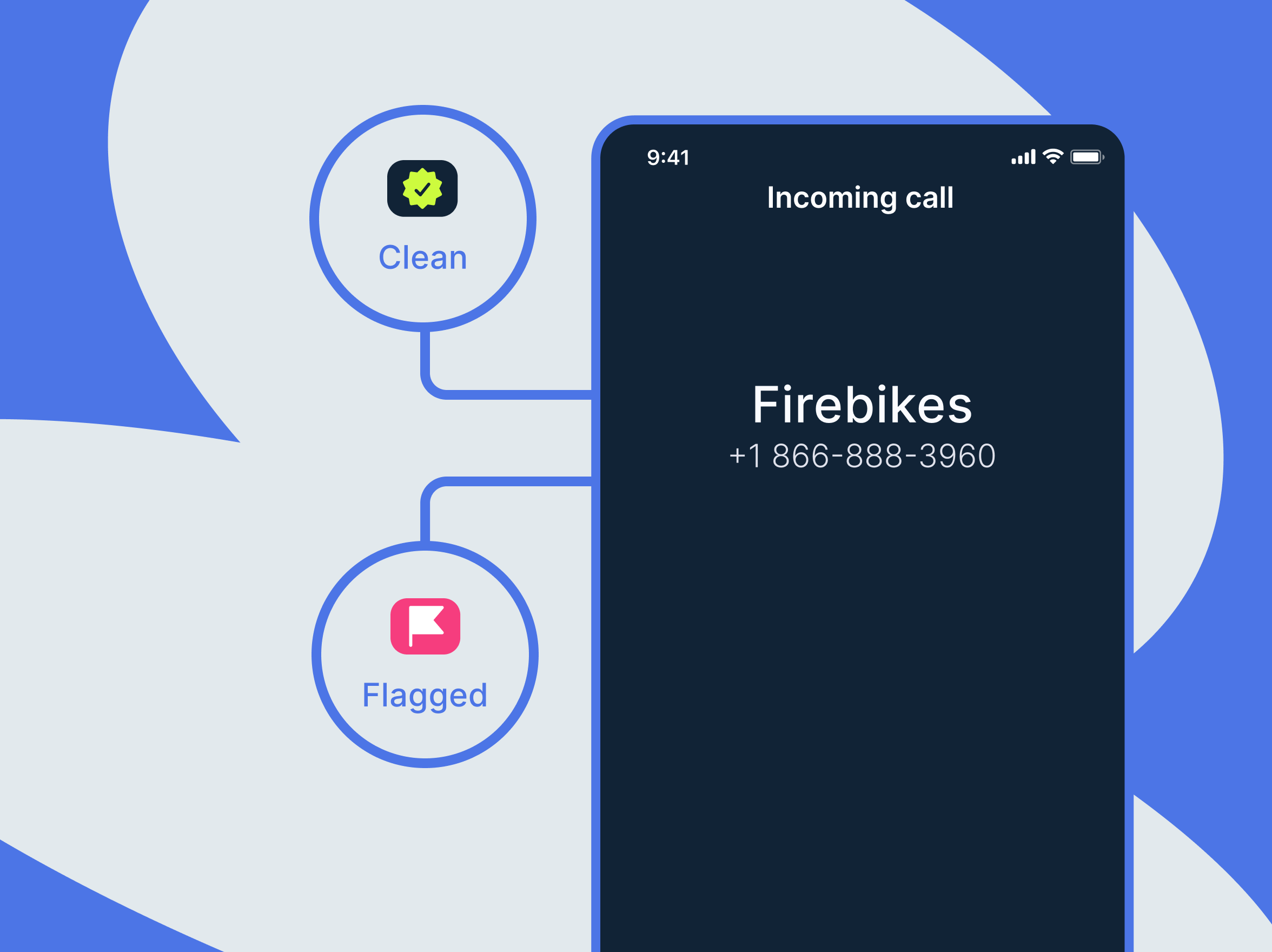
Automatically replace flagged numbers with MightyCall
If a flagged number is affecting your outbound campaigns, you don’t necessarily have to wait for the label to be removed.
MightyCall’s Automatic Flagged Number Replacement feature works alongside Number Reputation Management to detect flagged business numbers and automatically replace them with clean ones. The system prioritizes replacements with the same area code and transfers existing campaign settings, call flows, user assignments, and integrations to the new number.
The flagged number remains available for incoming calls during a 14-day transition period, helping your team maintain continuity without manually reconfiguring campaigns.
STIR/SHAKEN vs. call reputation: What’s the difference?
Both STIR/SHAKEN and call reputation help carriers evaluate incoming calls, but they answer different questions.
| STIR/SHAKEN | Call reputation | |
|---|---|---|
| Primary purpose | Authenticate caller ID | Assess calling activity and potential spam risk |
| Main focus | Caller identity and number authorization | Calling history, behavior, and recipient feedback |
| Key signals | Digital signatures, certificates, attestation | Call patterns, engagement, complaints, and spam reports |
| Helps address | Caller ID spoofing | Spam labeling and reputation issues |
| Guarantees no spam label? | No | No |
STIR/SHAKEN
STIR/SHAKEN helps participating voice providers verify caller ID information using digital signatures and certificates. Its attestation levels indicate what the originating provider can confirm about the caller and their authorization to use the displayed number. This makes it an important tool against caller ID spoofing, but it doesn’t determine whether recipients actually want the calls.
Call reputation
Call reputation looks at the bigger picture. Providers may consider a number’s history, calling volume, answer rates, engagement, spam complaints, and other signals to assess whether its calls might be unwanted. That means a properly authenticated call can still receive a spam warning if its calling behavior or recipient feedback raises concerns.
Protect your caller reputation with consistent calling practices
A good caller ID reputation isn’t something you achieve once and forget about. It takes consistent calling habits, relevant outreach, and regular attention to how recipients respond.
Registering your numbers and using proper caller authentication are important steps, but how your team makes calls matters just as much. Keep your contact lists accurate, respect opt-outs, avoid excessive retries, and monitor for signs of declining engagement.
If a number develops a poor reputation, don’t rush to replace it. Identify the root of the problem and fix it first. That way, you address the issue instead of carrying it over to another number. With responsible calling practices and ongoing monitoring, you can reduce the risk of spam labels and give your outbound campaigns a better chance of reaching customers.
Caller reputation isn’t a technical problem you hand off to IT. It’s the result of how your team sells. Respect people’s time, call the right contacts, and keep an eye on the signals, and your numbers will take care of themselves.