
TL;DR
- Caller ID remediation is the process of addressing incorrect or negative spam/scam labels and reputation issues that affect legitimate business phone numbers.
- Caller ID remediation addresses incorrect or negative spam/scam labels and reputation issues that affect legitimate business phone numbers.
- The process typically involves several steps. Identify which carrier or analytics provider flagged the number, verify your business information, submit a review or dispute request, address problematic calling practices, and verify whether the label or reputation status has changed.
- There’s no master switch. Carriers and analytics providers maintain separate reputation systems, so removing a label through one provider doesn’t necessarily resolve it elsewhere.
- Removing the label is only part of the solution. If excessive dialing, poor-quality contact lists, or ignored opt-outs contributed to the flag, the number may be labeled again unless you address those underlying issues.
A spam label does more than damage how your business appears on a recipient’s screen. It can also lower answer rates. Yet when calls go unanswered, many teams review their scripts and contact lists before considering whether their phone numbers have been flagged.
What is caller ID remediation?
Caller ID remediation, also known as phone number remediation, is the process of addressing negative or incorrect spam/scam labels and reputation issues associated with legitimate business phone numbers.
The process typically begins when a business discovers its number has an adverse reputation status, shows a spam-related warning, or experiences call delivery problems.
Depending on the situation, remediation may involve verifying business information, correcting inaccurate number details, submitting a review or dispute request, or addressing calling practices that contributed to the issue.
However, carriers and call analytics providers don’t all follow the same procedures. Without a universal remediation system, resolving a negative classification with one provider doesn’t guarantee the same result across every network.
When does a phone number need remediation?
A business phone number may need remediation when an existing spam label or reputation issue begins interfering with legitimate outbound calls. Some situations are easy to recognize, while others require a closer look at calling performance and number status.
Common signs include:
- Spam or scam warnings: Recipients see labels such as Spam Likely, Scam Likely, Spam Risk, or Potential Spam when your business calls. Understanding why a business number may show as spam can help clarify what these warnings mean.
- Network-specific flags: One or more carriers or call analytics providers classify the number negatively.
- Call blocking or delivery problems: Calls appear blocked or are handled differently than expected.
- Deteriorating number health: Reputation monitoring reveals a new negative status or a concerning change.
- Unexpected performance declines: Answer or connection rates drop, raising concerns about how the calling number is being presented.
- Incorrect classification: A legitimate business number receives a negative label despite being used for authorized communications.
Why caller ID remediation matters for outbound teams
When a business number is flagged, the consequences can extend beyond an unwanted label on a customer’s screen. The issue may affect how many people agents reach, how campaigns perform, and how recipients perceive the business.
Flagged numbers can reduce customer reach
Getting someone to answer an unfamiliar number is already a challenge. A spam warning can make that decision even easier for the recipient.
According to Hiya’s State of the Call 2026, 86% of calls that are not identified go unanswered. While this statistic doesn’t specifically measure spam-labeled business calls, it highlights the broader challenge of establishing trust before a conversation begins. When legitimate numbers are flagged, outbound teams face an additional obstacle.
Poor caller ID status can affect campaign performance
Sales teams and contact centers rely on successful connections to move conversations forward. If a number is flagged or blocked, agents may spend time calling prospects who never see or answer their calls.
Answer and connection rates can decline even when lead targeting and agent performance remain unchanged. This can also complicate campaign analysis. A team might investigate its calling scripts or lead quality without realizing that the number itself is contributing to the problem.
Unresolved flags can undermine caller trust
A spam warning can create doubt about a business before anyone answers. A 2024 TransUnion consumer survey found that 80% of respondents reported blocking calls from numbers they didn’t recognize, while 73% said they would be more likely to answer if the company’s name and logo appeared.
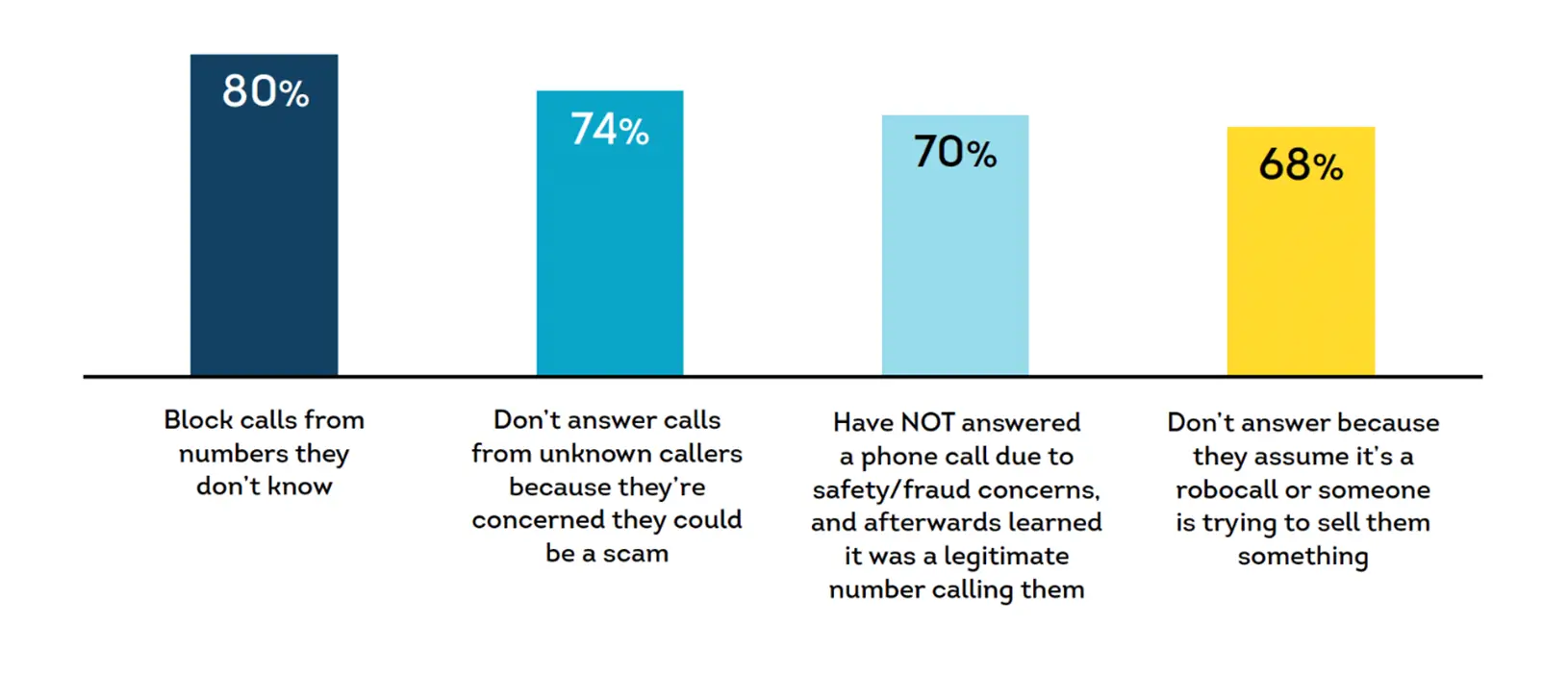
These findings emphasize the value of recognizable caller identity. Caller ID remediation helps businesses address negative number classifications that may interfere with that trust.

How does caller ID remediation work?
Caller ID remediation follows a recovery process that begins with identifying the affected number and continues through investigation, review, corrective action, and monitoring. Although exact procedures vary by carrier and analytics provider, the general process involves seven steps.
1. Detect the issue
Start by identifying which business numbers have received negative labels or may be experiencing delivery problems. Check number reputation statuses, review spam-label reports, and investigate customer feedback about suspicious-looking calls. Record the affected numbers and the problems associated with each.
2. Identify where the issue appears
A phone number may be flagged on one network but display normally on another. Determine which carriers, analytics providers, or reputation systems are showing the negative classification. This helps teams identify the appropriate review process instead of assuming that one request will resolve every issue.
3. Verify the business and phone number
Some providers require evidence that the business is legitimate and authorized to use the number. Verification may require business identification details, contact information, and documentation showing ownership or authorization of the number. Accurate information can help the provider evaluate the request.
4. Review possible contributing factors
Before requesting remediation, examine whether recent calling activity may have contributed to the problem. Relevant factors include:
- Sudden changes in call volume or dialing patterns.
- Repeated attempts to contact the same recipients.
- Spam reports, complaints, or ignored opt-outs.
- Incorrect business caller ID information.
- Authentication issues involving STIR/SHAKEN.
The goal is to understand whether the issue involves incorrect classification, problematic calling behavior, or both.
5. Submit the relevant remediation request
Once you identify the responsible provider, follow its available review, dispute, or redress process. A request may require business details, the affected number, and an explanation of why the classification should be reconsidered. Submission doesn’t guarantee approval, as each provider applies its own criteria.
6. Correct contributing issues
If calling patterns, identity information, or authentication problems contributed to the negative status, address them during the review. Otherwise, the number may still receive a negative classification even after successful remediation.
7. Monitor the number after remediation
Check whether the classification changes on affected networks and whether the problem returns. Continue reviewing reputation statuses and relevant calling metrics to determine whether additional action is necessary.
Caller ID remediation is more than submitting a form and assuming the issue is resolved. A complete recovery process includes verifying the outcome and addressing the factors that may have caused the problem.
Why correcting the root cause matters
Removing a negative label can help restore a business number’s standing, but the improvement may not last if the underlying issue remains. Consider a company that completes spam label remediation but continues using the same calling practices that generated complaints. Its number may receive another warning even after the original classification is corrected.
Several factors can cause recurring problems, including unusual call volume, repeated contact attempts, poor-quality calling lists, ignored opt-outs, and inaccurate caller-identity information.
That’s why caller ID recovery should involve more than requesting a status change. Businesses need to identify what contributed to the negative classification and take corrective action. Understanding how to improve caller ID reputation helps teams address these factors and reduce the risk of recurring issues.
Removing a negative label isn’t the same as fixing the behavior that caused the reputation problem. Both aspects need attention for lasting improvement.
Is it better to remediate or replace a flagged phone number?
The right decision depends on the number’s importance to the business, how severely the issue affects operations, and how quickly the team needs to continue calling. Remediation may be the better option for an established business number. For example, a sales department may have used the same number for years, and customers may already recognize it. Preserving that number can be valuable, making a review or dispute worth pursuing.
Replacement can be useful when campaign continuity is the immediate priority. If a flagged number disrupts outbound activity, switching to another available number may let the team keep working while the original issue is investigated.
However, a replacement doesn’t recover the original number’s reputation. It also doesn’t guarantee that the new number will remain free of negative labels if the same problematic calling practices continue. In some situations, businesses may choose both approaches: use a replacement number to maintain operations while pursuing remediation for an important existing number.
Neither strategy is universally better. Remediation and replacement serve different operational needs, and neither eliminates the need to correct the underlying cause.
How long does caller ID remediation take?
There is no universal timeline for caller ID remediation. Some cases may require relatively straightforward verification, while others involve additional investigation or review.
The duration depends on several factors:
- Carrier or analytics provider: Each organization may have its own procedures and processing schedules.
- Type of classification: Some negative labels require more investigation than others.
- Business verification: Missing or inaccurate details may delay the process.
- Underlying issue: Calling behavior or identity problems may require additional corrective action.
- Reputation update cycles: Providers may apply approved changes at different times.
Even after one provider updates a number’s status, another network may continue displaying the previous classification. Rather than relying on an estimated completion date, businesses should verify when the affected status actually changes.
Can caller ID remediation remove every spam label?
A single remediation request cannot guarantee the removal of every spam-related label across all carriers, mobile devices, and call analytics providers. Different networks may use separate reputation databases, evaluation models, and recipient feedback. As a result, one provider may consider a number clean while another flags it.
Phone number spam remediation may therefore involve separate review processes, depending on where the negative classifications originate. Even successful requests may not produce immediate, consistent results. One network might update a number’s status before another reflects the change.
The goal is to identify the affected providers, address the relevant classifications, and confirm the outcome. A successful review with one carrier doesn’t mean every other network will automatically treat the number the same way.
How MightyCall supports number reputation recovery
Before a business can address a reputation problem, it needs to know which numbers may be affected. MightyCall’s Number Reputation Management helps outbound teams monitor their business numbers and identify spam-related flags or changes in reputation status. This visibility makes it easier to investigate potential problems and decide whether remediation, calling-practice adjustments, or number replacement are necessary.
While monitoring helps detect potential issues, remediation focuses on addressing existing negative classifications.
schedule your personalized demo with our amazing team

How to know if caller ID remediation worked
Submitting a remediation request is only one part of the process. The next step is to confirm whether the original issue has been resolved. After remediation, review the following:
- Label or status changes: Check whether the negative classification has disappeared or changed on the affected network.
- Network consistency: Where possible, confirm whether other carriers or analytics providers still display adverse statuses.
- Reputation stability: Continue monitoring the number to see whether the issue returns.
- Calling performance: Compare answer and connection rates before and after remediation to identify potential changes.
Performance metrics can provide useful context, but they shouldn’t be treated as definitive proof of success. For example, improved answer rates might reflect better lead quality, different calling times, or a more responsive audience rather than a change in the number’s reputation.
The strongest evidence of successful remediation is a verified change in the adverse classification on the affected network, supported by continued monitoring and relevant calling data.
Caller ID remediation vs. registration vs. monitoring: What’s the difference?
Registration, monitoring, remediation, and reputation management are closely related, but each serves a different purpose. Understanding these distinctions helps businesses choose the appropriate response when a phone number develops a problem.
| Process | Main purpose |
|---|---|
| Registration | Associates or verifies a legitimate business identity with a phone number. |
| Monitoring | Detects reputation changes, spam labels, and network-specific number statuses. |
| Remediation | Addresses existing negative labels or reputation issues through review, dispute, or corrective action. |
| Reputation management | Supports number health over time through monitoring and appropriate operational responses. |
Business number registration helps providers associate a number with the correct organization. Related identity mechanisms, such as CNAM and branded caller ID, may supply additional information, but registration alone doesn’t guarantee protection from spam labels.
Monitoring helps teams recognize when a number’s status changes. It provides visibility but doesn’t automatically correct negative classifications. Remediation begins after an issue is identified and focuses on addressing the problem.
These processes can work together, but they aren’t interchangeable. Registration establishes identity, monitoring detects changes, and remediation addresses existing reputation issues.
Recover your business phone number from spam issues
Caller ID remediation gives businesses a structured way to address negative classifications affecting legitimate phone numbers. The process involves detecting the issue, identifying the responsible provider, pursuing remediation, correcting contributing factors, and monitoring the results.
However, phone number recovery is only part of maintaining reliable outbound operations. Ongoing visibility and responsible calling practices help teams recognize recurring problems and respond appropriately. MightyCall’s Number Reputation Management supports that visibility by helping businesses monitor their numbers’ reputation statuses.