

TL;DR
- DID reputation reflects how trustworthy a business phone number appears to carriers and call analytics providers when used for outbound calling.
- It develops through several factors, including the number’s history, calling patterns, recipient engagement, spam reports, and caller authentication.
- A poor DID reputation can trigger Spam Likely or Scam Likely warnings, reduce answered calls, and, in some cases, lead to call blocking.
- To avoid spam flags, maintain consistent calling patterns, use accurate caller identification, and respect recipients’ preferences and opt-outs.
If a DID is already flagged, identify the affected networks, review calling behavior, correct potential issues, and request remediation when appropriate.
Even legitimate business numbers can trigger spam warnings or call-delivery issues that make it harder to reach prospects. Understanding DID reputation helps teams recognize why these problems occur.
What does DID mean?
DID stands for Direct Inward Dialing, a telecommunications system that allows individual phone numbers to connect to specific users, teams, campaigns, or other endpoints without requiring separate physical telephone lines.
In outbound calling, a DID is often the business number recipients see on their caller ID. That makes reputation important: the number displayed on someone’s screen can influence how they evaluate and receive the call.
What is DID reputation?
DID reputation is the reputation associated with a business phone number based on its calling history, behavior, and how carriers, call analytics providers, and recipients perceive calls from it.
Think of it as the number’s standing within the telecommunications ecosystem. That standing isn’t permanently attached to the number or determined by a single authority. Instead, different systems evaluate the number using their own data and criteria.
For example, one carrier might consider a business number trustworthy based on available information, while another flags it after identifying potentially unwanted calling patterns.
That is why DID isn’t a single universal score for number reputation. The same number can have different ratings or statuses depending on which carrier or analytics provider evaluates it.
Why DID reputation matters for outbound teams
For sales teams and contact centers, a phone number’s reputation can noticeably affect campaign performance. Outbound operations depend on successful call delivery, answer rates, and connection rates. When a business number develops a poor reputation, recipients may see a spam warning or hesitate to answer, even when the call comes from a legitimate company.
Getting someone to pick up is already difficult. According to Hiya’s State of the Call 2026, 86% of unidentified calls go unanswered. While this statistic doesn’t measure DID reputation specifically, it highlights the challenge of establishing trust before a conversation even begins.
Reputation issues aren’t always immediately visible. In a 2025 survey reported by First Orion, more than 55% of businesses said they learned their calls were labeled spam or scam only after someone else pointed it out.
For organizations managing dozens or hundreds of DIDs, identifying an affected number through campaign results alone can be challenging. That’s why DID reputation deserves attention in everyday outbound operations, not just as a technical metric.
How does DID reputation work?
DID phone number reputation develops as carriers and call analytics providers evaluate signals associated with outbound calling activity. The process generally follows four stages:
- A business makes outbound calls using a DID. Recipients see the number on their phones as caller ID.
- Calling activity generates signals. Carriers and analytics providers may evaluate call frequency, calling patterns, recipient responses, complaints, and authentication information.
- The number develops a reputation. Each provider analyzes the available information and determines how to classify the number.
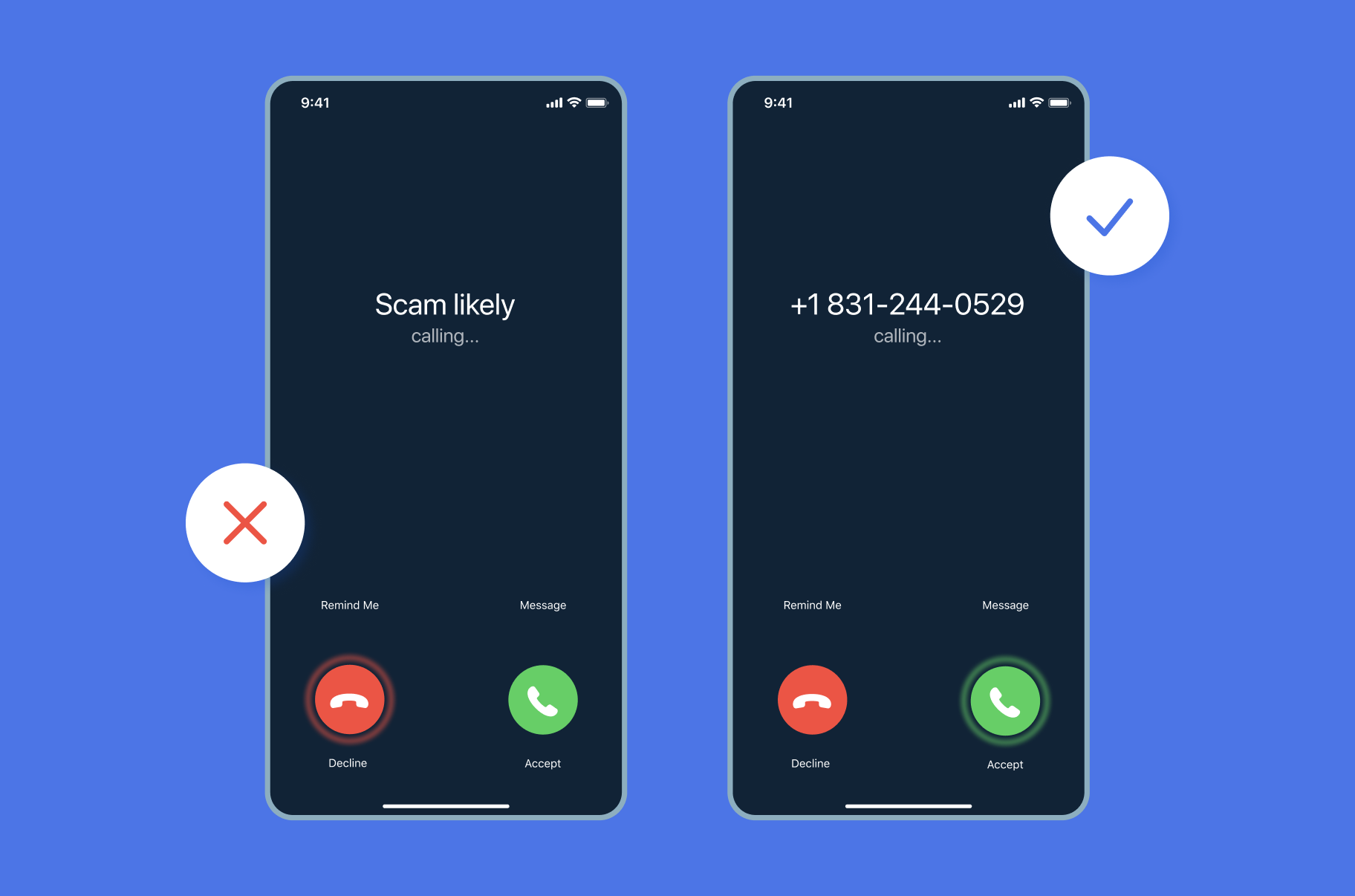
- That reputation can affect how calls appear. Depending on the receiving network, a call may display normally, receive a warning such as Potential Spam, or be blocked in certain circumstances.
Here’s the key distinction: no single universal DID reputation database exists. Carriers and analytics providers use different datasets, evaluation models, and update schedules. As a result, a number that appears perfectly normal on one mobile network might receive a spam-related warning on another.
What affects DID reputation?
A business number doesn’t develop its reputation overnight, and no single factor determines how carriers will classify it. Instead, DID reputation reflects a combination of calling history, behavior, recipient responses, and identity-related signals. Different analytics providers may evaluate these factors differently.
The most common categories include:
| Signal category | Examples |
|---|---|
| Number history | Number age, maturity, established calling history, consistency of use |
| Calling behavior | Call volume, calling frequency, sudden volume increases, repeated calls |
| Recipient engagement | Answer rates, short conversations, immediate hang-ups |
| Recipient sentiment | Number blocking, spam reports, complaints |
| Identity and authentication | Caller identification, number registration, STIR/SHAKEN authentication |
For example, consider a business number that typically makes a steady volume of outbound calls but suddenly begins placing significantly more calls each day. Some analytics systems may interpret that change differently from a consistent calling pattern.
Recipient behavior matters, too. Frequent spam reports or blocked calls can indicate that people consider calls from a particular number unwanted.
MightyCall’s DID reputation framework groups number health into four dimensions:
- Maturity: How established the number’s calling history and activity are.
- Connection: How frequently recipients answer calls from the number.
- Engagement: Whether recipients stay on the line and participate in conversations.
- Sentiment: Whether recipients appear willing to maintain contact or instead block or report calls.
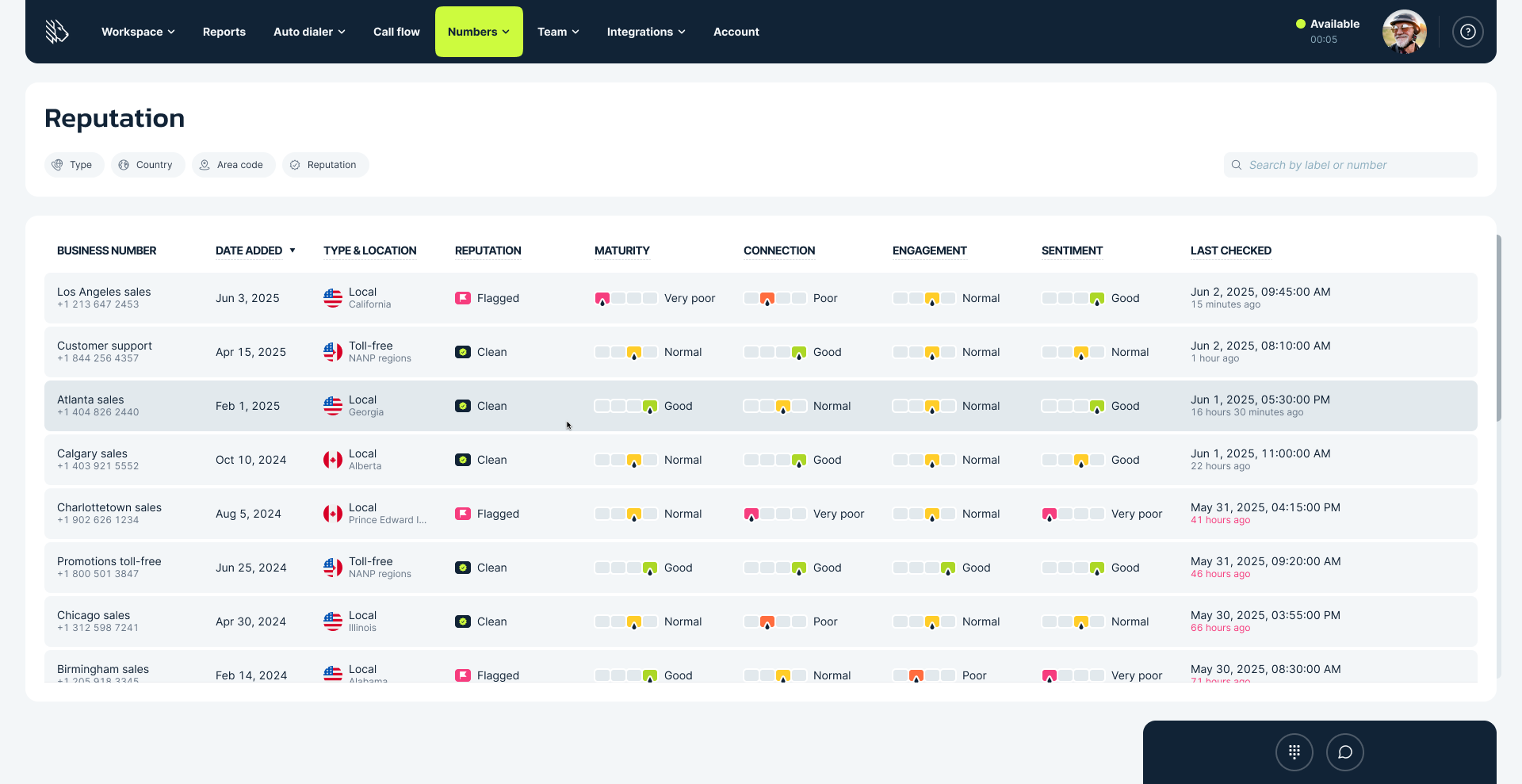
These dimensions provide a practical way to understand DID reputation scores, but they aren’t a universal industry standard.
Different carriers and analytics providers may weigh these signals differently, so no single metric guarantees a positive reputation. Understanding these factors and monitoring changes in calling patterns can help businesses identify potential issues early. Tools like MightyCall’s Caller ID Reputation can offer additional visibility into number reputation, complementing responsible calling practices.
How can you check DID reputation?
Checking DID reputation involves looking at how carriers and call analytics providers classify your outbound numbers. The challenge is that a single reputation rating may not tell the whole story. A number can receive different classifications across networks, so businesses benefit from looking beyond one overall status.
DID reputation monitoring can help teams identify:
- Spam-related flags: Numbers that are currently receiving warnings or negative classifications.
- Reputation changes: Numbers whose status has improved or deteriorated over time.
- Network differences: Cases where the same number is evaluated differently across available carriers.
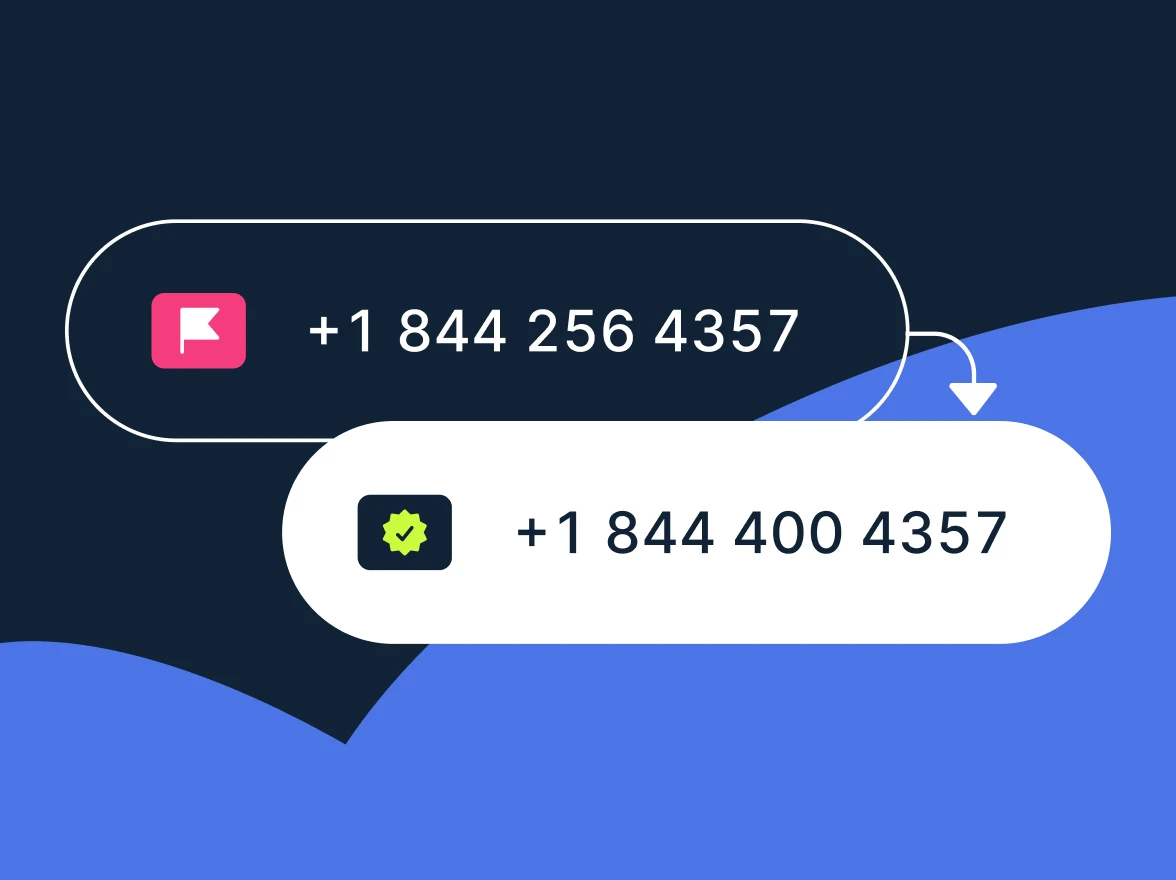
For example, MightyCall’s reputation framework includes Flagged and Clean statuses, along with Maturity, Connection, Engagement, and Sentiment assessments.
How frequently should teams check? That depends largely on outbound calling volume. A contact center making hundreds of calls daily will generally need more frequent visibility than a business that places occasional calls. However, with MightyCall’s Number Reputation Management feature, your team doesn’t have to do it manually.
Monitoring doesn’t control how carriers classify calls, but the feature provides valuable information about which numbers may need attention.
What should you do if a DID has poor reputation?
A poor DID reputation can lead to spam warnings, lower answer rates, or blocked calls. If your business number is affected, consider these steps:
- Identify affected networks.
- Review recent calling activity.
- Examine recipient responses.
- Verify caller identity.
- Address problematic calling behavior.
- Request a reputation review if needed.
- Continue monitoring your number.
If your number has already been flagged, phone number remediation can help you understand the available options for addressing incorrect spam labels and reputation issues. Keep in mind that replacing a DID without addressing the underlying calling practices may cause the same reputation issues to recur.
Can the same DID have different reputations across carriers?
A DID can appear clean on one network while another flags it for spam. This happens because carriers and their analytics partners don’t necessarily rely on the same information. They may use different reputation databases, recipient reports, calling records, evaluation models, and update schedules.
For example, a business number might display normally when calling someone on one network but appear as Spam Likely when calling a customer on another.
The key takeaway is that a positive status from one provider doesn’t guarantee identical treatment across every network.
DID reputation vs. STIR/SHAKEN
DID reputation and STIR/SHAKEN both relate to caller trust, but they serve different purposes. STIR/SHAKEN helps authenticate caller ID, while DID reputation reflects a phone number’s broader history and behavior.
STIR/SHAKEN is an authentication framework used in North American telecommunications. It helps receiving networks verify information about a call’s originating provider and whether the caller is authorized to use the displayed number.
DID reputation considers additional factors, including calling patterns, recipient engagement, complaints, and number history. Here’s why the distinction matters: a call can pass STIR/SHAKEN authentication and still receive a spam-related warning if analytics systems identify potentially unwanted calling behavior. An authenticated call isn’t necessarily trusted.
Understanding number reputation for more reliable outbound calls
For businesses that depend on outbound calls, DID reputation is more than a technical detail. It helps explain why a legitimate business number might trigger spam warnings, see declining answer rates, or be treated differently across carriers. Understanding the signals behind number reputation gives teams a clearer picture of when their calling operations may need attention.
MightyCall helps outbound teams monitor their business numbers’ reputation statuses and identify potential issues that could affect campaign performance. With better visibility into number health, teams can make more informed decisions about their outbound calling operations.