| MightyCall | RingCentral RingCX | OpenPhone (now Quo) | |
|---|---|---|---|
| Phone numbers included | 3 toll-free or local | 1 per user, toll-free or local | 1 per user, toll-free or local |
| Unlimited calling |  |
 |
|
| Unlimited texting | |
 |
|
| Voicemail & transcription | |
|
|
| Voicemail drop Send pre-recorded voicemail messages straight to customers’ voicemail 
|
|
|
|
| IVR / auto-attendant | Multi-level | Multi-level | Multi-level |
| Call recording | |
|
|
| Call queues | |
|
|
| Auto dialer | Predictive, progressive, and preview modes | |
|
| AI Answering machine detection MightyCall's AI AMD detects voicemail with over 97% accuracy and in under 3 seconds
|
|
|
|
| Local presence dialing Automatically match business numbers to your contacts’ area codes
|
|
|
|
| Call analytics | |
|
|
| AI call summaries | |
|
|
| Roles & permissions system Admin, supervisor, and agent roles with custom permissions
|
Advanced | Advanced | |
| Live call monitoring Call listening, barging, whispering, intercepting
|
|
|
|
| AI Agent | |
Additional charge | |
| CRM integrations | |
|
|
| High-availability seamless redundancy infrastructure MightyCall runs multiple dedicated physical servers simultaneously, ensuring real-time synchronization for zero downtime and built-in redundancy
|
|
|
|

Feature set: Which provider fits your team best?
Let’s begin our detailed comparison by looking at functionality and whether it covers everything your team may need.
OpenPhone (Quo)
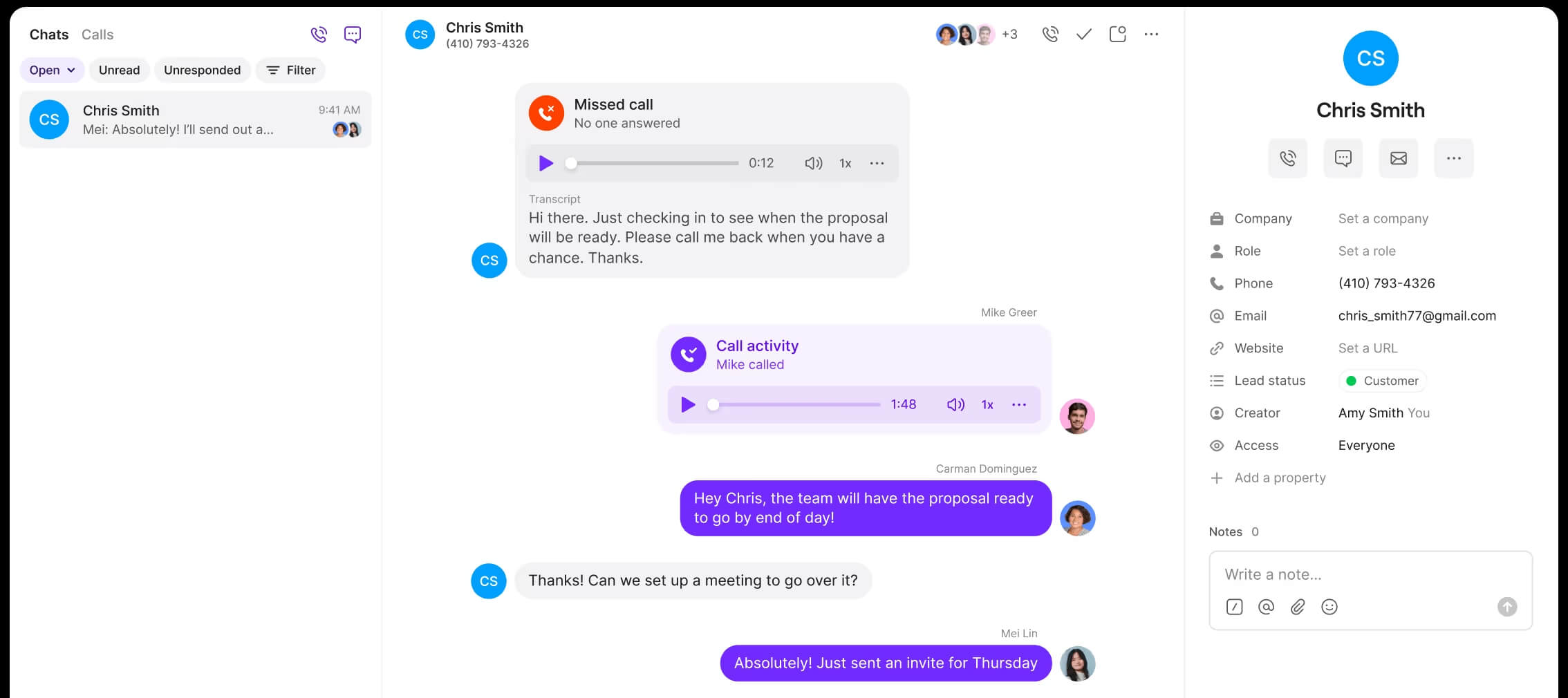
Compared to RingCentral, OpenPhone offers a more streamlined set of features for calls and messaging. Users get a virtual phone number, voicemail with transcripts, and AI support for call summaries and notes. The platform provides a central dashboard to track activity. AI agent is now available with no additional charge.
RingCentral (RingCX)
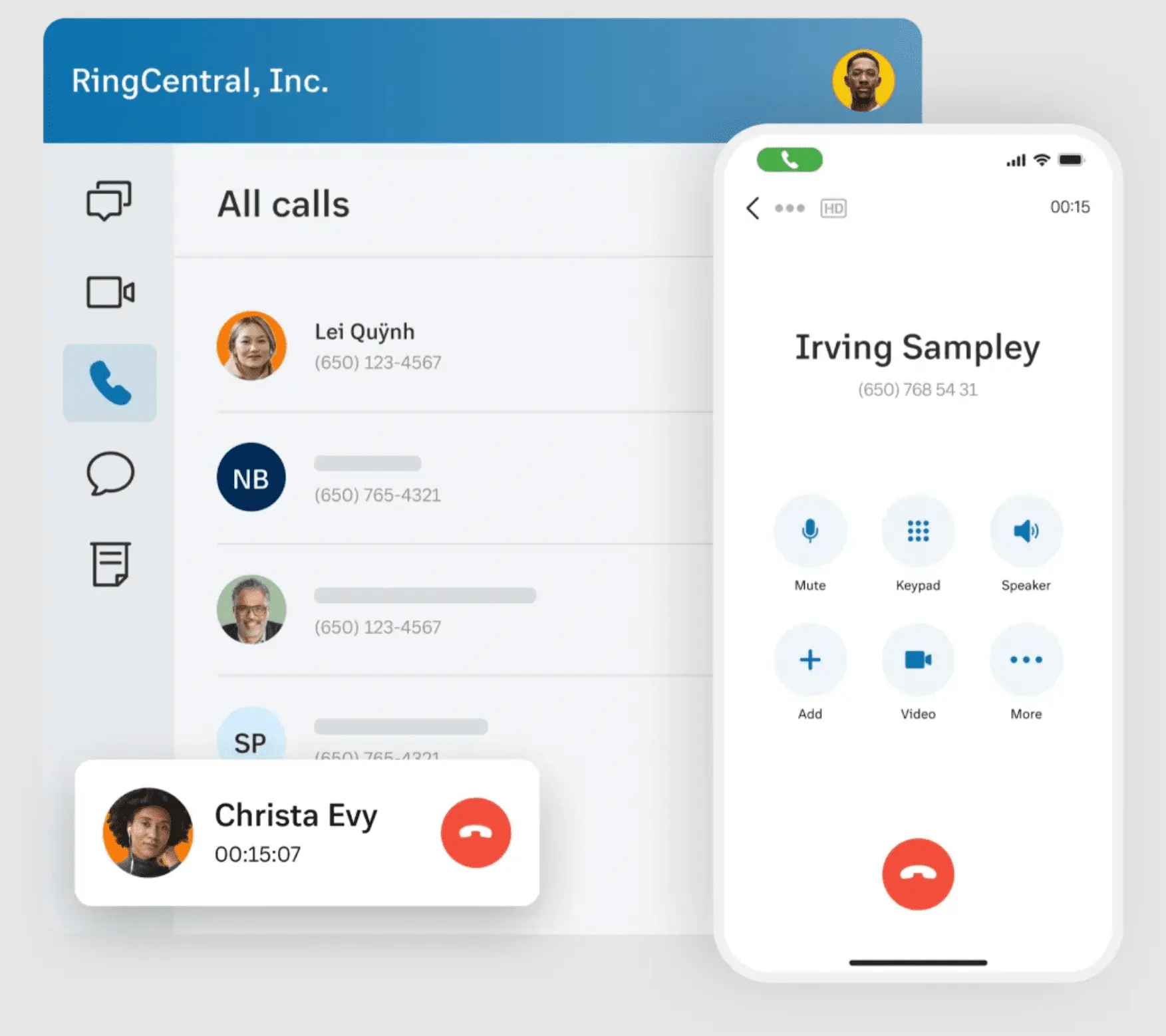
RingCentral delivers a complete, enterprise-level communication system that covers calls, messaging, and video. Core features include unlimited domestic calling, business SMS, voicemail transcription, HD voice, and basic auto attendants. It’s built to support large teams and call centers that need reliable performance and extensive customization.
Winner: Draw
Pricing & plans: Does OpenPhone (Quo) or RingCentral (RingCX) fit your budget?
Now let’s see how much users pay to use RingCentral and OpenPhone:
| OpenPhone (per user/month) | RingCX (per user/month) | |
|---|---|---|
| Lowest tier | Starter: $19 | Starts at $65 (paid annually) |
| Middle tier | Business: $33 | Custom |
| Highest tier | Scale: $47 | Custom |
OpenPhone delivers excellent value from the very first tier, with unlimited calling to the US and Canada, voicemail transcripts, an AI agent, and API access included at just $19. Its Business plan quickly expands into CRM integrations, call recording, analytics, and menus, and the Scale plan adds workflow automation and priority support.
RingCX, in comparison, charges more at lower levels and keeps its most appealing features locked in higher tiers. As an enterprise-focused solution, affordability isn’t its main priority.
Winner: When feature richness and affordability are weighed together, OpenPhone is the stronger choice.
Security, service reliability, and compliance: which provider is safer?
Communication should be safe for everyone. Whether you’re making or receiving a call, you need to trust the system it goes through. Here’s how RingCentral and OpenPhone keep their users protected:
OpenPhone (Quo)
OpenPhone relies on Amazon Web Services for cloud infrastructure and includes DDoS protection, firewalls, and encrypted connections. Encryption covers calls, messages, voicemail, and account data with AES-256 and TLS 1.3 standards.
The platform maintains daily and hourly backups across different locations, with automated recovery checks. Compliance includes SOC 2 Type II, GDPR, CCPA, and PIPEDA. Payment processing through Stripe follows PCI Level 1 standards.
RingCentral (RingCX)
RingCentral supports SAML, OAuth, and password-based authentication, with single sign-on options through Okta, Google Workspace, or Azure AD. All data is encrypted both in transit and at rest, and domain allow/block lists provide control over external communications.
The platform holds key certifications: ISO 27001, SOC 2, PCI DSS, and HITRUST CSF.
Winner: Tie
Integrations: Which platform supports more app connections?
The difference between a business with an integrated workflow and one without can be huge. So, let’s compare integrations:
OpenPhone (Quo)
OpenPhone, compared to RingCentral, offers a larger number of integrations: over 7,000 apps via Zapier and 2,200+ through Make. Key connections include HubSpot and Salesforce for CRM, Slack for notifications, and Jobber and Gong for workflow and call insights. Google Contacts import and AI call summaries sync across platforms.
RingCentral (RingCX)
RingCentral has over 500 pre-built integrations, including Salesforce, HubSpot, Zendesk, Microsoft Teams, and Google Workspace. Custom ones are available through open APIs, and the platform connects across RingEX and other RingCentral products.
Winner: OpenPhone
Customer support and satisfaction: Which delivers better service?
In this section, we’ll look at RingCentral vs OpenPhone based on what other people say about them:
OpenPhone (Quo)
Unlike RingCentral, OpenPhone offers support via chat and email, with live chat only available on certain plans during business hours. Most users find the team friendly and helpful, but wait times can be longer during busy periods. Support is only provided in English.
- What they love: Being able to work from anywhere, share access, and keep track of conversations with features like internal threads, call recordings, and voicemail summaries. Support and onboarding are often described as straightforward and helpful.
- What they don’t love: Occasional call quality hiccups, small notification or activity tab issues, and extra SMS fees. A few mention minor frustrations with account settings or advanced customization.
G2 rating: 4.7/5.0 (2,900+ reviews)
I love how easy the app is to use and how smooth it makes managing my phone services. The support team is amazing — they’re friendly, knowledgeable, and always quick to help whenever I have a question. It really makes me feel confident and supported as a user.
Read full review on G2
RingCentral (RingCX)
RingCentral’s contact center has 24/7 support in English, with phone numbers for both local and international calls. You can also submit a case for tricky issues, check FAQs, or get help from other users in the community. When calling, you’ll just need your voicemail PIN to verify your account.
- What they love: Reliability, easy setup, and seamless integration across devices. Support is usually knowledgeable and helpful, and account specialists make tasks like adding users or managing extensions easy, without trying to upsell.
- What they don’t love: Occasional slowdowns or glitches, spotty call quality, texts disappearing after a set time, minor notification delays, and limited ways to handle sensitive info in recordings. A few have run into frustrating customer service experiences.
G2 rating: 4.0/5.0 (150+ reviews)
I love RingCentral for its easy setup and access, which significantly helps our sales department. It permits seamless text communication and phone calls, increasing accessibility for us and our agents. Its agility saves us time, making it efficient and better than our previous solution.
I find the quality of the calls to be inconsistent. Sometimes the call quality is low or medium, which seems to depend on the internet connection and service provider.
Read full review on G2
Winner: OpenPhone
Compared to OpenPhone, RingCentral’s support is more robust and available around the clock, but users find OpenPhone easier to set up and use day-to-day.
Does RingCentral (RingCX) or OpenPhone (Quo) check all the boxes?
For the final push, let’s compare RingCentral and OpenPhone to see which teams each serves best.
OpenPhone (Quo) is good for
Best for businesses that handle everyday client calls and texts, coordinate basic team communication, and need to stay agile without complex setups. Also great for small workgroups that want simple tools for daily operations and quick client follow-ups.
RingCentral (RingCX) is good for
Unlike OpenPhone, it is best for teams managing high call volumes, multiple communication channels, and remote staff. It works well for businesses that need advanced call routing, multi-device integration, and 24/7 support for ongoing operations.
Keep your team connected with MightyCall
You’ve seen the differences between RingCentral and OpenPhone, but you should also know that MightyCall offers a stronger alternative. With MightyCall, businesses benefit from a straightforward setup and reliable support that doesn’t require constant oversight.
MightyCall Cloud Call Center Software
Smart dialing options
MightyCall offers several dialer options to match how your team makes calls:
- Predictive dialer – Anticipates agent availability and calls multiple numbers at once. It skips busy signals and prioritizes leads with higher chances of conversion.
- Progressive dialer – Dials at a controlled pace based on agent readiness, which lowers the chance of abandoned calls and missed connections.
- Preview dialer – Shows contact details before dialing and lets agents skip or prepare for calls.
To take your outreach efficiency even further, MightyCall comes with intelligent call management tools like:
- Answering Machine Detection – Automatically detects voicemail responses, saving agent time and ensuring only live calls connect.
- Local Presence – Matches outgoing numbers to your contact’s area code so calls appear local and build trust from the first ring.
Simple access management
MightyCall offers a detailed roles and permissions setup that makes managing your team straightforward and safe. Supervisors can assign different access levels, so each person only sees what they need for their work.
Dependable for every team
With MightyCall, you get more than tools:
- Strong security – Unlike many other providers, MightyCall offers HIPAA compliance. Healthcare, legal, and other security-focused industries have a contact center platform they can truly trust.
- Reliable call quality – With servers spread across multiple data centers, your calls stay clear and consistent no matter where your team is working.
- Simple, intuitive interface – The platform is designed to be easy to navigate, so onboarding new team members is fast and straightforward, even for those less familiar with the tech.
- Support that’s easy to reach – Whether by phone, email, live chat, or ticket, the team is ready to help whenever you need it.
See MightyCall
in action
–
schedule your personalized demo with our amazing team
schedule your personalized demo with our amazing team
Happy customers
MightyCall customers talk about how dependable the platform is and how approachable the support team feels. People appreciate that setting up accounts and handling calls or messages doesn’t get complicated, and when they do need help, the team responds quickly.

Rachel N.
Online Marketing Manager
Individual & Family Services (50 or fewer emp.)

The user interface is excellent - not just for those with technical skills but also for those who typically need a fair amount of help with technology. Very easy to navigate, very easy to set up call flows and setting. The intuitive interface is the best. The support team has been on top of it, I've actually spoken with the same person multiple times instead of being bounced to a new person with every interaction (like other experiences). I am so much more pleased with MightyCall than the last two service providers we've tried.

Play video
4x Call Volume and 10x Cheaper
“With the use of MightyCall, from the dialer they helped me create to the minutes they’ve been able to give me, I’ve been able to get my bill down to around $2,800 a month. From $32,000 to $2,800 dollars a month.”
Jason Elsen, owner of Black Creek Management
Prev
Next
01
01

Prev
Next
01
01
Reliable service to keep your
customers happy
MightyCall is continuously recognized as a G2 Leader at 4.5 stars due to its reliable & intuitive nature, exceptional customer support, and ease of setup

MightyCall user ratings:


Integrate our virtual phone system
with your favorite apps








Got questions?
Our customer care team is standing
by and ready to help you!
by and ready to help you!







FAQ
Can I port my existing OpenPhone or RingCentral number to MightyCall?
Yes, you can port your number to MightyCall from most major providers, including OpenPhone and RingCentral. All it takes is submitting a request with your current account details and following MightyCall’s instructions.
Which platform has a stronger track record for uptime and call reliability?
RingCentral offers 99.999% uptime, or about 5 minutes of downtime per year, thanks to its enterprise-level infrastructure and global data centers. OpenPhone delivers 99.99% uptime, roughly 50 minutes of downtime yearly, which is fine for small to medium teams.
How do RingCentral and OpenPhone compare in terms of user training and adoption?
OpenPhone is straightforward and easy to use for teams with minimal training. RingCentral offers more features, which require a longer onboarding period, but it provides robust documentation, webinars, and support to help teams adopt its tools.
Built for high-volume calling,


MightyCall lets you run business communications your way: