

Every call center manager has experienced it: a call lands with the wrong agent, the customer is already frustrated, and the fastest fix is to redirect it away. But speed without context has a cost. Blind transfers can reduce queue pressure, but when overused they increase repeat contacts, lower FCR, and hurt CSAT. In this guide, you’ll learn when they improve call center efficiency, when warm transfers are the better option, and which KPIs to track to protect customer experience.
Key takeaways
- A blind transfer routes a caller to another extension or queue without a live briefing.
- Works best for simple misroutes and call-volume spikes.
- Warm transfers are better when context, sensitivity, or compliance matters.
- Track transfer rate, repeat contacts, AHT, FCR, and CSAT to measure impact.
- Clear queues, intent confirmation, and short notes reduce customer frustration.
- Accuracy matters more than speed.
What is a blind transfer?
A blind transfer, also called a cold transfer, is a call handoff where an agent transfers the call to another extension, queue, or department without speaking to the receiver beforehand. No background information about the customer’s issue is shared when you perform a transfer; the receiving agent picks up with only what’s in the system, or nothing at all.
Here’s how it works step by step:
- An agent receives a phone call and realizes it belongs to another team.
- They inform the caller that they’re being transferred.
- They then select the destination extension or queue.
- The system connects the caller to the new destination.
- The next agent answers with no briefing.
A customer calls billing but needs to cancel a subscription. The billing person transfers to the subscription department. The customer arrives in a new queue and re-explains their reason for calling from scratch.
Manual vs automated blind transfers
A manual blind call transfer occurs when the call gets redirected. The team member picks the destination, informs the customer, and completes the transfer, often in under thirty seconds. The risk is human error: wrong queue, missing notes, or transferring before fully understanding the caller’s need.
An automated transfer is triggered by an IVR or ACD system routing calls based on menu inputs, skill mapping, or intent detection. When you configure your routing, automated transfers move callers efficiently. But when intent detection fails, the system routes confidently to the wrong place with no human to catch it.
- Speed: Automated is faster; manual depends on the team member
- Accuracy: Manual allows in-the-moment correction; automated depends on routing logic quality
- Context carryover: Both pass minimal real-time context; CRM notes are the main safety net
- Customer perception: Both feel abrupt if the caller isn’t informed beforehand
When blind transfers help call center performance
These aren’t a universal best practice. They’re also a situational tool. When call routing is clean, the issue is simple, and the destination is certain, they’re one of the fastest ways to move volume without tying up team members on calls that don’t belong to them.
Faster redirection for simple misroutes
When a call lands in the wrong queue through no fault of the caller—because of a wrong menu selection or IVR misfire—a blind transfer can resolve the misroute quickly. The issue is clear, the destination obvious, and no background context is needed.
Keep in mind: it’s faster provided routing is accurate.
Reduced agent time on irrelevant calls
Team members shouldn’t be handling calls that belong to another team. Transfers let them exit quickly and return to their actual queue. During high-volume periods, every unnecessary minute of handle time increases wait times across the board, meaning fast redirection has a real downstream benefit.
Lower immediate hold time in some workflows
Where a warm transfer would require putting the caller on hold while the agent reaches a colleague internally, this approach skips that wait entirely. For routine calls with a predictable, well-defined destination, this means callers reach help faster than if the system paused for an internal consultation.
Operational triage during volume spikes
During outages, campaign launches, or seasonal peaks, call volume can outpace any routing plan. Transferring blind gives team members a fast mechanism to redistribute load. It’s not a precise tool, of course, but when queues are backing up, speed of redirect matters more than process polish.
Consistent routing when paired with clear queues
When queue names are standardized and ownership is well defined, blind transfers become far more reliable. Team members choose from a known, maintained list rather than guessing. The transfer is only as good as the routing map it relies on: exactly why queue cleanliness should be a mandatory prerequisite, not a mere afterthought.
Example scenarios
Blind transfers work best when the destination is clear, the issue is simple, no sensitive information needs to be re-shared, and compliance documentation is not required during handoff.
Simple routing errors
Situation: A caller reaches technical support but wants to update billing information.
Why it works: The issue is clear, the destination (billing) is unambiguous, and no troubleshooting history is relevant to the next team member.
Do this before transferring:
- Ask one confirming question: “You’re looking to update your payment details. Is that right?”
- Tag the phone call reason in your system before initiating the transfer
- Tell the caller exactly where they’re going: “I’m connecting you to our billing team now.”
Departmental misdirection
Situation: A customer calls the returns department but their issue is a warranty claim handled by a separate sub-team.
Why it works: The caller is in the right organization, just the wrong sub-team. No sensitive data has been exchanged, and the destination queue is clearly defined.
Do this before transferring:
- Confirm the exact queue name; not just “warranty,” but the specific team that owns that call type
- Add a short note: “Caller has a warranty question on order #XXXXX; no return yet initiated.”
High call volume situations
Situation: An outage generates three times normal inbound volume. Team members receiving misdirected calls need to clear their queues fast.
Why it works: Speed and queue control are the operational priority. Even an imperfect redirect moves faster than an extended hold.
Do this before transferring:
- Use a standardized note template so receiving agents aren’t starting completely blind
- Caution: peak-time pressure is exactly when notes get skipped. Build the documentation habit into your spike protocol, not just standard training.
Situations when blind transfers should be avoided
Think of this section as risk management. The goal is fewer repeat contacts and less customer frustration. When a transfer increases the probability of either outcome, the faster option isn’t actually faster. It’s just moving the cost to the next team member, the next call, or the next churn event.
High-value or high-sensitivity customers
VIP accounts, customers flagged as churn risks, and enterprise clients carry significant revenue and can also help your reputation. Forcing a high-value customer to re-explain their issue to a third person in a single call is a serious retention risk. The time cost of a warm transfer is almost always lower than the cost of losing a high-value relationship.
Complex technical cases
Multi-step troubleshooting is context-heavy by nature. When a caller has already described error messages, worked through fixes, and explained their setup, transferring blindly resets all of it. The receiving team member starts at zero. The caller repeats everything. Handle time climbs, frustration builds, and first call resolution drops, penalties which dwarf the thirty seconds saved by skipping a warm handoff.
Regulatory-sensitive calls
Calls involving identity verification, financial data, health information, or consent-based processes carry compliance requirements that don’t automatically carry over between team members. What was verified before the transfer may need re-verification (or worse, may be assumed verified when it wasn’t).
Before transferring, document:
- Verification status (confirmed/not confirmed/partial)
- Data shared during the call
- Any consent given or still required
- Regulatory context (for example, a payment dispute or insurance inquiry)
Blind vs warm transfer: Key differences for call centers
A warm transfer, also called an attended transfer, involves the transferring team member speaking with the receiving agent before the caller is connected. The receiver gets real-time context, the handoff is smoother, and the risk of repeat contacts drops. The trade-off is time: a warm transfer costs the agent minutes that a blind one doesn’t.
That cost is often worth it. Reducing customer effort is one of the strongest predictors of loyalty. A warm transfer trades team member time for a lower-effort customer experience, and in many scenarios that’s the right exchange.
| Factor | Blind | Warm |
|---|---|---|
| Speed | Faster | Slower |
| Context passed | Minimal (notes only) | Real-time briefing |
| Customer experience | Abrupt if unmanaged | Smoother handoff |
| Compliance suitability | Lower for sensitive calls | Higher |
| Agent workload | Lower upfront | Higher upfront |
| Likelihood of repeat contacts | Higher if routing is off | Lower |
Perform a blind transfer when the issue is simple, the destination is clear, no sensitive data is involved, and the caller is clearly informed before the handoff.
Perform a warm transfer when the issue is complex, the customer is high-value or high-risk, prior troubleshooting context matters, or compliance documentation requires continuity between team members.
Industry-specific use cases
Transfer policies aren’t, or shouldn’t be, one-size-fits-all. Regulatory environment, customer expectations, and call complexity vary enough across industries that what’s standard in e-commerce may be actively risky in healthcare. Here’s how the decision changes by sector.
Healthcare call centers
Appointment routing is generally lower risk. Therefore, transferring blind is acceptable when the destination is correctly identified and any relevant notes are logged before the handoff.
Insurance verification is higher risk. These calls involve sensitive data and often require documentation continuity. Warm transfer is the safer default.
- Never assume verification carries over between agents. Instead, document status explicitly
- Use warm transfer when the caller has already shared insurance or benefits information
- When in doubt, err toward more documentation: compliance gaps are harder to fix after the fact
Financial services
Fraud escalation requires both speed and context. When a customer reports suspected fraud, the receiver needs to know what’s already been described; a brief internal handoff before transfer can prevent dangerous verification gaps.
Compliance handling has one critical rule: document first, transfer second.
- Red flags requiring warm transfer: caller has already provided account or card details; a dispute or case number is already open
- Required note fields: issue type, verification status, urgency level, any reference numbers already issued
SaaS & tech support
In SaaS, blind call transfers are most risky during onboarding, Tier 2 escalations, and enterprise support cases. When customers have already shared troubleshooting steps, error details, or environment information, a blind handoff forces them to repeat work and slows resolution. That can increase AHT, reduce CSAT, and create churn risk.
Sales-to-support transitions also need context. For example, an onboarding question may turn into a product setup issue that support must handle. Before transferring, document the customer’s goal, steps attempted, error messages, environment details, and account priority. For enterprise or high-risk accounts, a warm transfer is usually the better choice.
E-commerce & retail
Returns processing is usually low complexity. If queue routing is clean, these transfers work fine. Simply confirm the order ID, tag the reason, transfer.
Order tracking issues carry a real risk of transfer loops: callers bounce between shipping, fulfillment, and customer service without resolution. Prevent this by asking a simple intent question first: “Are you checking on a delivery status, or has something arrived that’s wrong?”
- Use order ID to confirm the correct fulfillment queue before transferring
- Verify order number before the transfer so the receiving agent doesn’t have to restart
- If tracking shows a carrier issue, route directly to the carrier liaison queue, not general support
Best practices for implementation
A good transfer policy only matters if it translates into consistent agent behavior. These six areas – training, scripting, technology, documentation, routing, and QA – form the full stack of what makes blind transfer handling reliable and measurable. The goal across all of them is the same: reduce unnecessary transfers, preserve context, and protect the customer experience under pressure.
Agent training protocols
Team members need a decision framework, not just a transfer button. Training should build three core habits: confirm intent before transferring (one direct question), verify the destination (the actual queue name, not an approximation), and write one sentence in the notes before initiating the handoff.
- Confirm intent: “Just to make sure: you’re trying to [restate issue], correct?”
- Destination certainty: agents should know the queue list and escalation paths before going on live calls
- One-sentence note habit: build this through role-play until it’s automatic, not something agents have to think about
How to measure adoption: Review QA samples for note completeness and intent confirmation; compare transfer rates per team member against team averages.
Transfer scripting best practices
What a call center operator says before a transfer sets the customer’s expectation for the next thirty seconds. Below are two examples:
Standard transfer: “I’m connecting you with our [team name]. They handle [brief reason]. You may need to briefly confirm your account when they pick up.”
High-volume transfer: “I’m routing you to the right team now. I’ve noted your reason for calling so you won’t need to repeat everything.”
Keep scripts short and neutral. Avoid filler empathy phrases, as these come across as fake.
Smart technology & software considerations
The right tools reduce the harm that transfers can cause while improving call management. When evaluating contact center software, prioritize capabilities that limit context loss at the point of handoff:
- Call notes that travel with the transfer, not just log to a timeline
- CRM screen-pop on the receiving end so call center agents see caller history before answering
- Disposition tagging required before the transfer is finalized
- Queue verification prompts that surface the destination name before completing the transfer
- Transfer loop detection that flags callers transferred more than once in a session
- Skill-based routing that reduces the need for manual blind transfers upstream
- Live call monitoring so supervisors can catch misroutes in real time
If your platform does not support note carryover, queue verification, or transfer loop detection, those gaps can directly affect AHT and CSAT. When evaluating call center software, prioritize tools that preserve context during transfers.
CRM documentation standards
Notes are the only context a receiver has in a transfer. Establish a minimal note template that team members complete before initiating any transfer, one that’s short enough to actually get filled in.
Minimum fields before a blind transfer:
- Issue summary: One sentence on what the caller needs
- Verification status: Confirmed / not confirmed / partial
- Urgency: Routine / escalation / time-sensitive
- Next best action: What the receiving agent should do first
- Destination: Which queue and why
Routing optimization
The most effective way to reduce transfers is to reduce misroutes when someone is being transferred to another team member. Review IVR menu logic and ACD routing rules regularly. Clear, specific queue names reduce guesswork at the agent level.
- Each queue should have a defined owner and clear call scope
- Remove or rename queues that consistently receive the wrong call types
- Use skill-based routing to match call intent to agent capability before any human decision is required
- Set transfer limits per queue to surface routing loops early
How to measure: Track first-assignment accuracy (the percentage of calls reaching the right queue without a transfer). That number is your routing health indicator.
Monitoring and quality assurance controls
Transfer quality should be measurable and coachable, not just observable after the fact.
- Sample 5–10% of transferred calls per team member per week
- Score each sample: intent confirmed, destination correct, note completeness, caller informed
- Track transfer loops: any caller transferred more than once in a session should trigger a review
- Tie QA scores to individual coaching, not just team averages. Team member-specific feedback can help change behavior faster
- Weekly review cadence: transfer rate, loop rate, and note quality as standing agenda items in team meetings
How blind transfers impact KPI and metrics
The effects of transferring blindly don’t stay in the queue. They flow directly into your most-watched performance numbers. The causal chain is straightforward: transfer with missing context → receiver re-triages → customer repeats their story → handle time increases, first call resolution drops, and satisfaction scores reflect the effort the customer had to exert.
Measurement plan:
- Define your transfer rate: total transfers ÷ total calls handled, segmented by blind vs warm
- Segment outcomes by queue: which queues receive the most transfers, and what are metrics which come from those calls?
- Compare AHT, FCR, and CSAT for transferred vs non-transferred calls, and blind vs warm
- Run QA on a sample of transfers: score for context quality and destination accuracy
- Run a 2-week pilot program: tighten blind transfer criteria for one team and track metric movement
- Review results before deciding whether to expand, adjust, or hold the policy change
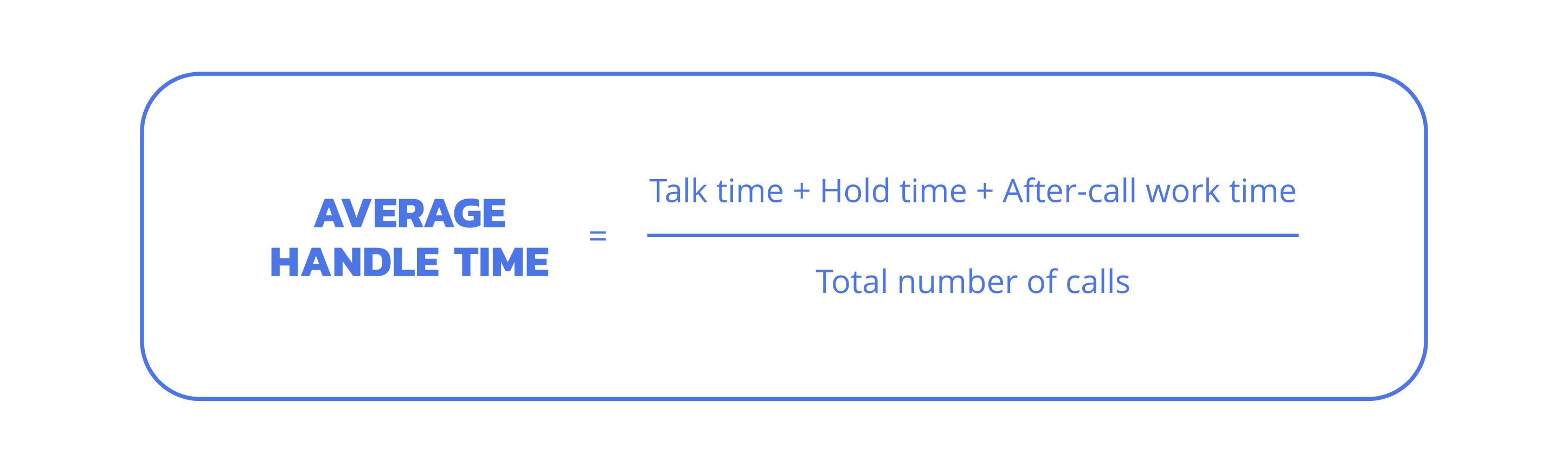
Average Handle Time (AHT)
When a receiver gets a call with no context, the first minutes are spent re-triaging: re-asking what the issue is, re-verifying the account, re-establishing where things stand. Each of those steps would have been unnecessary with a note or a warm handoff. Across hundreds of calls, the time adds up quickly.
Measure this: Compare AHT for blind-transferred calls vs calls handled without transfer
Reduce this: Mandatory pre-transfer notes, improved routing accuracy, and intent-confirmation training
First Call Resolution (FCR)
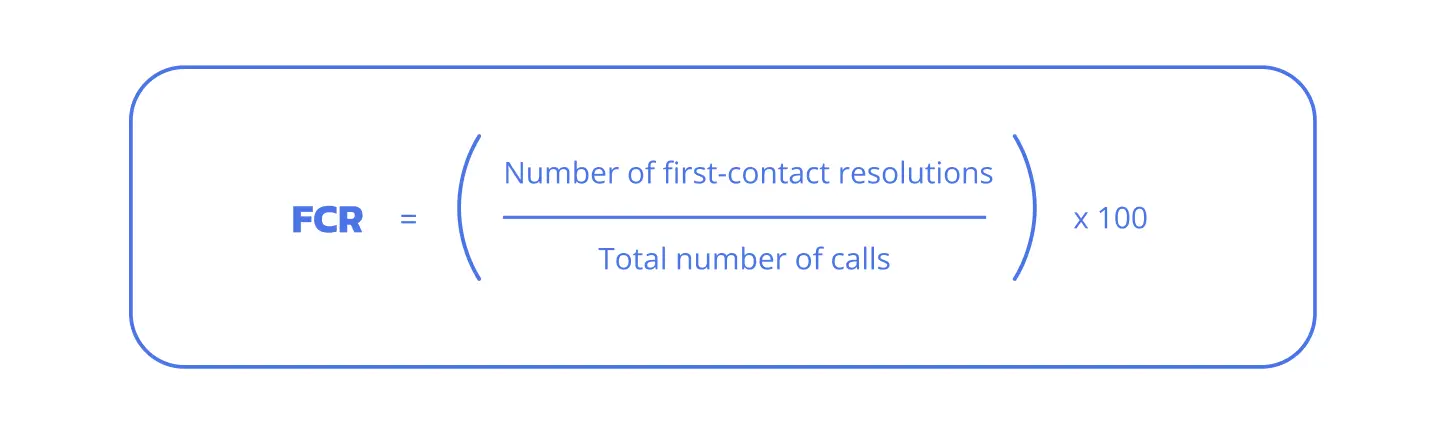
FCR measures whether a caller’s issue is resolved in a single contact without a follow-up call or callback. Every repeat contact comes at a real cost: more time spent, heavier pressure on queues, and a greater risk to customer lifetime value. Poorly handled transfers can lower FCR by sending callers to the wrong team, forcing them to repeat information that reveals process gaps, or escalating issues that could have been resolved at the first point of contact.
Measure this: Track FCR separately for calls involving a blind transfer vs those that didn’t
If blind-transfer FCR is materially lower, audit the most common transfer destinations for routing accuracy
Customer Satisfaction (CSAT)
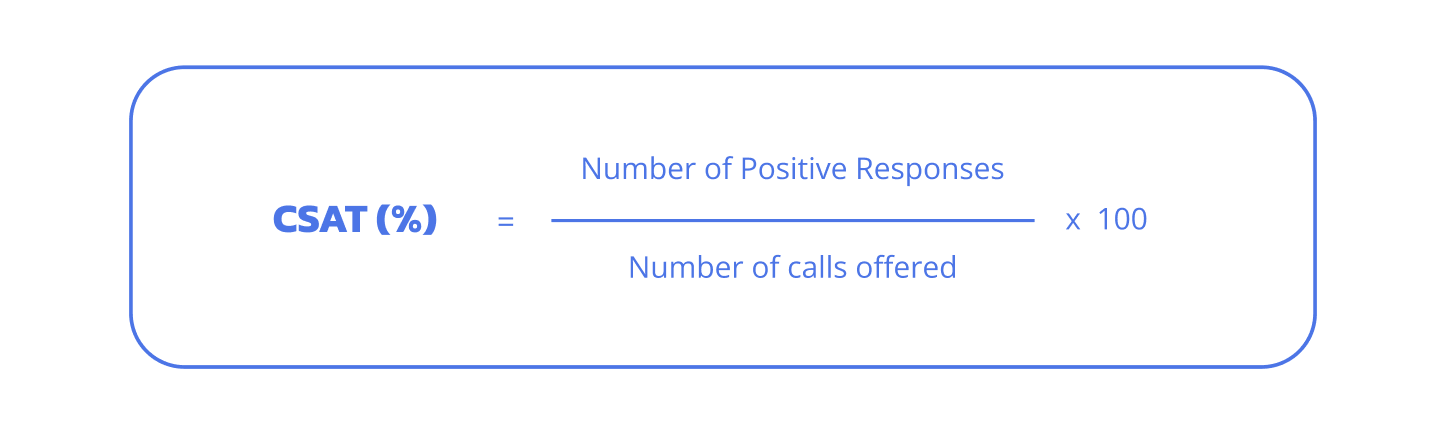
Customer effort – how hard a customer has to work to resolve an issue – is directly linked to satisfaction scores. Every time a caller is transferred and has to repeat themselves, their effort score climbs. Satisfaction follows it down. These transfers are a high-effort experience by default: the caller doesn’t know who they’re going to, just that they have been transferred to another agent, whether context was passed, or whether they’ll be transferred again.
Measure this: Compare post-transfer CSAT against non-transfer CSAT; tie the gap to note completeness and routing accuracy data
Net Promoter Score (NPS)
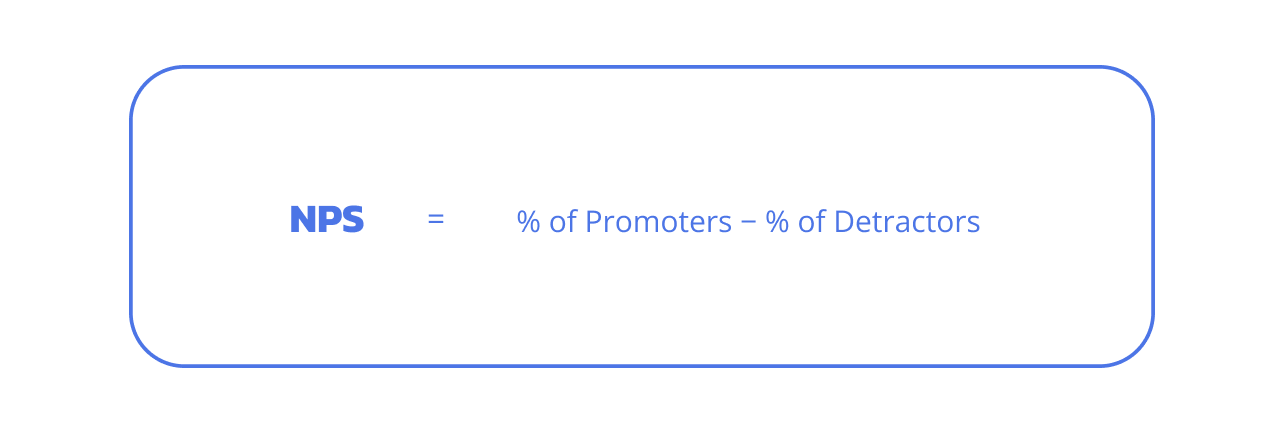
NPS measures loyalty intent (whether customers would recommend your company). Transfer experiences can influence NPS, but the relationship isn’t universal. It’s most visible in specific customer segments: high-value accounts and customers who’ve experienced multiple transfers in a single call are most likely to register a loyalty impact. Routine callers with simple issues resolved quickly are less likely to penalize a company for the transfer itself.
Avoid using NPS to evaluate individual transfers; use it at the segment level. Compare customers who were transferred against those who weren’t, segmented by issue type and customer tier
Make transfers a strength, not a leak in your funnel
Transferring blindly is a legitimate call handling tool: in the right conditions, it can be fast and effective. The core trade-off is simple: speed at the cost of context. When routing is accurate, the issue is low complexity, and the team member takes thirty seconds to document and inform the caller, that trade-off is worth making.
Clear criteria, trained teams, clean routing, and a QA process that catches problems before they become patterns are the way to go. Run a two-week pilot with tightened criteria, measure the metric movement, and let the data tell you where your transfer policy needs work. Audit your transfer workflow this week: review your blind transfer rate, identify the top transfer destinations, and compare AHT, FCR, and CSAT for transferred vs non-transferred calls. That will show you whether your current approach is improving efficiency or creating avoidable customer effort.