
In the world of business communication, Nextiva stands out as a popular choice for teams juggling calls, chats, and customer interactions. But what if your needs and business evolve? What if you start hunting for a cheap alternative or something with more detailed analytics?
In this guide, we will break down the best alternatives that Nextive has, including industry leaders, to help you choose the right fit. Whether you’re scaling or sprucing up your current setup, we’ll provide everything you need to know about the top Nextiva options.
Best Nextiva alternatives: Comparison
Finding the right Nextiva alternative means creating a table of pros and cons and comparing costs to features, especially for teams handling high call volume. We’ve put together a side-by-side comparison of Nextiva and 10 strong contenders.
This table focuses on starting prices, available dialer modes (for efficient call handling), real-time dashboards, analytics, and G2 scores.
| Name | Starting price | Dialer modes available | Answering machine detection | Analytics | G2 rating |
|---|---|---|---|---|---|
| Nextiva | $15 | Preview, progressive, predictive | Yes | Advanced | 4.5/5 |
| MightyCall | $20 | Preview, progressive, predictive | AI AMD | Advanced | 4.4/5 |
| Dialpad | $15 | Salesforce Power | Yes | Advanced | 4.4/5 |
| RingCentral | $20 | Preview, progressive, predictive | Yes | Advanced | 4/5 |
| Aircall | $30 | Basic power (progressive) | No | Basic | 4.4/5 |
| Vonage | $13.99 | None | Yes | Basic | 4.3/5 |
| JustCall | $29 | Predictive, preview, progressive | Yes | Advanced | 4.3/5 |
| Talkdesk | $85 | Predictive, preview, predictive | Yes | Advanced | 4.4/5 |
| Ooma | $19.95 | Basic (preview) | Yes | Basic | 4.6/5 |
| 8×8 | Request a quote | Preview, progressive, predictive | Yes | Advanced | 4.1/5 |
| CloudTalk | $19 | Parallel (power), predictive | Yes | Advanced | 4.4/5 |
Do you spot a pattern here? Many of these competitors to Nextiva pack automatic call distribution into lower tiers, making them solid picks. If you’re eyeing a free trial to test the waters, most offer 7-14 days.
We will have a more detailed look at each alternative in a bit. Before we do that, let’s see what Nextiva offers.
How we evaluated these alternatives to Nextiva
To understand how these companies differ and what makes them the best alternatives to Nextiva, we looked into various basics. Here’s the breakdown:
- Price: We compared the costs and scaling fees, favoring transparent plans that avoid surprise add-ons for extras.
- Key features: Prioritized must-haves like IVR menus and call recording for smooth contact center software vibes.
- Available integrations: Checked compatibility with CRMs. Imagine seamless syncs that keep everything super organized.
- Call quality: Reviewed uptime SLAs and user reports on clarity, especially for international calls, where lags can turn a sales pitch into money-losing errors.
- User support channels: Looked at response speeds and options (chat, phone, docs), because nothing kills momentum like waiting days for a fix.
- User experience: Pulled G2 ratings and reviews, highlighting platforms’ strengths and weaknesses.
This approach ensures that our list of companies, like Nextiva, will give you the answers you’re looking for.
What is Nextiva?
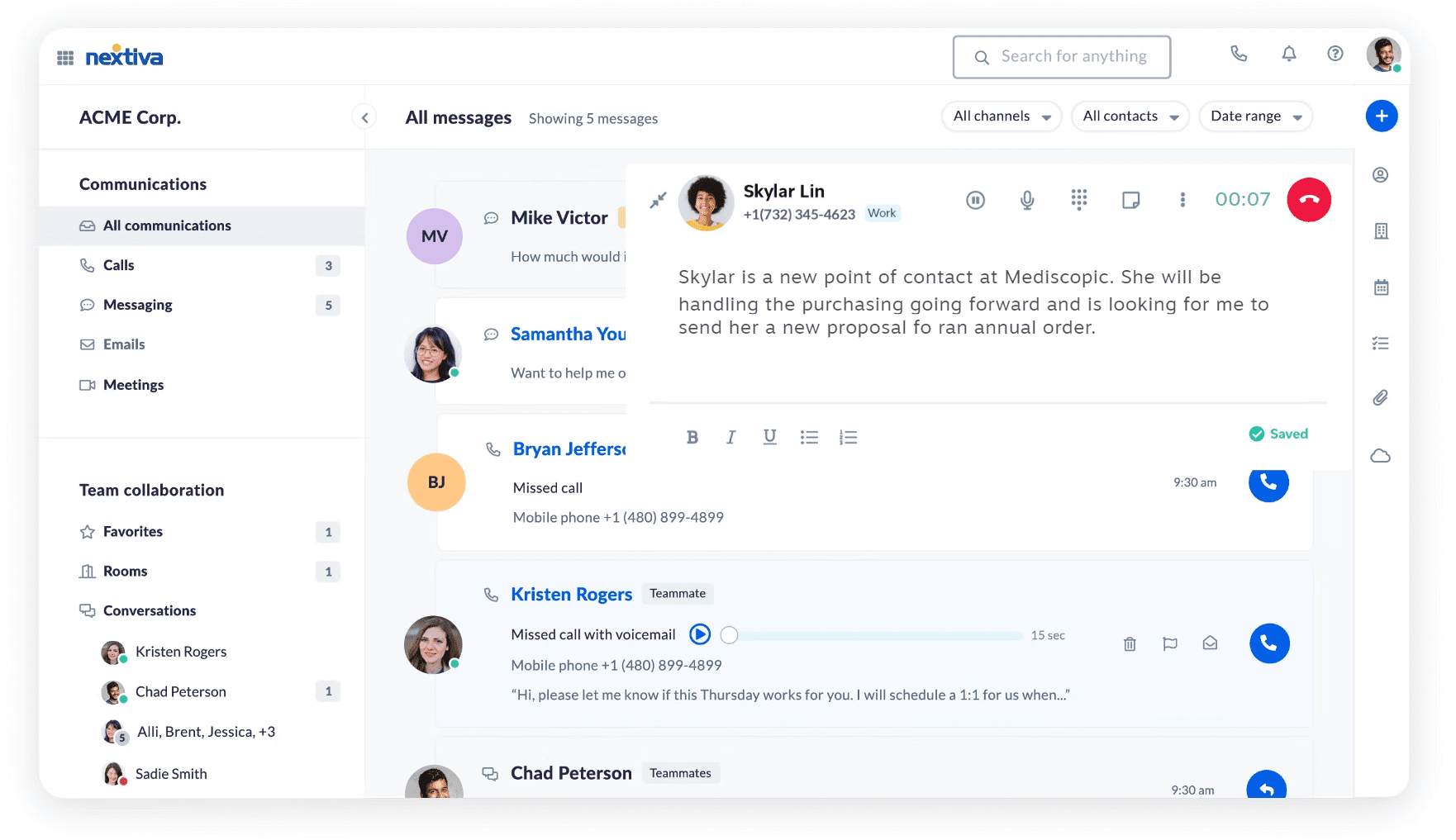
Nextiva was launched in 2006 and has an HQ in Scottsdale, Arizona. The company powers thousands of businesses worldwide with its unified communications platform. It’s built for teams that need a single hub for voice, video, SMS, and more.
Aimed at sales and support, Nextiva emphasizes real-time insights to improve call management and foster loyalty, while boasting fantastic uptime. With roots in VoIP evolution, it’s grown into a contact center solution that blends human touch with smart automation, serving giants like IKEA and DHL.
Key features
- Unified channels for voice, SMS, video, and social
- AI transcription and sentiment analysis for quick call summary
- Skill-based routing
- Call coaching tools like live whispering and barging
- Click-to-call
- Call tagging
Integrations
All major CRMs
Pricing
- Core: $15
- Engage: $25
- Power Suite CX: $75
- Enterprise Essential: $75
Free trial
It is unclear if Nextiva currently offers a free trial.
Why businesses pick Nextiva for their communication stack
Nextiva’s magic lies in how it makes complex communication feel effortless. For teams exhausted from juggling too many apps, that’s a game-changer. The reviews on G2 tell the story: more than 91% of users stick around thanks to Nextiva’s unbeatable mix of reliability and hands-on support. Thousands of reviewers highlight what keeps them hooked:
- Support that actually supports. Users love Nextiva’s 24/7 phone and chat access, with average hold times under two minutes.
- Scalable simplicity. Compared to most competitors, Nextive offers easy onboarding makes growth painless, whether you’re expanding from a small team to global operations. The cloud contact center adapts seamlessly to everything from local call surges to multinational collaboration.
- Smarter with AI. Tools like auto-summaries and sentiment analysis trim review time by up to 40%, letting agents focus on what matters most—closing deals instead of drowning in notes.
- Savings that make sense. Starting at just $15 per user, Nextiva can slash phone costs, all while meeting GDPR and HIPAA standards.
Nextiva delivers the best of both worlds: a dependable communication hub that scales with your business and features that outperform its price tag. If your team is tired of fragmented tools and missed connections, this platform feels like a breath of fresh air.
Why look into Nextiva alternatives?
Even strong Nextiva alternatives aren’t without their rough edges. As teams scale, small frustrations, such as creeping costs or occasional call-quality issues, can start to sting. G2 feedback highlights a few recurring pain points that push some ops teams to explore alternatives. They’re not deal-breakers for everyone, but in high-stakes environments, these gaps can add up. Let’s break down the main ones.
Support that’s hit-or-miss
Compared to other competitors, many users mention inconsistent response times for non-urgent issues—sometimes waiting hours or even days. That kind of delay can be maddening when a simple outage stalls sales.
Pricing that grows unexpectedly
The $15 entry plan sounds great until you factor in toll-free minutes, AI extras, and other add-ons. Before long, costs climb past $50 per user, putting it above leaner, cheap alternatives.
Set up hurdles for custom needs
Getting advanced call flows up and running can be tricky. Some describe the process as “a puzzle missing pieces.” It does fine for basic setups, but complex contact center platform configurations can feel clunky.
Reporting that’s functional but not flashy
The dashboards give you the essentials, but richer insights, such as detailed sentiment or NPS analysis, often require an expensive upgrade.
For many teams, these friction points prompt them to explore top alternatives to Nextiva. Platforms like MightyCall step in with sharper tools and fewer hidden costs. It’s not about walking away from Nextiva—it’s about finding the platform that moves at your pace.
10 top alternatives to Nextiva: overview
We got to the part of exploring the top alternatives. We’ve put together 10 standout options, each excelling in a different niche. MightyCall leads the pack for its no-fuss power, making it perfect for SMBs eyeing a better-than-Nextiva swap. Here’s the lineup. Let’s take a look.
These picks cover business phone bases, from free alternative trials to enterprise-grade PBX setups. Each offers unique features, such as more detailed call monitoring or tighter integrations, that outweigh Nextiva in certain aspects.
1. MightyCall
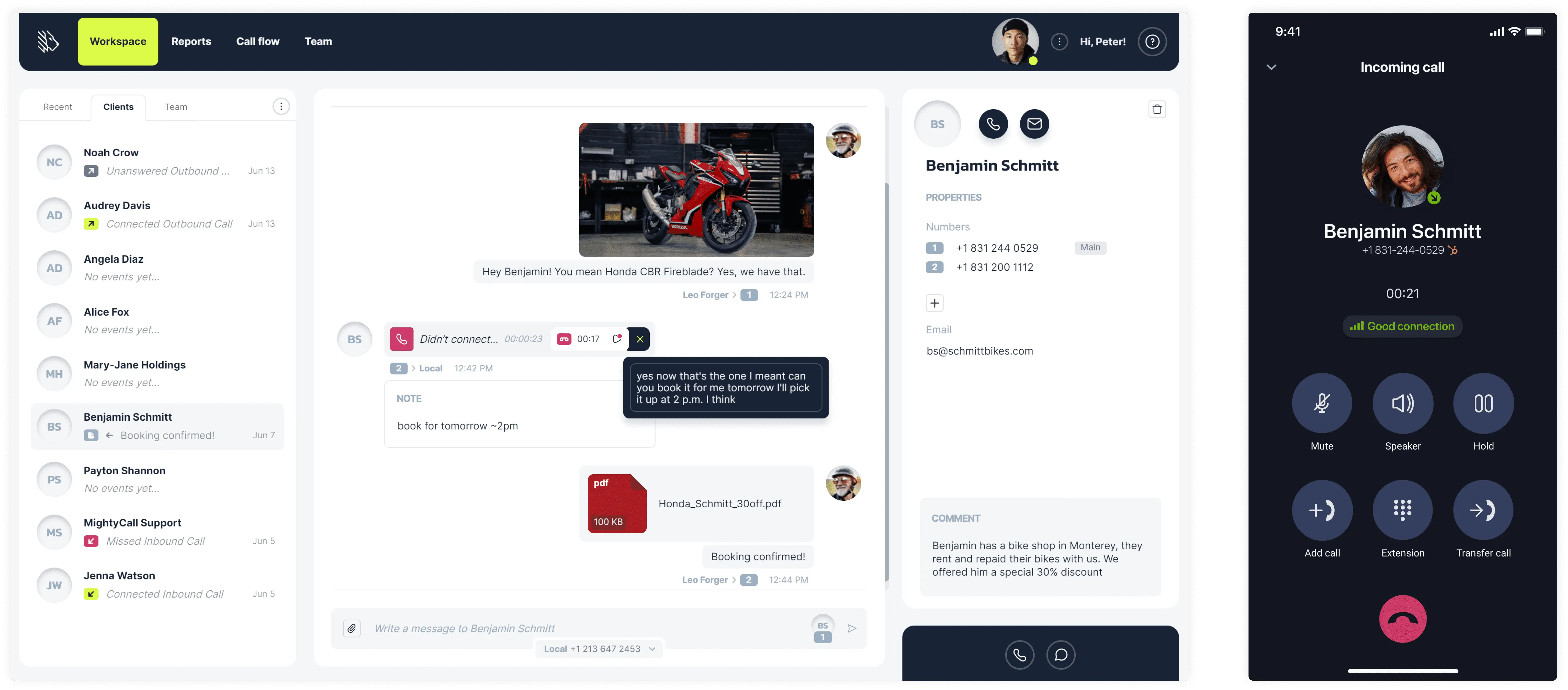
MightyCall is a San Francisco-based modern call center software solution built for small and mid-sized businesses that want to manage inbound and outbound calls efficiently. It provides an intuitive interface for agents and supervisors, allowing companies to handle customer interactions, monitor performance, and streamline communication without the hassle of complex on-premise phone systems.
Features
- Multi-level IVR
- Live call monitoring: whispering, barging, listening, intercepting
- Auto dialer with preview, progressive, and predictive modes
- AI AMD
- Call recording and AI summaries
- Call queues
- Click-to-call
- Voicemail to text transcription
- DID reputation
- Local presence dialing
- Voicemail drop
Integrations
All major CRMs
Pricing
MightyCall offers the following price plans, billed annually:
- Core: $20
- Pro: $38
- Power: $65
- Enterprise: Custom pricing
Free trial
MightyCall offers a 7-day trial.
Support channels
- Live chat: Integrated into the website for quicker, interactive support.
- Phone support: You can talk to an actual human support agent by dialing +1 (888) 256-8312 ext.2
- Email support: You can email support@mightycall.com
- Onboarding and personalized help: New customers can book a demo session to help them set up their accounts.
- Help center: Documentation, articles, and how-to videos covering everything you need to know.
What makes it better than Nextiva?
- Unlike Nextiva, MightyCall offers more features at entry-level pricing, making it ideal for smaller teams looking to control costs.
- Quick, user-friendly onboarding means less time spent setting up and more time serving customers.
- Greater flexibility for remote or hybrid workforces, since agents can log in from anywhere with internet access.
- High call flow customization—set detailed routing and rules without complex coding or IT involvement.
- Advanced call analytics that deliver granular insights.
MightyCall limitations
- Lacks some advanced features that larger enterprises may require.
- Some users note occasional app glitches.
Customer feedback
Many MightyCall customers praise its easy setup, friendly user interface, and responsive support team. They often mention that it’s especially well-suited for small- to mid-sized businesses that need basic yet reliable call center functionality. Some users want more advanced integrations, while others experience minor call quality issues during busy periods, but most find it a solid, cost-effective solution overall.


MightyCall solved the problem by enabling bulk calling and SMS, because we got to make a lot cold calls and SMS. Then, it also helps with auto recording call feature, that as a supervisor I can listen to, by just going in the report section. Also, there are unlimited minutes for USA and Canada, please addition of new phone numbers that help a lot.
Best for
SMB sales and support crews chasing efficient outbound without complexity—ideal for remote call center functionality in e-commerce or real estate.
schedule your personalized demo with our amazing team

2. Dialpad
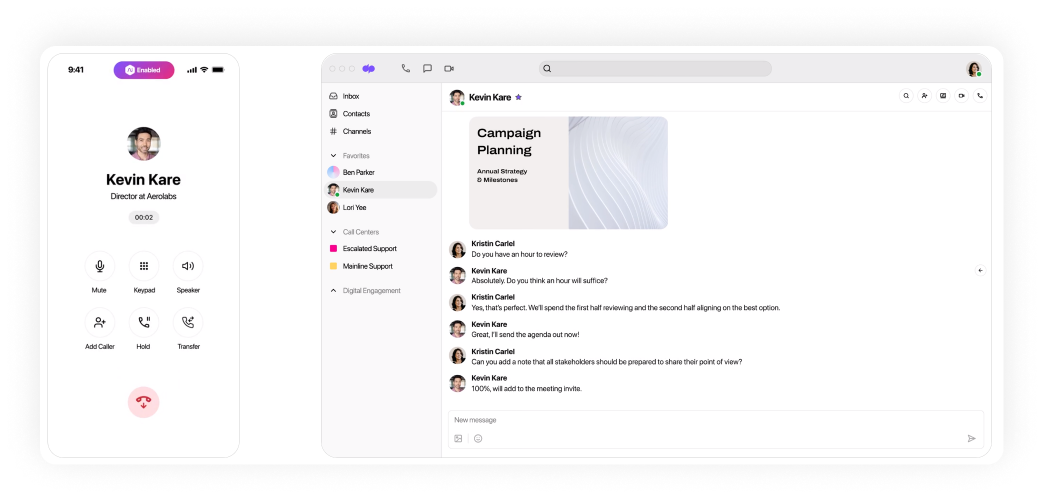
Dialpad is a modern, AI-powered cloud communications platform that combines voice, messaging, and video into a single, unified system. It’s built for remote and distributed teams, offering enterprise-grade call quality, intelligent insights, and seamless integrations with tools like Google Workspace and Salesforce. With real-time transcription, AI summaries, and scalable plans, Dialpad is designed to streamline business communication, reduce friction, and boost productivity.
Features
- AI real-time coaching
- Salesforce dialer
- Omnichannel inbox
- Call monitoring
- Workflow automation
Integrations
All major CRMs.
Pricing
- Standard: $15
- Pro: $25
- Enterprise: Custom pricing
Free trial
Dialpad offers a 14-day free trial for its “Connect” (business communications) plan.
Support channels
- Live chat and web support: Available to all users; helpful for quick issues and general guidance.
- Phone support: Included in Pro and Enterprise plans; provides 24/7 assistance for higher-tier customers.
- Help center: Documentation, FAQs, and guides for setup, integrations, and troubleshooting.
What makes it better than Nextiva?
- Stronger AI capabilities: Unlike Nextiva, Dialpad’s real-time transcription, call summaries, and voice intelligence are more developed and deeply integrated.
- Unified communications: Combines voice, messaging, and video in a single app.
- Cross-platform flexibility: Easy to use on mobile, desktop, and browser — great for remote and distributed teams.
Dialpad limitations
- Higher-tier features locked behind expensive plans: Many of its more advanced integrations, phone support, and AI capabilities require upgrading to Pro or Enterprise.
- Call quality can be inconsistent: Some users report dropped calls, audio delays, or one-way audio.
- Poor reliability on mobile: Reports include delayed notifications, missed incoming calls, and the app not ringing reliably on smartphones.
Customer feedback
- Positives: Users appreciate Dialpad’s AI-powered features (transcripts, summaries), its clean UI, and its seamless cross-device functionality.
- Criticism: Some users point to billing issues, hidden costs (e.g., for toll-free numbers), and limited support for lower-tier plans.
Occasionally, the mobile app can experience minor connectivity issues in low-bandwidth environments, which may affect call clarity or message delivery. -
Best for
Growing small to medium businesses or remote or distributed teams.
3. RingCentral
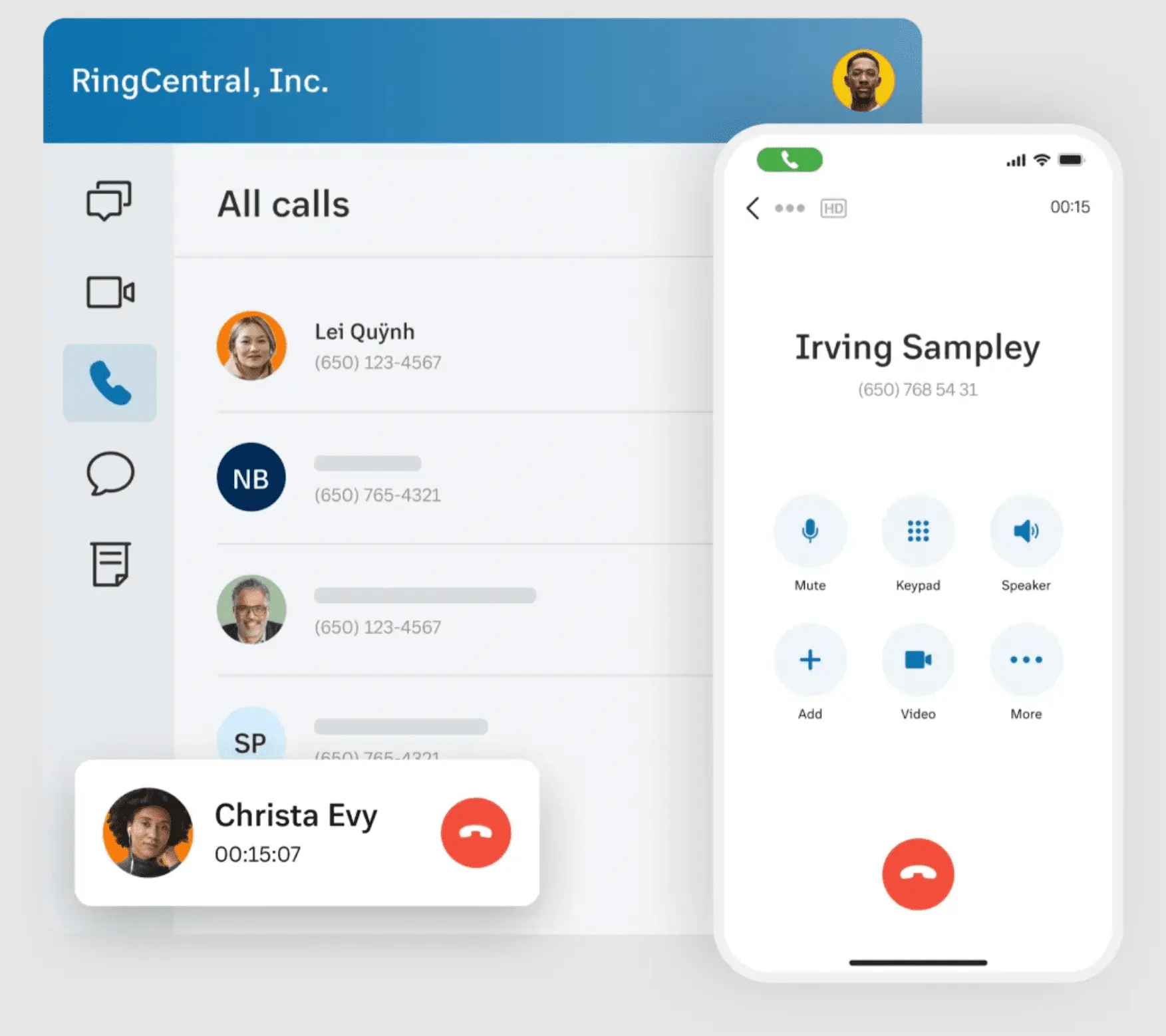
RingCentral is another alternative to Nextiva. It’s a comprehensive cloud-communication platform built for modern organisations, offering cloud telephony, messaging, video collaboration, and contact-centre capabilities in one unified system.
With enterprise-grade reliability, global reach, strong integrations, and AI-powered insights, RingCentral is designed to help companies both streamline internal communications and deliver high-quality service.
Features
- AI Receptionist
- Skills-based routing
- Sentiment analysis
- Coaching tools
- IVR
- Call flow builder
Integrations
All major CRMs.
Pricing
- Core: $20
- Advanced: $25
- Ultra: $35
- Customer Engagement Bundle: Custom pricing
Free trial
RingCentral offers a free trial of its communications platform. However, the dedicated contact-centre plan may require a demo or sales consultation instead of a full trial.
Support channels
- 24/7 phone support: Available especially for higher-tier plans or enterprise customers.
- Live chat: For general enquiries, setup help, and troubleshooting via their website.
- Knowledge base: Documentation, FAQs, tutorial videos, and user forums help users learn and troubleshoot independently.
What makes it better than Nextiva?
- Stronger omnichannel depth: RingCentral offers a broad set of digital channels (voice, chat, SMS, and social) and unified routing, which may be better than Nextiva, depending on the plan.
- AI and analytics capabilities: With tools such as live agent assist, speech/text analytics, and AI-powered coaching, RingCentral positions itself well for performance-oriented centres.
- Unified communications in a single contact centre platform: The ability to deliver both internal and external functionality in a single platform may reduce overall hassle compared to having separate systems.
RingCentral limitations
- Higher cost for full features: The entry price is higher, and costs increase as you add advanced features or heavy analytics.
- Complexity for smaller operations: With rich feature sets, configuration and onboarding may take more time or require more expertise than simpler alternatives.
- Some features are still add-ons: Even high-tier plans may require extra purchases for certain analytics, international calling, or advanced workforce-management capabilities.
Customer feedback
- Positives: Many cite the system’s reliability, features, ease of use for agents, and the strong integration capabilities.
- Criticism: Some users mention the cost can be high, particularly once you add advanced features; others point to complexity or the challenge of fully utilising all of the advanced analytics and workforce tools without dedicated resources.
Constantly crashes and has a delay when dialing. Also sometimes does double dialing. -
Best for
Mid-to-large contact-centres that require omnichannel operations.
4. Aircall
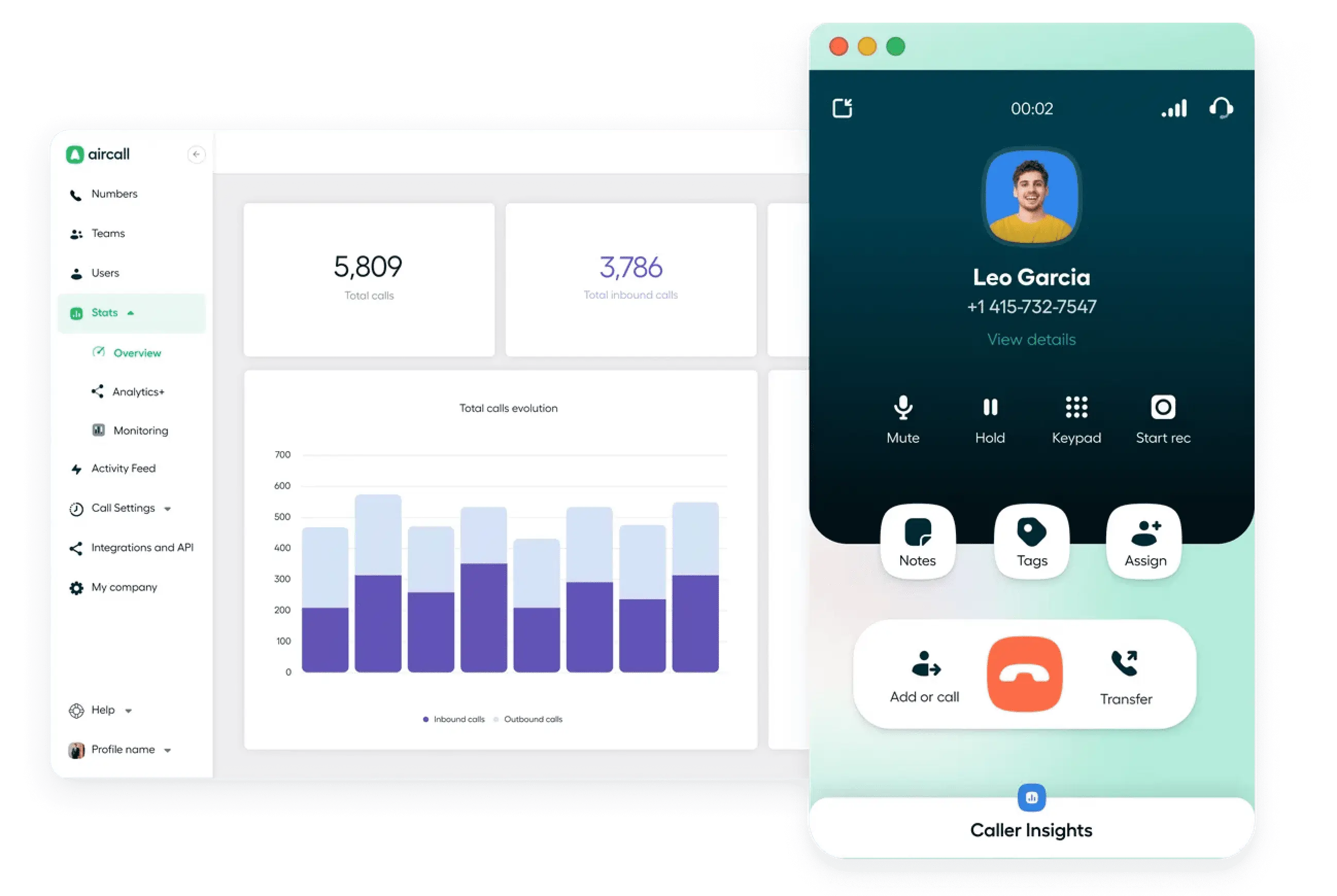
Aircall is one of the top Nextiva alternatives. It’s a cloud-based business phone system designed to organize the workflow of sales and support teams. It blends VoIP calling, SMS, and modern contact-center capabilities into a clean, intuitive interface. With its scalable architecture and deep integrations with CRM and helpdesk tools, Aircall is built to support high-performing contact centers that prioritize ease of use, coaching, and data-driven customer experience.
Features
- Power dialer
- Smart call routing
- IVR
- Call tagging
- Shared inbox
Integrations
All major CRMs.
Pricing
- Essentials: $30
- Professional $50
- Custom: Request a quote
Free trial
Aircall offers a 14-day free trial.
Support channels
- Help center: Live Nextiva, Aircall provided comprehensive documentation, how-to guides, FAQs, and setup articles.
- Support portal: Owners, Admins, or Supervisors can submit a ticket via Aircall’s support portal.
- Email support: Available for technical, billing, or number-porting inquiries.
- Phone support: Included in certain plans for more urgent or complex issues.
What makes it better than Nextiva?
- Focus on AI and coaching: Aircall’s AI Assist and real-time whispering capabilities make it very strong on agent coaching and call quality.
- Highly intuitive interface: Many users find Aircall’s UI more modern and easier to pick up than those of legacy VoIP systems.
Aircall limitations
- Add-on costs: AI Assist and advanced analytics come as extra-cost add-ons, increasing the total per-user spend.
- Support access restrictions: Agents without admin/supervisor roles may not have direct access to Aircall’s support portal.
Customer feedback
- Positives: Users generally praise Aircall for its ease of use and clean, modern interface. Many appreciate how seamlessly it integrates with CRMs and how the call transcription and AI features save time.
- Criticism: Common issues include connection problems or occasional call quality glitches, especially when internet conditions are suboptimal. Others note that billing can become “unexpectedly high” once add-ons are factored in.
So far, I've loved the system just as it is. I cannot think of something that I dislike in this moment. The only issue that I've faced is that there seems to be a double ring with the incomming calls, but it might be a bug. -
Best for
Mid-sized contact centers that value coaching, training, and performance through call insights and sales teams with high outbound volume.
5. Vonage
Vonage is yet another alternative to Nextiva. It’s a well-established cloud communications provider, offering a broad suite of voice, messaging, video, and API-based solutions. Over the years, it has evolved from a simple VoIP phone service into a full-fledged contact-center platform, delivering enterprise-grade flexibility and reliability. With global infrastructure, omnichannel engagement, and powerful routing capabilities, Vonage gives companies the opportunity to run sophisticated customer service operations while also supporting internal communications.
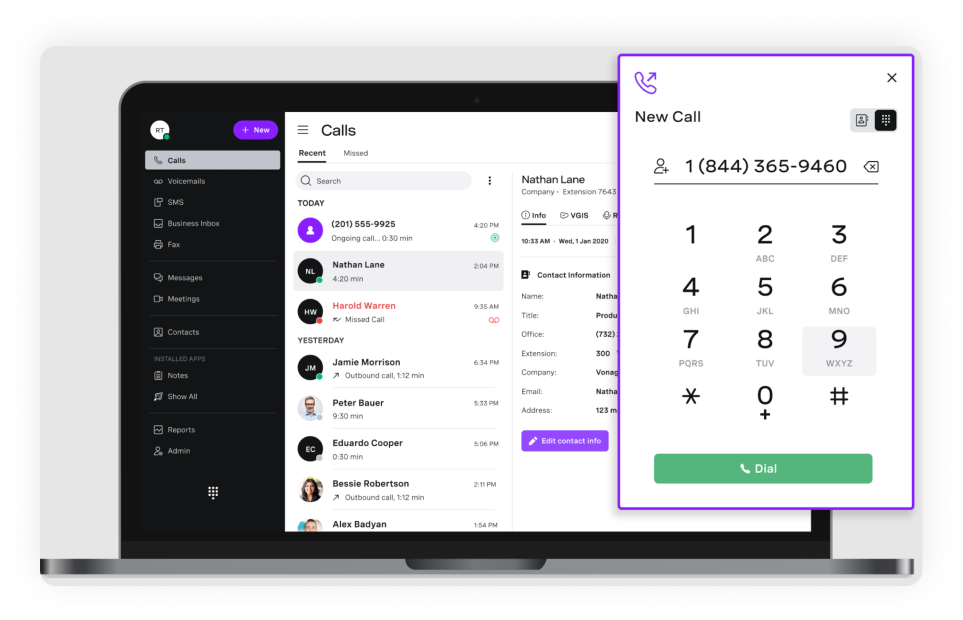
Features
- Conference calling
- Video messaging
- Call quality optimizer
- Automatic Call Distribution (ACD)
- IVR
- Virtual assistants
- Supervisor tools: Monitoring, whisper, barging
Integrations
All major CRMs.
Pricing
- Mobile: $13.99
- Premium: $20.99
- Advanced: $27.99
Free trial
Vonage offers a 1-week free trial (up to 5 licenses) for its Contact Center (on their public cloud), with training and support provided.
Support channels
- Ticket-based support: Users can submit support tickets via Vonage’s portal for technical issues or account-related queries.
- Knowledge base: Vonage maintains documentation on IVR flows, ACD configurations, and contact center best practices.
What makes it better than Nextiva?
- Advanced routing and ACD: More mature contact-center features, such as ACD, IVR, and skills routing, enable more sophisticated call-flow design.
- AI and analytics add-ons: Vonage’s virtual assistant, speech analytics, and transcription offer powerful insights and automation.
- Global reach: Vonage’s infrastructure and API platform make it suitable for international deployments or distributed teams.
Vonage limitations
- Add-ons can drive up costs: Features like AI, analytics, and advanced routing are often paid extras, which can inflate the total price.
- Limited custom reporting: Some users report that overall reporting is solid, but building fully custom reports or dashboards is less flexible.
Customer feedback
- Positives: Based on reviews, users generally appreciate the platform’s ease of use, flexible UI, and strong onboarding support. Many cite the mobile app as a big plus, allowing agents to handle calls from anywhere.
- Criticism: However, common criticisms include high cost, complexity of some features, and limited customization of reports.
As a startup owner I dislike the complicated accept the project. which lately I have e-learning project and I was need the video session and otp services but the support decline the project, I don't know why -
Best for
Medium to large contact centers that need scalable, reliable cloud infrastructure.
6. JustCall
JustCall is one of the best Nextiva alternatives. It’s a cloud-based communication platform that helps sales and support teams manage voice calls, SMS, WhatsApp, and email through a single, unified interface. It offers a highly scalable contact center solution that combines intelligent call routing, AI-driven insights, and workforce management tools to streamline customer interactions.
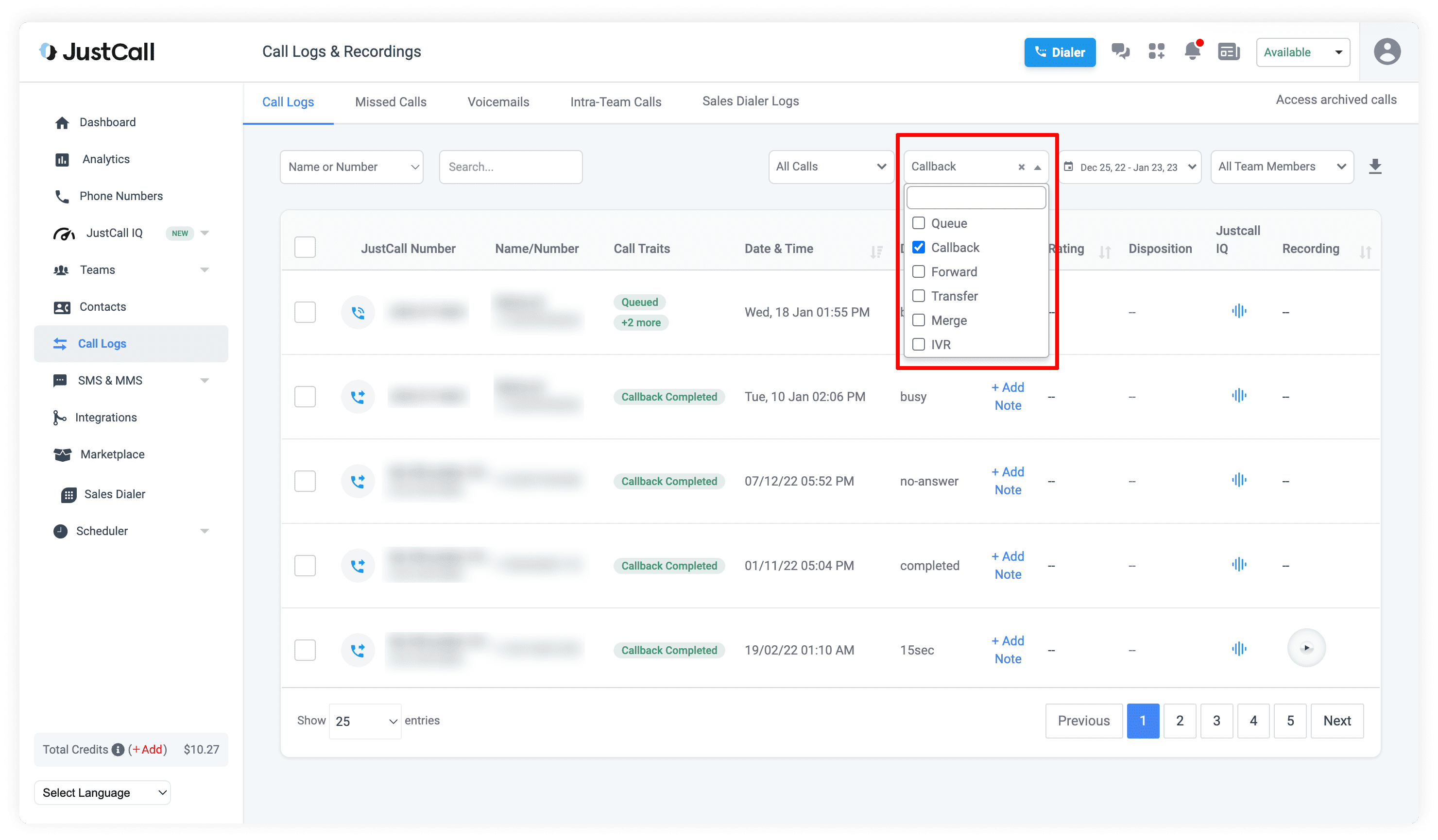
Features
- Predictive dialer
- Intelligent Call Routing
- IVR
- AI agents
- CSAT surveys
- Workflow automations
Integrations
All major CRMs.
Pricing
- Team: $29
- Pro: $49
- Pro Plus: $89
- Business: Request a quote
Free trial
JustCall offers a 14-day free trial that gives access to its full SalesPro feature set (with some usage limits).
Support channels
- Help center: Detailed documentation, guides, and FAQs to help with setup.
- Email support: Users can submit support tickets or email the team for technical or billing assistance.
- Chat/AI agent: JustCall provides a built-in AI chatbot to answer common questions and guide users.
What makes it better than Nextiva?
- More dialer flexibility: With power, predictive, and dynamic dialing options, JustCall supports advanced outbound campaign styles.
- Stronger AI and coaching: Real-time agent assist, AI summarization, and automated call scoring help improve agent performance.
- Deeper CRM integration: With over 100 native integrations and API support, JustCall can embed deeply into existing sales and support workflows.
JustCall limitations
- Minimum seat requirement: At least 2 users are required to subscribe.
- Call credit model: In addition to subscription fees, you need calling and messaging credits, which are separate from the plan.
Customer feedback
- Positives: Many users praise JustCall for its ease of use, clean interface, and powerful CRM integrations. Agents appreciate having all communications in one unified place.
- Criticism: Users frequently mention call quality issues (especially under weak internet conditions) and occasional delays during onboarding.
JustCall faces some audio issues, more so some delays when there is poor network. The app has hidden fees, more so on international calls and this limits people from accessing the product -
Best for
Small to medium-sized contact centers that want scalable cloud telephony with advanced routing and AI support.
7. Talkdesk
Talkdesk is a cloud contact-center platform built to help businesses deliver intelligent, AI-powered customer experiences at scale. Talkdesk allows organizations to manage omnichannel engagement, automate workflows, and gain deep insights into customer interactions.
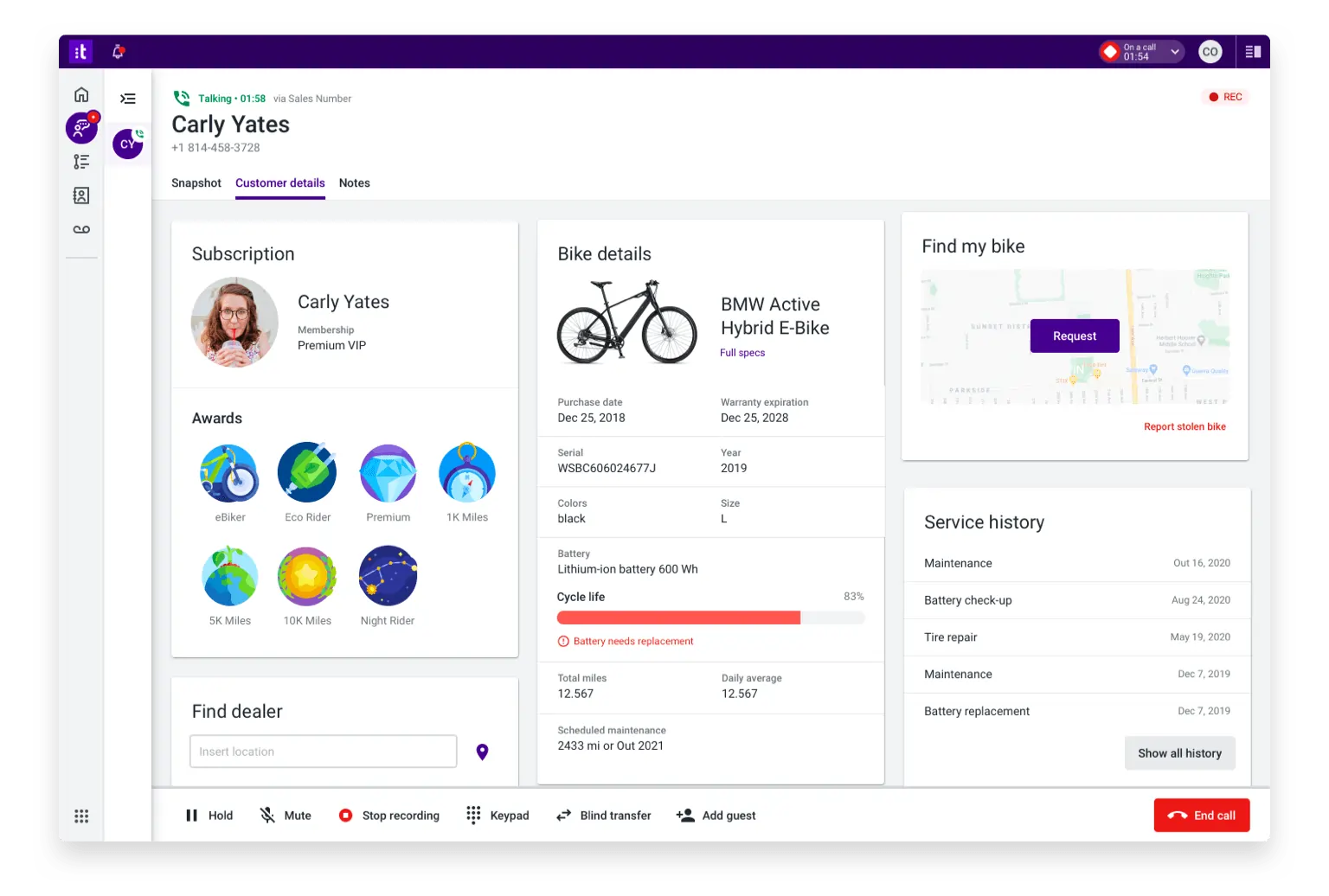
Features
- AI Agents
- Workforce management
- Real-time Analytics
- Smart routing
Integrations
All major CRMs.
Pricing
- Digital Essentials: $85
- Voice Essentials: $105
- Elite: $165
- Industry Experience Clouds: $225
Free trial
Talkdesk does not clearly advertise a standard free trial on its pricing page; instead, it typically requires contacting sales for a demo or pilot.
Support channels
- Ticket-based support and help desk: Submit support cases for technical, operational, or billing issues via Talkdesk’s customer portal.
- Knowledge base: Comprehensive documentation, user guides, and best-practice articles for administrators and agents.
What makes it better than Nextiva?
- Stronger AI capabilities: Talkdesk’s Copilot, Autopilot, and Navigator support both self-service and agent assistance, leveraging generative AI to reduce workload and enhance efficiency.
- Advanced workforce management: Built-in AI-driven scheduling and forecasting tools help optimize staffing, something that’s often more limited in simpler VoIP systems.
Talkdesk limitations
- Complex licensing: As you add AI, workforce management, and outbound features, the pricing and licensing structure can become quite complex and expensive.
- Reporting flexibility: Some users report that while Talkdesk’s dashboards are powerful, customizing reports or filtering for very specific metrics can be cumbersome.
Customer feedback
- Positives: Users frequently praise Talkdesk for its intuitive interface, easy-to-configure routing, and real-time visibility into agent status and queues.
- Criticism: On the flip side, common criticisms include the cost of add-on modules, complex licensing as you scale, and limitations in report customization.
For smaller teams, the pricing may feel on the higher side, especially once you add on optional features like advanced analytics or workforce management. -
Best for
Mid-sized to large contact centers that need enterprise-grade capabilities.
8. Ooma
Ooma is a cloud-based communications platform that offers business telephony, conferencing, and customer service features. It’s designed to deliver reliable, feature-rich voice communications without the complexity of legacy PBX systems. With global calling options, flexible call-flow tools, and a tiered pricing model, Ooma appeals to small and mid-sized businesses.
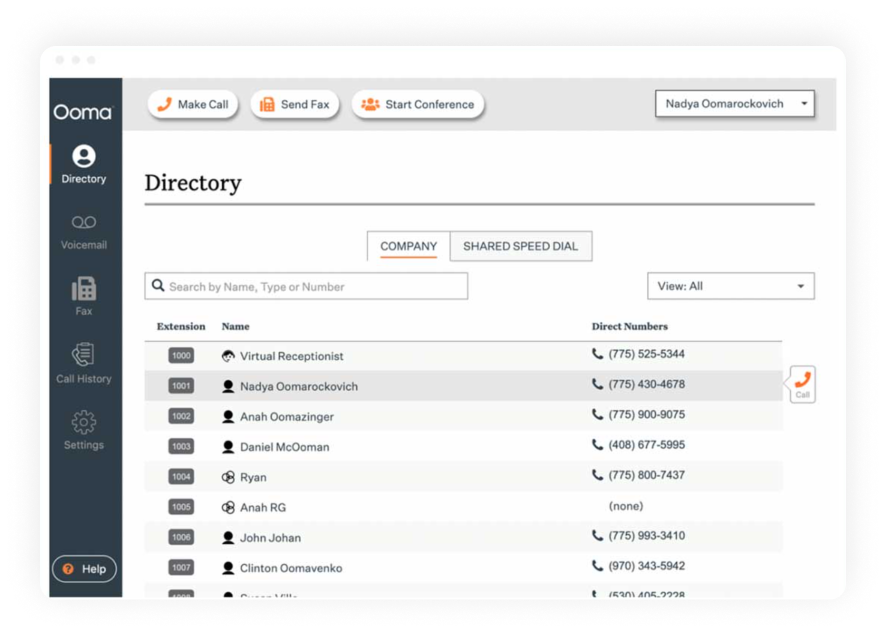
Features
- Virtual receptionist
- Call forwarding
- Advanced analytics
- Real-time reporting
- Call queuing
Integrations
All major CRMs.
Pricing
- Ooma Office Essentials: $19.95
- Ooma Office Pro: $24.95
- Ooma Office Pro Plus: $29.95.
Free trial
Ooma does not clearly advertise a standard free trial for its business phone or contact center plans.
Support channels
- 24/7 support: Ooma provides support around the clock.
- Knowledge base: Ooma provides documentation, guides, and FAQs for setting up phone systems, IVR, and call flows.
What makes it better than Nextiva?
- Affordable call-center tier: Ooma’s Call Center plan includes essential contact-center features (ACD, IVR, queues) at a per-user rate that may be more predictable for SMBs.
- Flexible call flow design: Visual, do-it-yourself call flow builder (IVR) lets you create routing logic.
Ooma limitations
- Limited advanced analytics: Reporting is fairly basic.
- Outage risks: Some user reports indicate service outages and call drop-outs.
Customer feedback
- Positives: Many appreciate Ooma’s affordability, its wide set of built-in phone features, and its flexibility for small offices.
- Criticism: Common issues include dropped calls, connectivity issues, and frustrations with support responsiveness.
We have occasional outages that can affect the phone service. We do have an issue trying to call members who have certain blocks on their phones to not allow VOIP calls. -
Best for
Small- to mid-sized businesses that need a cost-effective cloud phone system with contact center functionality.
9. 8×8
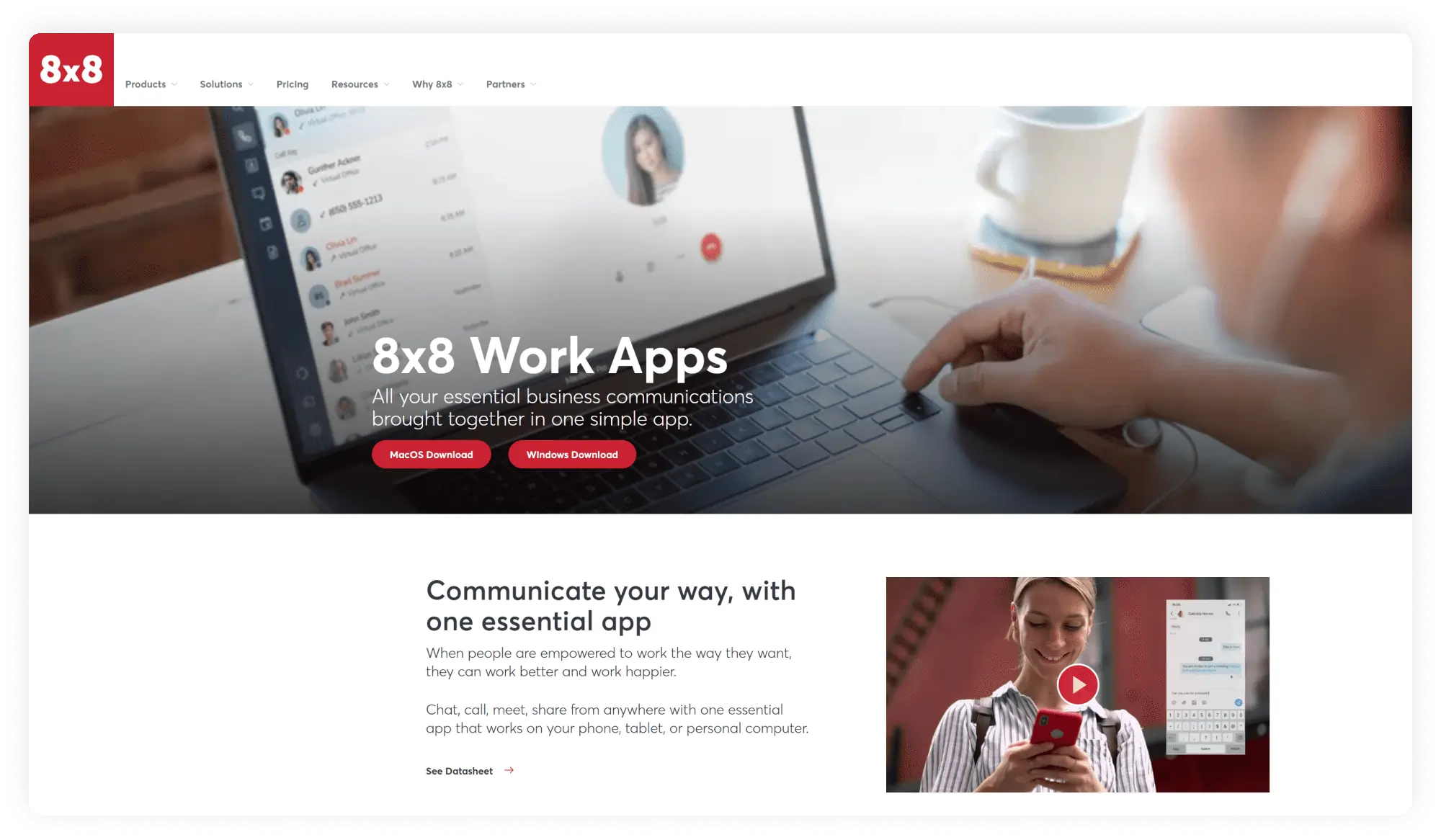
8×8 is a cloud-communication provider that brings together voice, messaging, video, and contact-center tools in a unified platform. With its scalable architecture and broad integration capabilities, 8×8 helps companies deliver efficient, intelligent customer experiences.
Features
- Omnichannel routing
- AI Agent Assist
- Sentiment insights
Integrations
All major CRMs.
Pricing
Request a quote
Free trial
8×8 offers a 30-day free trial.
Support channels
- Tiered dupport: 8×8 offers different levels of support based on plan, including standard and premium.
- Knowledge base: Like Nextiva, 8×8 provides comprehensive documentation and resources for setup, workflows, analytics, and contact-center features.
- Billing and cost-center management: Via their billing portal, you can use “Cost Centers” to manage departmental billing and monitor spend.
What makes it better than Nextiva?
- Stronger AI automation: 8×8’s Intelligent Customer Assistant + Agent Assist offers more mature AI-driven self-service.
- Workforce engagement tools: Advanced forecasting, scheduling, and agent management help optimize efficiency.
8×8 limitations
- Complex pricing and hidden fees: Some users note regulatory recovery fees or other additional costs not obvious in listings.
- Learning curve: Users note that the platform can be complex for admins to configure or build routing flows.
- Interface clutter: A few users feel the UI is overwhelming; navigating and customizing dashboards or workflows can be difficult.
Customer feedback
- Positives: Users generally appreciate 8×8 for its scalability, versatility, and strong analytics capabilities.
- Criticism: Some note a learning curve with configuration, and the interface can feel cluttered or outdated.
The configuration process is difficult to handle independently. Without support, it can be challenging to make changes or set up new flows (ex. reducing inbound queues without toubling the service for agents) -
Best for
Medium to large contact centers that need omnichannel engagement.
10. CloudTalk
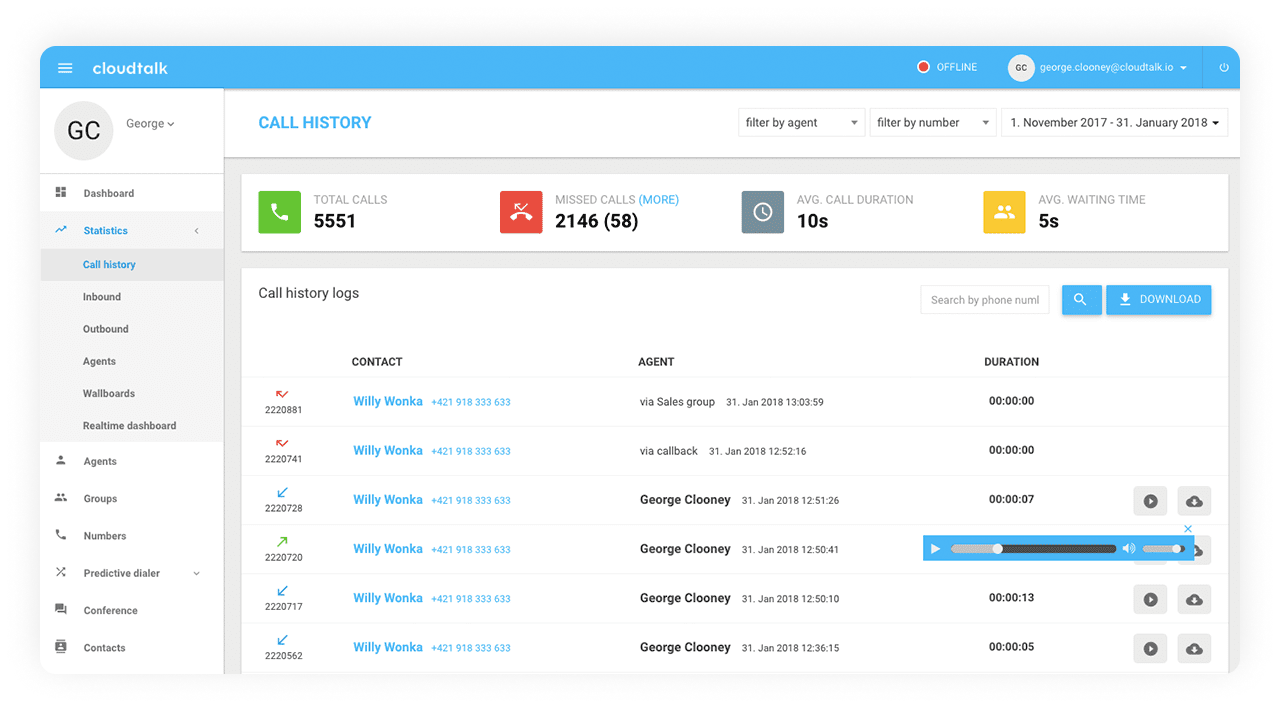
CloudTalk is one of the best Nextive alternatives. It’s a cloud call center platform built to empower remote and distributed sales and support teams. With its rich infrastructure, AI-driven voice agents, and global coverage, CloudTalk helps organizations scale their customer interactions.
Features
- Parallel dialer
- Smart call routing
- AI transcripts
- Smart call routing
- Multi-level IVR
- Live monitoring
Integrations
All major CRMs.
Pricing
- Lite: $19
- Essential: $29
- Expert: $49
Free trial
CloudTalk offers a 14-day free trial.
Support channels
- 24/7 chat and email support: Available for all plans, ensuring help is always just a message away.
- Phone support: Offered (especially for higher or expert-tier customers) so you can reach real people when needed.
- Help center: Detailed documentation, guides, and FAQs covering call flows, IVR, integrations, and more.
What makes it better than Nextiva?
- AI Voice Agents: CloudTalk’s AI-powered agents can handle inbound or outbound calls 24/7, reducing agent load.
- Flexible outbound dialing: Its power dialer and smart dialer options make calling large lists more efficient.
- Strong analytics and coaching tools: Real-time dashboards, call sentiment, and full call history help drive performance and coaching.
CloudTalk limitations
- Add-on costs: Important features such as AI Conversation Intelligence, Power Dialer, and Voice Agents are not included in base plans, which can increase the total price.
- Reporting customization: Some users note limitations in customizing reports and analytics dashboards.
Customer feedback
- Positives: Users appreciate CloudTalk’s intuitive interface, strong CRM integration, and reliable call quality.
- Criticism: Some report that the app can lag, and that reporting dashboards lack deeper customization. A few also mention occasional connection issues depending on their internet.
Sometimes the app can take a few extra seconds to load or sync, especially when switching between calls quickly. I also wish there were a few more customization options for reports, but overall, these are minor issues compared to how smoothly everything else works. -
Best for
Small to mid-sized sales or support teams that need a scalable cloud contact-center without complicated setups.
How to choose the right Nextiva alternative?
Swapping to a Nextiva competitor? Start by pinpointing your real pain points—whether it’s recurring call quality issues, clunky integrations, or limited flexibility—so you can choose a platform that actually solves them. When evaluating VoIP or call-center alternatives, use this quick roadmap:
- Budget fit: Compare true total costs, including international add-ons. If Nextiva’s price increases sting, look for plans that stay within your budget without sacrificing essentials.
- Core capabilities: Make sure the provider can comfortably handle your inbound call volume. If outbound is part of your workflow, built-in dialers are a must.
- Scalability and global reach: Prioritize platforms with 99.99% uptime and broad international availability.
- AI and analytics depth: Advanced call coaching, sentiment analysis, and automated insights help teams that depend on continuous improvement.
- Ease of setup and training: Choose solutions with no-code builders, clean dashboards, and solid training resources to reduce onboarding from months to weeks.
- Security and compliance: Verify that the provider meets your HIPAA or GDPR requirements and offers clear SLAs with response-time guarantees.
- Trial and migration ease: A free trial and guided porting support can make switching far smoother and reduce data disruption.
This checklist helps cut through the noise so you can choose a platform that elevates your omnichannel communication without the headaches.
Wrapping up the search
From Nextiva’s reliable roots to MightyCall’s dialer opportunities, today’s best Nextiva alternatives for business open new doors to sharper, simpler communication. Whether you’re focused on trimming costs or unlocking AI-powered efficiency, the right fit depends on your team’s rhythm—fast-paced outbound campaigns or long-haul customer support.
Dialpad offers a futuristic touch, while Ooma keeps things easy on the budget. But if you want a balanced upgrade combining capability with a user-friendly design, MightyCall might just hit the sweet spot. Try the free trial and experience how smoother, smarter calls can redefine the way your team connects.